In the hours after powerful earthquakes tore through northern Venezuela on June 24, 2026, photographers documented scenes that were almost impossible to absorb all at once.
Collapsed buildings.
People standing barefoot in streets.
Rescue crews climbing over broken concrete.
Families holding one another while aftershocks kept nerves raw.
Then there was one quieter photograph.
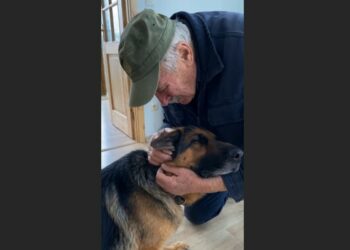
A man stood in Caracas holding a dog tightly against his body.
He was crying.
Associated Press photographer Javier Campos captured the moment after the earthquakes, but the published caption did not identify the man or explain exactly what had happened to him, his home, or the animal in his arms. It simply recorded what the camera could establish: a man holding a dog and weeping after the disaster.
There is no need to invent the rest.
The photograph already says something recognizable.
When the ground stops being reliable and everything familiar suddenly becomes uncertain, people reach for the lives they do not want to lose.
For that man, at that moment, one of those lives was a dog.
The Ground Moved Twice in 39 Seconds
The first major earthquake struck northern Venezuela at 10:04 p.m. UTC on June 24.
The U.S. Geological Survey measured it at magnitude 7.2, centered east of San Felipe.
Just 39 seconds later, a magnitude 7.5 earthquake struck west of Catia La Mar.
Both were shallow, about 10 kilometers deep, a combination capable of producing extremely destructive shaking near populated areas.
Caracas and the coastal state of La Guaira suffered severe damage.
Buildings collapsed.
Power and communications failed in some areas.
Hospitals received large numbers of injured people.
Thousands of residents fled damaged homes and remained outside because they feared aftershocks or no longer had a safe building to return to.
The scale of the disaster became clearer with each passing day.
Initial reports counted dozens of deaths.
Later, the toll rose sharply as rescue teams reached more collapsed structures.
By July 4, Venezuelan authorities were reporting 2,954 deaths, more than 16,000 people displaced from their homes, and tens of thousands still unaccounted for.
Against numbers that large, one man and one dog could easily disappear into the background.
The photograph prevented that.
We Do Not Know What Happened Before the Camera Shutter Clicked
Perhaps the man had just escaped a damaged building.
Perhaps he had been looking for the dog.
Perhaps both had been outside when the shaking began.
The published reporting does not establish those details.
It would be tempting to say he “chose the dog over everything else” or that the animal was “the last thing he carried from his home.”
Those are powerful lines.
They are also assumptions.
What the image actually preserves is more honest.
The man’s face is overwhelmed with emotion.
His arms are around the dog.
The animal is pressed against him while the city around them is dealing with catastrophe.
Whatever happened immediately before that photograph belonged to the two of them.
What happened elsewhere in Caracas soon provided another reminder that animals were experiencing the disaster too.
The Next Day, Rescuers Found a Puppy Beneath a Collapsed Building
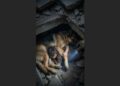
On June 25, footage emerged from Caracas showing firefighters working among earthquake debris.
Somewhere inside the wreckage was a puppy.
The dog was alive but trapped.
Video filmed by journalist Roman Camacho showed rescuers reaching the animal and giving it water while it was still among the rubble.
The puppy was then carefully removed and placed in the care of the Caracas Fire Department.
It was a brief piece of footage.
There was no elaborate soundtrack needed.
A frightened dog.
A hand.
Water.
Broken concrete surrounding them.
Then rescuers carrying the animal away from the structure.
In a disaster defined by enormous destruction, the task became momentarily simple.
There was something alive inside.
Get it out.
Finding a Survivor Does Not Mean the Rescue Is Finished
Earthquake debris is unpredictable.
A collapsed building may look motionless while remaining dangerously unstable.
Large concrete sections can be supported by surprisingly small pieces of material.
Removing one object can transfer weight somewhere else.
Aftershocks can make an already fragile structure shift again.
That means rescuers cannot simply reach into every opening as quickly as possible.
They have to evaluate access.
Listen.
Clear material deliberately.
Protect themselves so they do not become additional victims.
Then, when they can reach a survivor, they have to consider injuries that may not be obvious.
The puppy in Caracas could not explain whether something hurt.
He could not say how long he had been trapped.
He could not tell firefighters whether another animal or person had been beside him.
He could only respond to what was happening around him.
The rescuers supplied the rest.
The Water Was a Small Gesture With a Practical Purpose
One of the most shared parts of the video showed the puppy drinking.
It is easy to turn that moment into something sentimental.
But giving water to an animal trapped after a major disaster is also basic care.
Stress, heat, fear, and time without access to normal drinking water can quickly leave an animal dehydrated.
The firefighters did not need to know the dog’s name before offering help.
They did not need to know whether an owner would be found.
The animal was alive and reachable.
That was sufficient.
After drinking, the puppy was removed from the rubble and transferred to the fire department’s care.
The video did not establish a later reunion with a family.
So that part of the story should remain unknown unless better documentation emerges.
Not every rescue has to end with a camera waiting at somebody’s front door.
Survival was already an ending worth recording.
Animals Became Part of the Earthquake Search From the Beginning
Pets were scattered throughout the affected communities.
Some had escaped buildings.
Others remained trapped inside damaged apartments.
People searching for relatives were also searching for dogs and cats.
In the days afterward, additional animal rescues were documented.
One dog named Giselle was found alive after five days beneath the wreckage of a residential building in Caraballeda, La Guaira.
A Salvadoran rescue team spent about five hours working to reach her.
When she finally emerged, footage showed her licking a rescuer’s face before receiving veterinary attention.
Another dog was recovered after days beneath collapsed concrete as rescuers continued searching damaged buildings.
Each case was different.
Together, they showed how long the earthquake’s consequences continued after the shaking itself stopped.
Some Dogs Were Being Rescued, While Others Were Doing the Searching
Dogs also appeared on the other side of the disaster response.
International and Venezuelan teams deployed trained search dogs to help locate human survivors.
One search-and-rescue dog named Tsunami was reported to have helped locate a man trapped beneath rubble in Caracas.
These working dogs are not performing magic.
Their handlers train them to search for human scent and give a recognizable alert when they detect it.
Then human rescue teams take over.
Structural specialists evaluate the building.
Crews remove debris.
Medical personnel treat whoever is found.
The dog is one component in a system designed to locate life where human eyes cannot see.
Elsewhere in the same disaster zone, other dogs waited beneath concrete for those systems to reach them.
That contrast was striking.
Dogs searching.
Dogs being searched for.
Both moving through the same catastrophe alongside people.
A Disaster Does Not Separate “Human Problems” From “Animal Problems”
When an earthquake destroys a neighborhood, everything connected to that neighborhood is disrupted at once.
People lose houses.
Animals lose houses too.
Families flee into streets and parks.
Pets may bolt through damaged doors.
A hospitalized owner may have no way to return for an animal left behind.
An evacuation center may not be equipped for dogs.
A frightened cat may disappear into a collapsed structure.
Leashes, carriers, medications, food, and veterinary records may all be buried inside buildings nobody is allowed to reenter.
That is why animal welfare becomes part of disaster recovery whether planners expect it or not.
Pets exist inside human households.
When those households are shattered, the animals do not become a separate issue.
They are part of the same disruption.
The Man Holding the Dog Became One Image of That Reality
We cannot responsibly tell readers who he was or what he had lost.
But we can observe what the photograph shows.
He was crying.
The dog was in his arms.
Around him was a city responding to one of the most destructive earthquake sequences Venezuela had experienced in decades.
People often dismiss the phrase “pets are family” as sentimental.
Disasters reveal why many owners do not experience it that way.
A dog is part of the morning routine.
The animal sleeps in the house.
Waits by the door.
Needs medication.
Recognizes the sound of familiar footsteps.
Occupies a place in daily life that is both practical and emotional.
When an emergency forces someone to decide what comes with them, those relationships do not suddenly become less important.
Sometimes they become more visible.
That Does Not Mean Every Rescue Decision Is Simple
Disaster professionals face brutal priorities.
If a structure is collapsing and rescuers must choose between reaching a human survivor and an animal, human rescue will normally take precedence.
Resources are finite.
Time matters.
Responder safety matters.
Access matters.
Yet the existence of those priorities does not mean animals are irrelevant.
When responders encounter an accessible animal and can help without compromising critical human operations, many do exactly what the Caracas firefighters did.
They help.
The puppy did not require a philosophical debate.
It needed water and a way out.
The firefighters were already there.
So they provided both.
The Earthquake Left Thousands of People With Nothing Familiar Around Them
By early July, entire communities were still living with the consequences.
Families slept in temporary shelters or tents.
Search teams continued working.
International responders joined Venezuelan crews.
Hospitals and field medical facilities treated injuries.
Thousands of homes had been lost or damaged.
In those circumstances, finding a pet alive could carry enormous emotional weight.
Not because a dog replaces a home.
Not because an animal erases grief.
But because disaster removes familiar things so quickly.
A doorway.
A bedroom.
Photographs.
Clothing.
Neighbors.
A daily route.
When one living companion survives, that continuity can matter.
The dog is still there.
The cat recognizes your voice.
The animal that slept beside the sofa yesterday is somehow standing beside you today.
That is not a cure for loss.
It is one thing that was not taken.
Rescuers Later Created Makeshift Systems for Animals Too
As the recovery continued, veterinarians and volunteers treated animals separated from their families.
One unusual effort developed around a McDonald’s that had survived in the affected region.
According to Associated Press reporting, a team of roughly 70 veterinarians, medical workers, and volunteers used the site as a makeshift treatment center for people and pets.
More than 200 animals had reportedly been treated or rescued there as families searched for missing companions.
That was disaster response in its least glamorous form.
Cleaning wounds.
Checking identification.
Providing food.
Treating dehydration.
Recording where animals were found.
Trying to reconnect them with owners who might themselves be injured, displaced, or searching from somewhere else.
The dramatic rescue from rubble lasts minutes.
The care afterward can last weeks.
One Family Searched Eight Days for Their Dog
Among the animals treated through the improvised network was a white dog named Buddy.
His owner, Gabriela Alves, had been searching after the June 24 earthquakes.
She returned repeatedly to the ruins of her home.
Eight days after the disaster, she heard barking beneath the debris.
With help, Buddy was recovered and treated.
That story helps explain the man photographed holding a dog on the first day.
For someone whose animal is missing after a building collapse, “just a pet” stops making sense very quickly.
A family member may be physically safe and still spend days wondering whether the dog beneath the kitchen table survived.
Disaster recovery contains thousands of these private uncertainties.
Some end well.
Others do not.
The Puppy in Caracas Could Not “Hope Someone Kept Searching”
That is one place where human storytelling can go too far.
We do not know what the trapped puppy understood.
Dogs do not conceptualize organized urban search-and-rescue operations.
The puppy could hear sounds.
Smell people.
Experience thirst and fear.
Perhaps respond to nearby movement or voices.
But saying he waited with faith that rescuers would come gives him a human narrative he could not tell us himself.
The real event does not need it.
A living animal was under concrete.
Rescuers kept examining the wreckage.
They found him.
That is powerful precisely because the dog did not have to understand the system working above him for that system to save his life.
The Same Care Should Be Taken With the Photograph of the Crying Man
We should not claim he chose the dog instead of possessions unless someone who was there says so.
We should not invent the dog’s name.
We should not say their home had collapsed unless reporting confirms it.
Photographs invite stories.
Responsible storytelling stops where evidence stops.
The documented image is enough.
A man in Caracas, after the June 24 earthquakes, held a dog in his arms and cried.
People looking at that photograph recognized something familiar.
Fear of losing someone who depends on you.
Relief that they are still beside you.
Shock after an event too large to process.
Perhaps the tears represented all of those things.
Perhaps something else entirely.
We cannot know.
But we can respect the moment without manufacturing its missing pieces.
What We Can Know Is That Many People Refused to Leave Animals Behind
Photographs from the aftermath showed residents sitting outside damaged homes with dogs beside them.
Others carried animals through streets.
Rescue personnel worked with search dogs.
Firefighters removed trapped pets.
Veterinary volunteers treated animals separated from families.
Those scenes formed a pattern.
Human beings did not stop caring about animals simply because the emergency was enormous.
If anything, the crisis made ordinary attachments more visible.
A leash in someone’s hand.
A dog pressed against a chest.
A bowl of water offered through rubble.
A rescue dog pausing beside its handler.
None of those acts changed the magnitude of the disaster.
They changed what happened to individual lives inside it.
Preparedness Matters Long Before the Ground Moves
Stories like these also carry a practical lesson.
Pet owners living in disaster-prone areas cannot know what kind of emergency will come.
But they can make evacuation easier.
A secure leash or carrier kept near an exit can save crucial time.
Identification and updated microchip information can help reunite an animal with family later.
A small supply of food, medication, and veterinary information can matter if evacuation lasts longer than expected.
Most importantly, people should know in advance whether emergency shelters, relatives, hotels, or transportation plans can accommodate their animals.
That preparation is not excessive.
A disaster is the worst possible time to discover that the only available shelter refuses pets or that a frightened dog has slipped out of an unfamiliar collar.
The photographs from Venezuela show what happens when families have seconds rather than hours.
Compassion After a Disaster Is Usually Practical Before It Is Inspirational
Give water.
Hold the leash.
Carry the dog.
Search the building.
Treat the wound.
Find the owner.
Offer temporary shelter.
Those actions do not sound grand.
They save lives.
The puppy pulled from the Caracas rubble did not need rescuers to make a statement about humanity.
He needed them to keep clearing concrete.
The man holding his dog did not need to become a symbol.
He needed somewhere safe to stand while his city shook around him.
That is often what compassion looks like during catastrophe.
Not speeches.
Tasks.
The Two Images Belong Together
One photograph shows a man holding a dog close after the earthquakes.
One video shows firefighters giving water to a trapped puppy before carrying the animal out of rubble.
Different animals.
Different people.
Different circumstances.
The connection is not that dogs somehow make disaster beautiful.
Nothing about an earthquake that kills thousands is beautiful.
The connection is that catastrophe strips life down to immediate responsibilities.
Who is alive?
Who is missing?
Who needs help?
Who can we reach?
On June 24 and in the days afterward, rescuers answered those questions thousands of times across Venezuela.
Sometimes the survivor was a child.
Sometimes an elderly person.
Sometimes an entire family.
And sometimes it was a frightened dog beneath broken concrete.
The Brightest Part of the Story Is Also the Simplest
The earthquakes did not spare people because they loved their pets.
The puppy did not survive because love defeated concrete.
Rescue does not work that way.
Buildings fell.
People died.
Animals died too.
Thousands of lives were changed permanently.
Yet destruction never became the only thing happening.
A man still held a dog.
Firefighters still stopped for a puppy.
Veterinarians still treated displaced animals.
Families still searched for companions after losing homes.
Search dogs still worked beside rescue crews.
That is the part worth carrying forward.
Not the idea that compassion can erase disaster.
It cannot.
Compassion does something more practical.
It decides what we do next.
In Caracas, one man wrapped his arms around a dog while tears ran down his face.
Nearby, rescuers heard or saw signs of another dog beneath the ruins.
They reached in.
They gave him water.
Then they carried him out.
For one small life in the middle of an enormous catastrophe, the rubble was not the end.