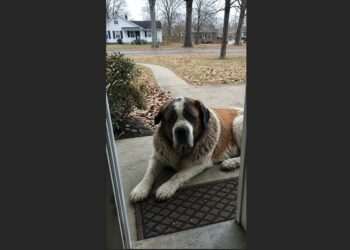
When Zach walked into the animal shelter, he wasn’t looking for a young, energetic dog with years of life ahead of him.
He wasn’t searching for the easiest companion or the healthiest animal available.
Instead, he found Henry.
Henry was 16 years old, weak, and living with a cancer diagnosis. His previous family had surrendered him, and his condition made the future uncertain.
At an age when many dogs are slowing down, Henry was facing a serious illness without the comfort of a familiar home.
He was quiet and appeared exhausted.
There was little reason to believe he had much time left.
For most prospective adopters, Henry’s situation would have been difficult to accept. Taking home an elderly dog with cancer meant preparing for the possibility of losing him almost immediately.
But Zach couldn’t stop thinking about what it would mean for Henry to spend whatever time remained alone in a shelter kennel.
So he made a decision that would change the dog’s future.
He brought Henry home, knowing their time together might be measured in days rather than years.
What happened afterward was something neither of them could have anticipated.
A Senior Dog Facing an Uncertain Future
By the time Henry reached the shelter, he was already well into his senior years.
At 16, he had lived longer than many dogs ever do.
His body showed the effects of age, and his cancer diagnosis added another serious concern.
The original circumstances of his surrender were difficult enough. Henry had lost the home he knew at a time when stability and comfort were especially important.
Now he was in an unfamiliar environment, surrounded by the changes and sounds of shelter life.
The staff could provide food, care, and attention, but there was no way to make a kennel feel exactly like a familiar home.
For a healthy young dog, a shelter stay may be a temporary interruption before another family comes along.
For Henry, the situation was more complicated.
His age and illness made adoption uncertain. Anyone considering taking him home would have to understand that he might need significant medical care and that his remaining time could be short.
Those are not small considerations.
Caring for a dog near the end of life can involve difficult decisions, emotional strain, and the knowledge that even the most loving home cannot guarantee a particular outcome.
Henry needed someone willing to accept those uncertainties.
He also needed somewhere comfortable to rest.
Zach Wasn’t Looking for the Dog Everyone Else Wanted
When Zach met Henry, he saw an animal whose needs were very different from those of a typical adoption candidate.
Henry wasn’t bouncing around his kennel or eagerly demonstrating how playful he could be.
He was worn down.
His quiet demeanor and frail appearance suggested a dog who was struggling.
Zach understood that bringing him home wouldn’t necessarily mean starting a long new chapter together.
There might be very little time.
Perhaps days.
Perhaps a few weeks.
There was no reliable way to know.
But the uncertainty didn’t prevent Zach from seeing what he could offer.
Even if Henry’s condition couldn’t be improved, a peaceful home would allow him to spend his remaining days somewhere more comfortable than a shelter kennel.
He could have a place to rest, someone nearby, and the reassurance of ordinary daily companionship.
Zach wasn’t expecting a dramatic recovery.
He was thinking about Henry’s immediate needs.
And the more he considered the dog’s circumstances, the harder it became to accept the possibility that Henry might spend his final days without a family.
So Zach took him home.
There were no guarantees attached to that decision.
Only the intention to make whatever time Henry had left as comfortable as possible.
The First Morning Brought an Unexpected Change
Zach had prepared himself for a quiet period of caring for a very old, sick dog.
He knew Henry was weak.
He understood that a change in environment couldn’t erase a cancer diagnosis or reverse the effects of age.
Still, he hoped that a calmer setting would help Henry feel more comfortable.
Then came Henry’s first morning at home.
Something about the senior dog’s behavior seemed different.
His eyes appeared softer.
He showed signs of curiosity that hadn’t been obvious before.
There was a new attentiveness about him, a small but noticeable change from the exhausted dog Zach had first encountered at the shelter.
It wasn’t a sudden medical recovery.
Henry was still 16, and his cancer remained a serious concern.
But he seemed more engaged with the world around him.
For Zach, that difference mattered.
He had brought Henry home believing that comfort might be the only thing he could give him.
Now he was seeing small signs that Henry still had an interest in life beyond simply resting.
The change didn’t prove that his illness was improving, and no one could know exactly what had caused it.
Perhaps the quieter environment helped him relax.
Perhaps the attention and companionship made him feel more secure.
Whatever the reason, Henry seemed different from the dog Zach had met at the shelter.
And that change led Zach to reconsider what might be possible.
What Began as Comfort Care Became a Chance for More Time
When Zach first brought Henry home, his goal had been straightforward.
He wanted to give an elderly dog a peaceful place to spend the time he had left.
But watching Henry become more alert and curious raised a new question.
What if there was still an opportunity to help him live longer?
Henry’s cancer diagnosis hadn’t changed.
There was no reason to minimize the seriousness of his condition.
But Zach was no longer seeing only a frail dog who needed a comfortable place to rest.
He was also seeing a dog who seemed interested in exploring his new surroundings and participating in life.
That didn’t mean surgery would necessarily be successful.
At Henry’s age, any significant medical intervention required serious consideration.
But Zach decided to pursue treatment rather than assume that nothing more could be done.
He arranged surgery to remove the cancer.
It was a hopeful decision, but not one that came with a promise.
Henry would still have to undergo the procedure and recover afterward.
No one could know in advance how his body would respond.
For Zach, however, the possibility of giving Henry additional time was worth pursuing.
The dog he had brought home for comfort was being offered a chance at something more.
Henry Underwent Surgery — and His Recovery Surprised Everyone
The operation went well.
For a dog who had initially been expected to have very little time remaining, that was an encouraging development.
But successful surgery was only one part of Henry’s journey.
He still needed to recover.
His age remained an important consideration, and improvement would have to be measured by how he was actually doing rather than by expectations alone.
There was no reason to assume that a 16-year-old dog would suddenly behave like a puppy.
Yet as time passed, Henry began doing things that seemed increasingly unlikely when Zach first met him.
He grew stronger.
He became more active.
And eventually, he started running again.
The same dog who had arrived at the shelter weak and exhausted was now moving with a level of energy that surprised the people following his progress.
He began playing.
He explored his surroundings.
He showed more of the curiosity that Zach had first noticed on that remarkable morning after bringing him home.
These changes didn’t happen all at once.
They developed as Henry continued recovering.
And with each passing month, his progress became harder to overlook.
Henry had been brought home with the expectation that he might have only a short time left. Months later, he was running, playing, and enjoying a life that once seemed out of reach.
The Dog Who Seemed Defeated Began Enjoying Everyday Life Again
One of the most meaningful parts of Henry’s recovery was how ordinary his new activities were.
Running.
Playing.
Exploring.
For a healthy dog, those behaviors might seem unremarkable.
They are the kinds of things people expect when they welcome an animal into their home.
But for Henry, they represented an enormous change.
He had been surrendered following a cancer diagnosis.
He had entered the shelter at 16 years old, physically weak and with an uncertain prognosis.
Zach had taken him home expecting that his role might be limited to keeping Henry comfortable until the end.
Now Henry was showing that he still had energy and interest in the world around him.
His improvement continued over the following months.
That was particularly encouraging because it meant the changes weren’t limited to a brief period of excitement after arriving in a new home.
Henry had continued making progress after surgery.
He was becoming stronger and more active over time.
His recovery didn’t erase his age or guarantee that future medical challenges wouldn’t arise.
But it gave him something that had seemed unlikely when he first reached the shelter.
More time to live comfortably.
More opportunities to enjoy familiar activities.
And more days spent receiving the attention and care he needed.
For Zach, those everyday experiences were a meaningful return on the decision he had made.
He hadn’t brought Henry home because he expected an extraordinary outcome.
He had brought him home because he believed the dog deserved comfort regardless of what happened next.
The improvement was something neither of them had been promised.
Henry’s Story Began Reaching People Beyond His New Home
As Henry continued recovering, word of his journey spread.
People were moved by the circumstances that had brought him and Zach together.
A 16-year-old dog had been surrendered after being diagnosed with cancer.
A man had taken him home knowing he might have very little time left.
Then, after receiving care and undergoing surgery, Henry began showing an unexpected level of strength and enthusiasm.
His story challenged the assumption that an elderly, seriously ill dog necessarily had nothing more to enjoy.
The transformation attracted attention.
Soon, people began expressing interest in adopting Henry.
For a dog whose age and medical condition had initially made his future so uncertain, that response was significant.
He had once seemed like an unlikely adoption candidate.
Now families were reaching out because they wanted to offer him a home.
The available account doesn’t establish whether Henry eventually joined another family or remained in Zach’s care.
What it does make clear is that his circumstances had changed dramatically.
The dog who had once needed someone simply willing to provide end-of-life comfort was now receiving adoption interest from people who saw the possibility of a meaningful future with him.
That was a remarkable change from where his journey had begun.
A Second Chance Doesn’t Always Begin With a Promise of a Happy Ending
There is an important distinction in Henry’s story.
Zach didn’t know that surgery would be possible when he first brought Henry home.
He didn’t know the operation would go well.
He couldn’t have predicted that Henry would eventually begin running and playing again.
And he certainly couldn’t have known that people would later be interested in adopting the same senior dog whose circumstances had initially seemed so discouraging.
He made his decision without any of those guarantees.
All he knew was that Henry was elderly, unwell, and facing an uncertain future.
That was enough for him to offer the dog a place to stay.
The decision mattered before the successful surgery.
It mattered before Henry regained his strength.
And it would still have mattered if Henry had lived only a few comfortable days.
That is what makes Zach’s choice meaningful.
He wasn’t offering care in exchange for an expected recovery.
He was helping an animal whose circumstances made that recovery uncertain.
The unexpected improvement added another chapter to Henry’s story, but it wasn’t the only reason Zach’s decision deserved attention.
Why Senior Dogs Like Henry Are Worth a Second Look
Henry’s journey is also a reminder of the difficult choices that surround senior dog adoption.
Older animals can be wonderful companions, but their needs may be different from those of younger pets.
They may require more veterinary care, gentler routines, or additional attention to mobility and comfort.
Some arrive at shelters with chronic illnesses or medical histories that make prospective adopters hesitant.
Those concerns are understandable.
Caring for an aging animal requires preparation, patience, and a willingness to face difficult possibilities.
But age alone doesn’t tell the entire story of what a dog can still experience.
Even when an animal has limited time remaining, that time can contain comfort, companionship, and meaningful everyday experiences.
Henry’s case went further than anyone initially expected.
After surgery, he regained enough strength to become active again.
But his story shouldn’t be taken to mean that every elderly dog with cancer will experience the same outcome.
Medical conditions differ, and treatment decisions depend on many factors.
For some dogs, the kindest option may be comfort-focused care.
For others, appropriate treatment may provide additional time and a better quality of life.
What matters is recognizing the individual animal’s needs and possibilities.
Henry was fortunate that Zach was willing to see him as more than his age and diagnosis.
He saw a dog who needed help.
Then, as Henry’s condition and behavior changed, he remained open to the possibility that more could be done.
That willingness made an enormous difference.
Zach Went Looking to Help One Dog. Henry’s Future Became Something Neither Could Have Predicted.
When Henry first arrived at the shelter, his circumstances seemed bleak.
He was 16 years old, physically weak, and living with cancer.
His previous family had surrendered him, and there was no certainty that another person would be willing to take responsibility for his care.
Zach changed that when he brought Henry home.
At first, the arrangement was simply about comfort.
A safe place.
A familiar person nearby.
A little peace during an uncertain time.
But the first morning brought an encouraging change in Henry’s behavior.
That change led Zach to consider treatment.
The surgery went well, and Henry began recovering in ways that surprised those who had expected his remaining time to be brief.
Month after month, he grew stronger.
He ran again.
He played.
He explored.
And eventually, his story reached families who wanted to know whether they could adopt him.
None of those developments could have been guaranteed when Zach first encountered the quiet senior dog at the shelter.
The future Henry ultimately found was different from the one Zach had prepared himself for.
There is something deeply reassuring about that.
Not because every difficult diagnosis can be overcome or because love alone can treat a serious illness.
But because a compassionate decision can matter even when the outcome is unknown.
Zach had been prepared to give Henry a peaceful ending.
Instead, he was given the opportunity to watch the old dog enjoy life again.
And Henry, who had once seemed too weak to do much more than rest, was now moving through the world with renewed energy.
He had gone home for comfort. What followed was time neither of them had expected to have.