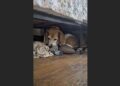
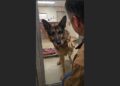
For eleven months, Maya waited at our animal shelter for someone to take her home.
She was a beautiful Border Collie who had spent far too long watching other dogs leave with their new families.
Then, finally, someone adopted her.
We thought her long wait was over.
But the very next day, Maya was brought back.
I still remember seeing her return through the shelter doors.
We had barely begun celebrating her adoption, and already she was back in the place we’d hoped she’d left behind for good.
I don’t know exactly what Maya understood about those two days.
But her behavior after the return worried me.
She withdrew to the farthest corner of her kennel.
She spent long periods curled up with her head resting on her front paws.
When visitors approached, she rarely looked up.
The lively, intelligent Border Collie we’d hoped to place in a permanent home seemed to have lost interest in the people walking past.
Then, on a rainy Thursday afternoon, an elderly man named David came into the shelter.
He wasn’t looking for a puppy.
He didn’t ask to see our most playful dogs.
Instead, he stopped in front of Maya’s kennel, lowered himself onto the cold floor, and began speaking quietly.
“I know what it feels like,” he told her. “I know what it means to wait for someone who isn’t coming back.”
Maya didn’t move.
But one of her ears shifted toward his voice.
David continued sitting there.
And more than an hour later, something happened that I hadn’t seen from Maya in months.
She stood up.
Walked toward the kennel gate.
And gently rested her forehead against the old man’s hand.
Then her tail began to move.
Eleven Months of Waiting
I’ve worked with shelter dogs long enough to know that finding the right home can take time.
Some animals attract attention almost immediately.
Others wait weeks or months, even when they have qualities that could make them wonderful companions.
Maya was one of the dogs whose wait seemed to stretch endlessly.
She was a Border Collie, a breed known for intelligence, energy, and a strong need for appropriate activity and engagement.
But an individual dog’s behavior isn’t determined by breed alone.
Each animal arrives with a different history and temperament.
Maya had her own needs, and we wanted to find a family prepared to meet them.
For eleven months, we continued hoping someone would choose her.
I watched visitors pass through the shelter.
Some preferred small dogs.
Others were interested in puppies.
A few spent time considering the older or quieter animals.
But Maya remained.
The longer she stayed, the more I found myself worrying about her future.
A shelter can provide food, medical attention, and dedicated caregivers.
But it cannot completely reproduce the consistency of a suitable home.
Maya needed a family willing to make a lasting commitment.
Then, after eleven months, an adoption was arranged.
For the first time in a long while, I allowed myself to believe her wait was finally over.
The Adoption That Lasted One Day
Maya left the shelter with her new adopters.
We were hopeful.
After nearly a year, she had a chance to begin life in a home.
But the next day, she was returned.
I won’t pretend to know every reason behind that decision.
Sometimes adoptions fail because expectations and an animal’s needs don’t match.
Sometimes a family discovers that the arrangement isn’t suitable.
Whatever happened during Maya’s brief time away, the result was the same.
She came back.
And the change in her behavior was difficult to watch.
She retreated to the back of her kennel.
She curled up tightly.
Often, she rested her head on her front paws and kept her eyes closed.
When people walked by, she showed little interest.
We continued caring for her and paying attention to her condition, but she remained withdrawn.
I couldn’t know whether she understood the return as another rejection.
Dogs don’t interpret events exactly as people do.
Still, the sudden change in environment and routine could certainly have been unsettling.
And from what I observed, Maya was having a difficult time adjusting.
I began wondering how long it would take before someone gave her another chance.
The Dog at the Back of the Kennel
Every day, I checked on Maya.
Sometimes I stopped outside her enclosure and watched her for a moment.
She usually remained in the same area.
Her body was curled toward the back wall.
Her head rested on her paws.
Her eyes were often closed.
She rarely approached the gate when visitors came through.
Other dogs barked or moved forward to investigate.
Maya usually stayed where she was.
I didn’t want to assume I knew what she was feeling.
Her withdrawal could have reflected stress, uncertainty, or difficulty adapting to repeated changes.
But it was clear that she wasn’t comfortable engaging with people the way we hoped she eventually would.
We tried to provide a predictable routine.
We gave her time.
And we continued looking for someone who might be willing to understand her needs.
But the days passed without a suitable adoption.
I worried that the longer Maya remained withdrawn, the harder it might become for visitors to notice her.
Then, just as my confidence was beginning to fade, David arrived.
A Rainy Thursday Afternoon
It was a gray, rainy Thursday.
A fine rain was falling outside, and the shelter was going through an ordinary afternoon.
I was behind the reception counter, sorting through old adoption records.
Then the entrance door opened.
An elderly man stepped inside.
He moved slowly and without hurry.
He placed his wet umbrella in the stand near the entrance and carefully wiped his shoes on the mat.
Then he looked around the room.
He was tall, although his shoulders had become slightly stooped with age.
His silver hair framed a face marked by deep lines.
He wore an old canvas jacket with worn elbows, and a neatly folded handkerchief was visible in one pocket.
There was something quiet and deliberate about the way he carried himself.
I approached him.
“Hello. How can I help you today?”
He looked at me for a moment.
Then he answered hesitantly.
“I’d like… I’d like to adopt a dog.”
His name was David.
I invited him to come with me so we could meet some of the animals.
At the time, I had no reason to expect that his visit would be different from any other adoption appointment.
The Man Who Didn’t Rush
We walked down the main hallway.
Dogs reacted to our presence in different ways.
Some barked excitedly.
Others hurried toward the front of their kennels.
A few jumped up, hoping to attract attention.
David continued walking at a steady pace.
He didn’t seem particularly interested in finding the most energetic dog.
He didn’t ask to see only puppies or animals with a specific appearance.
He simply looked at the dogs as we passed.
I wondered what sort of companion he had in mind.
Perhaps he wanted someone quiet.
Perhaps he was looking for an older animal.
I didn’t know.
I was preparing to ask him more about his preferences when we reached Maya’s kennel.
David stopped.
He looked through the gate.
Maya was lying at the back, curled up with her head on her paws.
She hadn’t approached when we entered the hallway.
She barely seemed to acknowledge us.
I expected David to continue walking.
Instead, he remained where he was.
The Border Collie Who Wouldn’t Look Up
David stood quietly in front of Maya’s kennel.
He watched her for a long moment.
I began explaining a little about her history.
She was a Border Collie.
She’d spent eleven months waiting for adoption.
And after finally leaving, she’d been returned the next day.
Since then, she’d been noticeably withdrawn.
David listened.
He didn’t immediately ask whether she was friendly or how quickly she could be trained.
He simply looked at her.
Maya remained curled up.
The noise from other kennels continued around us.
Visitors moved through the hallway.
But David didn’t appear eager to move on.
Then, slowly, he lowered himself onto the floor.
He sat on the cold tile outside Maya’s kennel.
I was surprised.
Many visitors crouch briefly to see a dog more closely.
Few elderly visitors choose to sit directly on the shelter floor.
But David seemed unconcerned about his clothes.
He settled into a comfortable position, facing Maya.
He didn’t reach through the bars.
He didn’t offer a treat.
And he didn’t try to get her attention by making excited noises.
He simply sat there.
Then he began speaking.
“I Know What It Feels Like”
David’s voice was quiet.
“I know what it feels like, you know,” he said. “I know what it means to wait for someone who isn’t coming back.”
Maya didn’t lift her head.
But I noticed one of her ears move slightly toward him.
David continued.
He explained that his life partner had died two years earlier.
For months afterward, he had spent long periods sitting in his living room, struggling with the silence of a house that no longer felt the same.
He missed the familiar footsteps.
The ordinary sounds.
The comfort of knowing someone else was nearby.
“Waiting is a cruel thing,” he said. “It doesn’t always break you all at once. Sometimes it wears you down a little each day.”
I stood nearby, listening.
David wasn’t telling me the story directly.
He was speaking to Maya.
Of course, she couldn’t understand his words as another person would.
But she could hear the sound and rhythm of his voice.
And she was becoming familiar with the quiet man sitting outside her kennel.
I watched her carefully.
She still hadn’t stood.
But she was listening.
The Life David Had Lost
As David spoke, I began to understand why he seemed so willing to remain there.
His partner’s death had changed his everyday life.
Two years had passed, but he still missed the person who had shared his home.
He described sitting alone in his living room, accustomed to listening for movements that were no longer part of his day.
He hadn’t come to the shelter expecting a dog to erase that loss.
He seemed to understand that companionship couldn’t undo the past.
But perhaps it could make ordinary days feel less lonely.
I looked toward Maya.
She was still curled up at the back of her kennel.
Her eyes were closed again.
I couldn’t know whether she found David’s voice reassuring.
But his presence wasn’t making her retreat farther.
And unlike visitors who sometimes tried to encourage a response immediately, he appeared content to wait.
There was no urgency in his behavior.
He wasn’t asking Maya to perform.
He wasn’t trying to prove that she liked him.
He was simply giving her the opportunity to become familiar with him.
“I’m Here. And I’m Not in a Hurry.”
After a while, David spoke again.
“I didn’t come here expecting you to love me, Maya.”
He rested his hands quietly in his lap.
“I’m not asking you to wag your tail, jump into my arms, or even trust me today.”
He looked toward the back of the kennel.
“I only want you to know one thing. I’m here. And I’m not in a hurry.”
I felt my throat tighten.
David continued.
“If you need to stay in that corner for hours, I’ll sit here with you. And if you don’t want to come out today, I can come back tomorrow. And the day after that.”
He paused.
“Because loneliness feels a little lighter when you don’t have to carry it alone.”
I didn’t interrupt.
There wasn’t any reason to hurry the conversation.
Maya needed time.
And David was offering exactly that.
I realized he wasn’t approaching her as a problem to solve.
He wasn’t expecting immediate affection in exchange for adopting her.
He seemed prepared to accept that trust might take longer than a single afternoon.
For Maya, that kind of patience could be important.
More Than an Hour on the Floor
Time passed.
The shelter continued its usual activities.
The telephone rang at reception.
People walked through the hallway.
Other dogs barked from their kennels.
Outside, the rain continued falling.
David remained seated.
Sometimes he spoke softly.
Other times, he simply watched Maya and allowed the silence to continue.
More than an hour passed.
I checked on them periodically.
Maya hadn’t suddenly become playful or outgoing.
She remained mostly still.
But something about the interaction felt different from the usual visits.
David had given her an opportunity to observe him without pressure.
He hadn’t tried to pull her toward the gate.
He hadn’t reached into the kennel to touch her before she was ready.
And he hadn’t walked away because she failed to respond quickly.
Then I noticed movement at the back of the enclosure.
Maya opened her eyes.
She was looking toward David.
The First Time She Raised Her Head
At first, the movement was barely noticeable.
Maya lifted her head from her paws.
She looked toward the man sitting outside the gate.
David remained still.
I watched as she shifted her position.
Then, slowly, she stood.
Her movements were cautious.
She seemed uncertain about coming closer.
But she took a step.
Then another.
She stopped briefly, watching David.
He didn’t lean toward her.
He didn’t call her name repeatedly.
He simply waited.
Maya continued across the kennel.
I felt my heart begin beating faster.
I had spent months seeing her curled up at the back.
Now she was approaching a visitor on her own.
I tried not to make a sound.
I didn’t want to startle her.
She reached the front of the kennel and lowered her nose toward the gate.
David gently presented the back of his hand where she could investigate it safely.
Maya leaned forward.
The Forehead Against His Hand
Maya sniffed David’s hand for a long moment.
He remained still.
Then she moved a little closer to the metal gate.
She gently pressed her forehead against his waiting fingers.
David didn’t pull away.
He allowed her to remain in contact for as long as she wanted.
I watched, almost unable to believe what I was seeing.
This was the Border Collie who had spent so much time withdrawn at the back of her kennel.
The dog who’d shown little interest in visitors since being returned.
Now she was standing at the front, voluntarily seeking contact with someone she’d met that afternoon.
Then her tail began moving.
Slowly at first.
A gentle movement from side to side.
It was the first clear tail wag I’d seen from Maya in months.
I felt tears running down my face.
I couldn’t know exactly what she was feeling.
And I wouldn’t claim that one interaction meant every difficulty had disappeared.
But her behavior had changed.
She’d approached.
She’d made contact.
And she seemed comfortable enough to remain near David.
For the first time in a long while, I felt genuinely hopeful about her future.
The Question I Finally Asked
David continued sitting beside the kennel.
Maya remained close to the gate.
He looked toward me.
His eyes were wet.
I knew we still needed to discuss the responsibilities involved in adopting her.
A single encouraging interaction couldn’t guarantee that Maya would immediately adjust to a new home.
She was an intelligent, active breed with needs that would have to be met appropriately.
And her recent history suggested she might require additional time and patience.
But David had already shown something important.
He was willing to let her approach at her own pace.
He didn’t expect affection on demand.
And he seemed to understand that providing a stable home would involve more than simply wanting to rescue her.
I moved a little closer.
“David… would you like us to fill out the adoption paperwork?”
He turned toward me.
A smile spread across his face.
“Yes,” he said. “It’s time to go home.”
Leaving the Shelter Together
We completed the adoption arrangements that afternoon.
We discussed Maya’s needs and the importance of allowing her to adjust gradually.
David listened carefully.
He understood that bringing Maya home didn’t mean she’d become comfortable immediately.
She might need quiet places to rest.
She might take time before approaching him freely.
And there could be moments when unfamiliar sounds or situations made her uneasy.
David wasn’t discouraged.
He was prepared to provide patience and consistency.
Later that day, Maya left the shelter with him.
I watched them make their way toward his car through the rain.
I remembered how she’d looked when she was brought back after her first adoption.
Curled up.
Withdrawn.
Barely interested in the people around her.
Now she was leaving again.
This time, with a man who had spent more than an hour sitting on the floor simply to give her an opportunity to approach.
I hoped the adoption would work.
I couldn’t know the future.
But I felt encouraged by what I’d seen.
And for the first time since Maya’s return, I found myself imagining her resting comfortably in a permanent home.
The House That Had Been Too Quiet
For David, bringing Maya home meant another significant change.
He had lived with the absence of his partner for two years.
During that time, his house had become a place where silence sometimes felt difficult to bear.
Now there was a dog.
A cautious Border Collie who needed a stable routine and someone willing to understand her behavior.
The relationship wouldn’t be effortless.
David would have to learn what made Maya comfortable.
Maya would have to become familiar with a new environment.
And neither could expect the other to respond perfectly from the beginning.
But David seemed ready for that.
He knew how much patience could matter during difficult periods.
He didn’t need Maya to make him forget his loss.
He wanted the opportunity to care for another living creature and share the ordinary routines of daily life.
And Maya needed someone who could offer her a dependable home without expecting instant trust.
It was a promising beginning.
But I knew the real test would come during the weeks that followed.
The Envelope of Photographs
A few weeks later, David returned to the shelter.
This time, he wasn’t carrying an umbrella and asking about adoption.
He was carrying an envelope.
Inside were photographs of Maya.
I remember how relieved I felt when he began showing them to me.
In one photograph, she was lying comfortably on a soft rug in front of the fireplace.
In another, she was exploring a large green garden.
There was also a picture of Maya sitting on the couch beside David.
She looked comfortable in the familiar surroundings.
Her coat appeared well cared for.
And her expression was far more engaged than the one I remembered from her last weeks at the shelter.
I studied the pictures for a while.
It was difficult to reconcile them with the dog who had spent so long lying at the back of her kennel.
Yet there she was.
Living in a home.
Resting near someone she knew.
And beginning to enjoy ordinary activities.
David sat beside me.
Then he began telling me how their life together had changed.
“She’s the One Who Rescued Me.”
David looked toward the photographs.
“You know, when I came here that day, I thought I was doing a good thing by rescuing an unwanted dog.”
He paused.
“But the truth is, she’s the one who rescued me.”
I listened.
He explained that Maya had brought movement and companionship back into a house that had become painfully quiet.
He talked to her during the day.
They went on walks together.
And when he returned home after going out, Maya often waited near the door.
At night, she slept at the foot of his bed.
David smiled as he described their routine.
“She brought life and conversation back into a house that had become too quiet,” he said. “She sleeps at the foot of my bed, comes with me on walks, and waits by the door when I go out.”
Then he added:
“We helped each other heal.”
I understood what he meant.
Maya couldn’t erase the loss of David’s partner.
And David couldn’t undo the difficult experiences Maya had lived through.
But they had found companionship.
They had developed familiar routines.
And both seemed to be benefiting from having someone else nearby.
The Border Collie on the Couch
I looked again at the photograph of Maya sitting beside David.
It wasn’t a dramatic image.
Just an elderly man and a dog sharing a couch.
But I remembered the first time David met her.
The way she remained curled at the back of the kennel.
The long wait while he sat outside.
And the moment she finally walked toward him.
Now she was comfortable enough to sit beside him in his living room.
That photograph said more to me than any elaborate description could have.
She had a familiar place to rest.
A garden to explore.
A person who enjoyed her company.
And a daily routine that suited their needs.
I was especially glad David hadn’t expected her to become affectionate immediately.
He’d offered her time to adjust.
And from what he described, Maya had gradually become more comfortable.
I couldn’t know exactly how she experienced those changes.
But I could see the results.
The Border Collie who once seemed reluctant to engage with anyone was now taking part in ordinary family life.
What David Understood Before I Did
As I listened to David, I thought about the afternoon he first arrived.
He hadn’t asked whether Maya would greet him excitedly.
He hadn’t demanded that she come to the kennel gate.
He’d simply sat down.
I remembered being surprised that an elderly man would choose to sit on the cold tile for so long.
At the time, I was focused on whether Maya would respond.
I wanted to see her lift her head.
I wanted to see her approach.
And when she finally did, I was overwhelmed.
But David seemed to understand something I’d been struggling to accept.
A frightened or withdrawn dog might need a long period of observation before feeling comfortable approaching someone.
That doesn’t mean the time is wasted.
It may be part of the process of becoming familiar with a person.
David had given Maya a quiet opportunity to investigate him.
He hadn’t attached conditions to the encounter.
And after more than an hour, she chose to approach.
That didn’t guarantee a perfect adoption.
But it revealed a way of interacting with her that was more useful than trying to rush her into affection.
Two Years Without His Partner
David’s story stayed with me too.
He had lost his life partner two years before coming to the shelter.
He described the difficult silence that followed.
The evenings sitting alone.
The familiar footsteps he missed.
And the feeling that his house had become much emptier.
I couldn’t compare that human loss directly with Maya’s experience.
They were different.
David understood what had happened to his partner.
Maya couldn’t understand her adoption history in the same way.
But both had experienced major changes in their familiar routines.
And both seemed to benefit from building a new one.
For David, caring for Maya gave structure to his days.
He had a companion to walk with.
Someone to provide meals and attention.
A dog who rested nearby in the evenings.
For Maya, David offered predictable care, familiar surroundings, and time to adjust.
It was a relationship built through ordinary acts.
Not a single dramatic rescue.
But repeated days of living together.
And I think that was what made it so meaningful.
The One-Day Adoption I Couldn’t Forget
I still remembered the family who had adopted Maya before David.
For eleven months, she’d waited.
Then she left the shelter.
The next day, she came back.
I’d seen failed adoptions before, but this one affected me particularly because of how withdrawn Maya became afterward.
I worried that the experience had made it harder for her to engage with future visitors.
She spent so much time at the back of her kennel that people could easily walk past without seeing much of her personality.
I couldn’t know exactly why she’d become so quiet.
But her behavior concerned me.
When David arrived, he didn’t judge her by how she greeted him.
He didn’t expect her to demonstrate all the qualities of an ideal pet during the first few minutes.
Instead, he gave her time.
He seemed willing to see who she might become in a stable environment, not only how she behaved in a stressful one.
That mattered.
And it reminded me why a shelter dog’s behavior should be understood in context.
The animal in front of us may be responding to experiences we know very little about.
We have to be willing to observe carefully.
And sometimes, we have to wait.
The Dog Who Finally Came Forward
Of all the moments I’ve spent with Maya, I remember the first time she approached David most clearly.
He had been sitting outside her kennel for more than an hour.
Other dogs continued barking.
The shelter telephone rang.
People passed through the hallway.
But David remained where he was.
Then Maya opened her eyes.
She lifted her head.
Stood slowly.
And began walking toward the gate.
I watched every step.
I was afraid that if someone moved too quickly or spoke too loudly, she’d retreat.
But David stayed calm.
Maya reached him.
She sniffed his hand.
Then gently rested her forehead against his fingers.
And her tail moved.
Slowly.
Side to side.
I remember feeling tears run down my cheeks.
After months of seeing her withdrawn, even that small gesture felt extraordinary.
Not because Maya had suddenly become a completely different dog.
But because she’d chosen to make contact.
And because the man who’d given her time was still sitting there to receive it.
The Family They Became
When David showed me the photographs, I felt a kind of relief that’s difficult to describe.
I’d spent so long worrying about Maya’s future.
Now I could see that she’d begun settling into a home.
There was a photograph of her resting near the fireplace.
One of her exploring the garden.
And another of her on the couch beside David.
She no longer seemed like a dog whose entire world was limited to a kennel.
She was becoming familiar with her surroundings and the person caring for her.
David was also adjusting.
The house he’d described as painfully quiet now had another living companion.
There were walks to plan.
Meals to prepare.
And a dog who often rested nearby.
He still missed the partner he’d lost.
I knew that wouldn’t simply disappear.
But he had another relationship to care for.
And he seemed grateful for it.
I thought about how David had described their connection.
“We helped each other heal.”
I wouldn’t interpret that as a cure for grief or difficult experiences.
But I understood it as an expression of how much their companionship meant to him.
The Lesson That Stayed With Me
Working in an animal shelter can be emotionally demanding.
There are happy adoptions.
There are difficult returns.
And there are animals whose progress takes longer than anyone expects.
Sometimes, despite our best efforts, we cannot find an immediate solution.
Maya reminded me of that.
Her first adoption had lasted only one day.
Afterward, she became withdrawn.
For a while, I worried that she might spend much longer at the shelter.
Then David arrived.
He didn’t perform some extraordinary act.
He didn’t have a secret method for winning over frightened dogs.
He simply sat down and gave Maya time to observe him.
He spoke gently.
He respected her distance.
And he allowed her to approach when she was ready.
Then he followed through by providing a home and the consistent care she needed.
I learned that compassion isn’t always demonstrated through dramatic gestures.
Sometimes it’s shown by being patient when progress is slow.
By recognizing that an animal may need space.
And by continuing to provide care without demanding an immediate reward.
Those things can make a meaningful difference.
The Rainy Afternoon I Still Remember
Sometimes, when I’m working at the reception desk, I remember the Thursday afternoon David walked through the entrance.
The rain outside.
His old canvas jacket.
The carefully folded handkerchief in his pocket.
And the way he hesitated before telling me he wanted to adopt a dog.
I remember taking him down the hallway.
Watching other dogs rush toward their gates.
Then seeing him stop in front of Maya.
He didn’t ask me to bring out a different dog.
He didn’t tell me she seemed too sad or difficult.
He lowered himself onto the floor.
And began speaking.
“I know what it feels like,” he told her.
Then he stayed.
For more than an hour.
Until Maya finally raised her head.
I remember how slowly she walked across the kennel.
How she sniffed his hand.
And how gently she pressed her forehead against his fingers.
Most of all, I remember that small movement of her tail.
After all those months, it was a change I’d been hoping to see.
The Home Maya Finally Found
Maya now has a home with David.
She has a soft rug near the fireplace.
A garden to explore.
Walks with someone who enjoys her company.
And a familiar place to sleep at the foot of his bed.
David has a companion too.
Someone who moves through the house with him.
Someone who joins him on his walks.
And a dog who often waits near the door when he goes out.
Their life together isn’t a perfect fairy tale.
Maya may still encounter situations that make her cautious.
David still carries the sadness of losing his partner.
But they’ve developed something valuable.
A shared routine.
A comfortable home.
And the companionship neither had when David first came to the shelter.
I like to think about the photographs he brought me.
Especially the one of Maya sitting beside him on the couch.
She looks comfortable.
He looks happy to have her there.
It is such an ordinary picture.
And after everything that happened, that’s exactly why I treasure it.
Eleven Months, One Day, and a Second Chance
For eleven months, Maya waited for a family.
Then someone adopted her.
One day later, she was returned.
After that, she spent long periods lying at the back of her kennel, showing little interest in visitors.
I worried about her.
I wondered whether someone would ever give her the patience she needed.
Then an elderly man walked into the shelter on a rainy Thursday afternoon.
His name was David.
He had lost his life partner two years earlier.
And he understood what it was like to live with an absence that changed every ordinary part of the day.
When he saw Maya, he sat down outside her kennel.
He didn’t ask her to wag her tail.
He didn’t try to make her approach.
He simply told her he wasn’t in a hurry.
More than an hour later, Maya stood and walked toward him.
She rested her forehead against his hand.
And for the first time in months, I saw her tail begin to move.
David adopted her that afternoon.
A few weeks later, he returned with photographs.
Maya was resting near a fireplace.
Exploring a garden.
And sitting beside him on the couch.
He told me how much life she’d brought back into his quiet home.
And I thought about the dog who had seemed almost unreachable after being returned.
I still remember the words David spoke when he first sat outside her kennel.
“I’m here. And I’m not in a hurry.”
Sometimes I think those were exactly the words that mattered most.
Not because Maya understood their meaning.
But because David’s behavior reflected them.
He waited.
He gave her space.
And when she finally came forward, he was there.
After eleven months at the shelter and an adoption that lasted only one day, Maya finally found someone willing to let her adjust at her own pace.
And David, who had spent two years missing the familiar presence of someone he loved, found a companion who made his house feel less empty.
Whenever I remember them, I picture an elderly man sitting on a cold shelter floor.
A frightened Border Collie slowly approaching the gate.
One open hand.
A gentle touch.
And a tail beginning to wag.
It took Maya a long time to find her way home.
But when she finally did, she wasn’t the only one who was glad to have someone beside her.
Editor’s Note: The characters in this story are fictional. Through these stories, we hope to share the intelligence, loyalty, compassion, and loving nature of dogs with people everywhere.