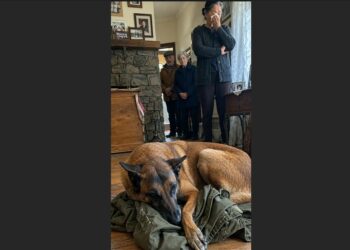
Every morning, Murphy made the same journey across my living room.
It was not a long distance.
From his bed beside the couch to the front window, maybe twenty feet.
For most dogs, it would have taken seconds.
For Murphy, it took time.
His front legs pulled first. His back legs followed unevenly, sometimes supporting him for several steps and sometimes slipping beneath him on the floor.
Still, he kept moving toward the same patch of sunlight.
Once he reached the window, he settled onto the rug and watched the neighborhood wake up.
Dogs passed on leashes.
Children rode bicycles.
Birds hopped through the yard.
Rabbits occasionally crossed the empty lot across the street.
Murphy watched all of it.
His ears lifted.
His tail moved.
Sometimes his body leaned toward the glass as though every sound outside deserved his full attention.
I used to look at him and think about everything he could not do.
Eventually, I realized Murphy seemed far more interested in everything he still could.
The Shelter Had Called Him Buddy
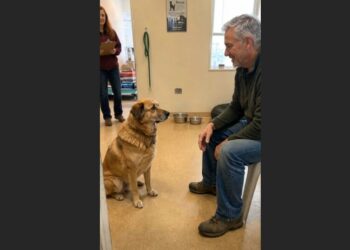
The first time I saw him, he was lying in the corner of a county shelter kennel.
His paperwork said his name was Buddy.
By then, staff used the name only occasionally.
He had been there long enough that routine mattered more than what someone had written on a form.
He was young.
Thin.
His ears looked almost too large for his head.
When I stopped at his kennel, he did not bark.
He watched me through the door.
Then his tail tapped once against the blanket.
A veterinarian later sat with me and explained what the shelter knew about his condition.
Both of his hind legs were severely malformed.
The exact cause was uncertain.
It could have involved abnormal development before birth, neurological damage, or another congenital problem that had never been fully diagnosed.
What mattered most was what the condition meant for his daily life.
Murphy would probably never move like a typical dog.
The Veterinarian Did Not Promise an Easy Future
She was careful not to romanticize his disability.
He might need ongoing veterinary care.
His mobility could change as he aged.
His front legs and shoulders would carry more strain because they compensated for the weakness behind him.
Slippery floors could be difficult.
Weight management would matter.
So would skin care, paw checks, and watching for pressure sores or irritation if he dragged his back legs.
Some days might be better than others.
There could eventually be equipment to consider.
Ramps.
Support harnesses.
Possibly a mobility cart, depending on how his body developed and what a veterinarian recommended.
She did not say he could never enjoy life.
She also did not pretend love would make the physical limitations disappear.
I appreciated that.
Most People Had Passed Him By
Puppies usually attracted attention at the shelter.
Murphy did too, at first.
Then people watched him move.
Some asked questions.
Others became quiet.
A young dog often represents possibility.
Hiking.
Running.
Trips.
Fetch.
Years of activity.
Murphy came with a different set of possibilities.
Medical appointments.
Adaptations.
Patience.
Uncertainty.
The shelter staff understood why that frightened some adopters.
Wanting a dog whose needs fit your household is not cruel.
But the result was the same.
Murphy stayed.
He Watched Me Without Trying to Impress Me
That was what I remember.
He did not scramble toward the door.
He did not whine.
He did not perform for me.
He simply watched.
His expression was soft.
His body stayed relaxed.
Every few seconds, the end of his tail moved against the blanket.
I crouched.
“Hey, buddy.”
The tail moved again.
That was all.
Something about the quietness of the interaction held me there longer than I had planned.
I Had Not Planned to Adopt a Difficult Dog
At fifty-six, I was retired and living alone.
Three years earlier, my wife had died.
Our son lived across the country with his own family.
He called.
We visited when we could.
But most days belonged to me.
That sounded peaceful when I was younger.
It did not always feel peaceful now.
I drank coffee alone.
Ate dinner alone.
Watched television because silence sometimes felt larger than the room.
Friends invited me places.
I usually found a reason not to go.
Nothing was dramatically wrong.
I simply moved through the days because the days kept arriving.
I Told People I Missed Having a Dog
That was partly true.
My wife and I had owned dogs years earlier.
I missed nails clicking on the floor.
A leash by the door.
Someone noticing when I walked into a room.
But there was another reason I stayed beside Murphy’s kennel.
At the time, I did not know how to say it without sounding self-indulgent.
The dog looked tired.
Not defeated.
Just tired.
He seemed accustomed to moving through a world that was not especially designed for him.
I understood that feeling more than I wanted to admit.
That did not mean Murphy and I were the same.
We weren’t.
My grief was not his disability.
His mobility problem was not a metaphor for my life.
Still, I recognized something in the effort it took simply to keep going through an ordinary day.
I Signed the Papers
Not immediately.
The shelter made sure I understood what I was accepting.
We talked about my house.
The floors.
The yard.
Steps.
Veterinary expenses.
Whether I could lift him if necessary.
How often he would be alone.
What would happen if his needs became more complicated.
The questions helped.
Emotion may start an adoption.
Practical preparation helps it last.
My ranch house had only a few steps.
I could cover the hardwood with runners.
There was room for ramps if we needed them later.
I had time.
I could afford his care.
By the end of the conversation, I still wanted him.
So I signed.
On the drive home, I decided Buddy no longer fit.
I called him Murphy.
The First Morning Surprised Me
I expected him to investigate everything.
Dogs usually do.
Instead, Murphy focused on the front window.
He started toward it slowly.
At first, I thought he might be struggling.
I almost reached down to help.
Then I stopped.
He was moving deliberately.
His back feet slipped on the hardwood.
His front legs pulled him forward.
He paused.
Then continued.
A patch of sunlight lay across the rug beneath the window.
Murphy reached it, lowered himself onto the warm floor, and let out a long sigh.
Within minutes, his eyes closed.
The house had been his for less than a day.
He had already found the best place in it.
I Changed the Floors Before I Changed Anything Else
Watching him cross the hardwood made the problem obvious.
The floor looked nice.
Murphy did not care.
He needed traction.
I bought nonslip runners.
Then more.
Soon my carefully maintained living room looked as though someone had built a series of carpeted highways through it.
The veterinarian approved.
Murphy moved more confidently.
He still had an unusual gait.
That was not something rugs could fix.
But he slipped less.
That mattered.
A good accommodation does not make a disability disappear.
It removes one unnecessary obstacle.
The Window Became Part of Our Morning
Every sunrise followed roughly the same pattern.
I opened the curtains.
Murphy began making his way toward the rug.
I made coffee.
By the time I returned, he was usually settled beneath the window.
We watched the neighborhood together.
He was more interested than I was.
Dogs on morning walks caught his attention immediately.
So did squirrels.
Bicycles.
Delivery trucks.
Children carrying backpacks.
Murphy’s nose sometimes pressed toward the glass.
His ears stood high.
On especially exciting mornings, his front half shifted forward.
I used to imagine that he wanted to run outside after everything.
Maybe he did.
Maybe he was simply interested.
I could not know.
What I could see was that the world held his attention.
He Was Not Unhappy Because He Could Not Run
That was one of my early mistakes.
I looked at a young dog and compared him with dogs whose bodies worked differently.
They could sprint.
Murphy could not.
They could jump into vehicles.
Murphy needed help.
They could chase balls across a field without considering every movement.
Murphy had limits.
I assumed those differences must dominate his experience.
They certainly affected his life.
But they were not the whole of it.
Murphy liked sunlight.
Food.
Smells.
People.
Soft blankets.
Watching birds.
Having his ears scratched.
Sleeping with his head on my foot.
None of those things required four perfectly functioning legs.
He Learned the House Quickly
Within a few weeks, he knew where everything was.
Water bowl.
Food.
Bed.
Front window.
Back door.
My chair.
The kitchen.
He developed preferences.
He liked one blanket more than the others.
He disliked the vacuum cleaner.
He knew the sound of the refrigerator opening.
He was particularly alert to the cabinet where treats were stored.
He also discovered that if he made enough effort to position himself directly behind me while I cooked, I would eventually drop something.
That became a safety issue.
We worked on it.
Murphy was disabled.
He was also extremely capable of being annoying.
I found that reassuring.
The House Started Making Noise Again
Not much.
Murphy was not a loud dog.
But there were small sounds.
His tags against the water bowl.
His front paws on the runners.
A toy being dragged across the floor.
The thump of his tail.
His breathing beside my chair.
I had not understood how much silence had accumulated after my wife died.
Grief can make a house feel physically larger.
One person disappears and suddenly every room seems to contain extra space.
Murphy did not fill her place.
Nothing could.
He added something different.
Presence.
He Gave My Days More Structure
Dogs are unimpressed by existential crises.
Breakfast still needs to happen.
Water still needs replacing.
Veterinary appointments still need scheduling.
The yard still needs attention.
Murphy needed exercises recommended by his care team.
He needed weight monitoring because extra pounds would make movement harder.
He needed regular checks of his paws and skin.
He needed help into the car.
He needed me to pay attention.
At first, I thought I was taking care of him.
Gradually, I noticed that caring for him also prevented entire days from dissolving into television and coffee.
That was not a cure for grief.
It was a routine.
Routine helped.
Some Days Were Harder for Him
His mobility varied.
There were mornings when he moved more easily.
Other days, his body seemed slower.
If he had done too much the day before, we adjusted.
I learned that encouraging him did not mean pushing him endlessly.
Rest was not failure.
Being carried was not failure.
Using support was not failure.
There were times when the most responsible thing I could do was pick him up and move him rather than let determination turn into exhaustion.
That lesson took me longer than it should have.
I admired Murphy’s persistence.
I also had to protect him from the idea that persistence should always win.
One Rainy Tuesday, I Had a Bad Day
Nothing terrible happened.
That was almost what made it difficult.
The mail brought a roof repair estimate much higher than I expected.
My doctor’s office called about rescheduling more tests.
Then my son texted.
His family would not be able to visit that summer.
He felt bad.
I told him it was fine.
It was fine.
None of those things were disasters.
Together, they made the house feel heavier.
I sat on the living room floor.
I was not doing anything.
Murphy was across the room.
He Started Moving Toward Me
At first, I did not notice.
Then I heard his front paws on the runner.
He made his way across the living room.
Slowly.
His hind legs slipped out of position.
He stopped.
His breathing had become heavier.
“Murphy.”
His ears moved.
“You don’t need to come over here.”
He stayed where he was for a moment.
Then he continued.
I almost went to him.
Instead, I waited to see what he chose.
He crossed the remaining distance.
When he reached me, he pressed the side of his body against my chest.
Then he licked my face.
I Cried Harder Than I Expected
For three years, I had become skilled at controlling grief.
Funeral.
Paperwork.
Closets.
Anniversaries.
Birthdays.
The first Christmas.
The second.
The third.
I could talk about my wife without crying most of the time.
That afternoon, I couldn’t.
Murphy stayed beside me.
He probably did not understand why I was crying.
Dogs can respond to changes in tone, posture, scent, and behavior, but that does not mean he understood widowhood or disappointment.
He knew I was sitting on the floor.
He chose to come close.
That was enough.
I Did Not Need Him to Understand Grief
People sometimes want dogs to possess perfect emotional insight.
Maybe because the simpler truth feels less poetic.
Murphy did not need to know why I hurt.
He did not need to understand marriage or death.
He only needed to notice that I was there.
Then decide he wanted to be there too.
Companionship does not always require explanation.
That afternoon, his warm body against mine mattered more than any understanding he could not possibly have had.
I Had Been Looking at His Disability Through My Own Fear
Afterward, I realized something uncomfortable.
I often felt sorry for Murphy.
Not constantly.
But enough.
When he watched dogs running outside, I saw what he was missing.
When he needed help into the car, I saw what he could not do.
When his legs slipped, I imagined frustration.
Some of that concern was useful.
His limitations were real.
They required care.
But pity had quietly begun shaping the way I interpreted him.
Murphy himself seemed more interested in breakfast.
That was worth noticing.
The Open Gate Scared Me More Than Anything Else
Several weeks later, I carried groceries in from the car.
My hands were full.
I thought I had latched the front gate.
I had not.
When I came back outside, Murphy was gone from the porch.
For one terrible second, I could not see him.
Then I spotted him.
Halfway down the walkway.
My stomach dropped.
The pavement sloped toward the sidewalk.
A fall could injure him.
The street was farther beyond.
I hurried toward him.
Then stopped when I saw where he was going.
He Had Reached the Flower Bed
Butterflies often gathered there in summer.
Murphy had watched them through the window.
Now he was beside the flowers.
Not chasing anything.
Just smelling.
The breeze moved through his ears.
His nose worked constantly.
His tail tapped against the pavement.
He looked alert and completely absorbed in whatever information the air carried.
I stood a few feet away, trying to slow my breathing.
Part of me wanted to laugh.
Part of me wanted to lecture a dog who would understand none of it.
Instead, I crouched beside him.
“You scared me.”
Murphy sniffed another flower.
I Carried Him Back
He had already done more movement than I wanted him doing unsupervised.
So I lifted him.
His tail struck my arm while I carried him toward the house.
I fixed the gate.
Then checked it twice.
The incident changed my safety habits.
It also changed something else.
Until then, I had often interpreted Murphy’s interest in the outdoors as longing for a life he could not have.
Watching him beside that flower bed made me reconsider.
Perhaps he did not need to run across a field to enjoy being outside.
A few yards could contain plenty.
Grass.
Wind.
Flowers.
Warm pavement.
Smells.
Sunlight.
Distance mattered to me.
Experience seemed to matter more to him.
That Did Not Mean His Disability Was Irrelevant
It would be dishonest to say Murphy did not have limitations.
He did.
Some days, they were significant.
He could not safely do everything another young dog might do.
Our outings required planning.
Surfaces mattered.
Fatigue mattered.
His body needed monitoring.
As he got older, those needs could increase.
I never wanted to turn him into an inspirational symbol whose suffering existed to teach me a lesson.
Murphy was not brave because his legs were malformed.
He did not owe anyone inspiration.
He was a dog.
A dog who happened to live with a disability.
That was different.
I Stopped Thinking in Terms of “Normal”
Normal compared with what?
A healthy Labrador?
A racing Greyhound?
The neighbor’s terrier?
Those comparisons told me little about Murphy’s actual quality of life.
A better question was simpler.
Could he participate in things he enjoyed?
Was pain being controlled?
Was he interested in food?
Did he seek interaction?
Did he rest comfortably?
Could he move safely with support?
Did the good days remain good?
Those questions were useful.
Whether he looked like other dogs was not.
Murphy Had Plenty of Opinions About Life
He loved scrambled egg.
He disliked baths.
He preferred lying directly where I needed to walk.
He became suspicious whenever I hid medication inside food.
He adored the front window.
He tolerated car rides but did not love them.
He liked children who sat quietly.
He was fascinated by rabbits.
He had no interest in tennis balls.
This surprised me because I had spent so much time feeling sad that he would never chase one.
Apparently, Murphy had never received the memo that tennis balls were supposed to matter.
I Started Going Outside More
At first, it was for him.
We sat on the porch.
I carried him to patches of grass where he could safely investigate.
On good days, he moved short distances using his own legs while I stayed close.
Sometimes we used supportive equipment as recommended.
I stopped measuring success by distance.
Five yards could be an outing.
Ten minutes could be enough.
The strange thing was that the shorter pace forced me to notice things I had ignored for years.
Neighbors.
Birds.
Weather.
Who had planted new flowers.
Which children rode past after school.
Murphy watched everything.
Eventually, I did too.
My Son Noticed the Difference
During one phone call, he said I sounded better.
I almost argued.
Then I stopped.
“Maybe.”
He asked about Murphy.
I spent ten minutes describing the dog’s new obsession with watching a squirrel near the front tree.
My son laughed.
“You realize that’s the longest you’ve talked about anything in months?”
I changed the subject.
He let me.
Later, I thought about it.
Murphy had not healed my grief.
But he had given me something outside grief to talk about.
There is value in that.
The Morning Window Became My Favorite Routine Too
Eventually, I started opening the curtains before making coffee.
Murphy waited.
He knew the sequence.
Curtains.
Window.
Sunlight.
Coffee.
Sometimes I placed his blanket in the warm patch.
Other mornings, he chose the bare rug.
I sat nearby with my cup.
The neighborhood moved past us.
There was no dramatic transformation.
No morning when I suddenly decided life was beautiful again.
It happened much more slowly.
I began looking forward to breakfast.
Then to the porch.
Then to seeing a neighbor.
Then to my son’s calls.
Small expectations returned.
Murphy’s Body Needed More Help as Time Passed
That was inevitable.
He did not “overcome” his disability.
We adapted with it.
Veterinary visits remained part of the schedule.
We monitored his weight.
We checked for skin irritation.
I learned when to let him move independently and when to help.
There were days when I carried him without asking him to prove anything first.
Sometimes people saw me doing that and said, “He never gives up.”
I understood the compliment.
Still, I began answering differently.
“He knows when to rest too.”
That mattered.
Strength is not always continuing alone.
Sometimes strength looks like accepting support.
I No Longer Saw Him as Damaged
That did not mean I pretended he was able-bodied.
It meant I stopped treating disability as a verdict about the quality of his life.
Murphy’s body had real constraints.
His life also contained real pleasure.
Both could exist at once.
He could need help and still have agency.
He could struggle with movement and still be curious.
He could depend on me physically and still make his own preferences clear.
He was not half a dog.
He was not a tragedy with ears.
He was Murphy.
That became enough.
The Flower Bed Became Part of Our Summer
After the gate incident, I made the area safer.
We went there intentionally.
Murphy liked sitting near the flowers in the afternoon.
I brought a blanket.
Sometimes butterflies appeared.
Sometimes nothing happened.
He smelled the air.
I drank iced tea.
The world did not need to provide an event.
I had spent years thinking a worthwhile life had to contain big things.
Travel.
Plans.
Achievements.
Noise.
Murphy seemed perfectly capable of enjoying twenty quiet minutes beside a flower bed.
I started getting better at it too.
I Thought Retirement Would Be Freedom
Instead, after my wife died, it often felt like excess time.
No work schedule.
No school calendar.
No one waiting for me at dinner.
Murphy changed that without demanding much.
He needed breakfast at approximately the same time every morning.
He needed care.
He needed someone to open the curtains.
Those responsibilities did not shrink my life.
They gave time edges again.
Morning had a beginning.
Evening had a routine.
Tomorrow contained something expected.
I Became Less Interested in Whether Life Was “Fair”
For a long time, I had quietly believed life had cheated me.
My wife died too soon.
My son moved far away.
Retirement arrived looking nothing like the future we had planned.
Murphy could have become another reason to think in those terms.
A young dog born into a body that made movement difficult.
But fairness is a human framework.
Murphy needed care, not philosophy.
Once I concentrated on what could actually be changed, life became more manageable.
Rugs could be added.
Ramps could be built.
Pain could be treated.
Schedules could change.
The gate could be secured.
Sunlight could still reach the floor.
Some Things Could Not Be Fixed
That was true too.
Murphy’s legs were not going to become normal.
My wife was not coming back.
My son was not moving across the country simply because I was lonely.
Aging was continuing for both Murphy and me.
Accepting that was not the same as giving up.
It meant separating what required grief from what allowed action.
Murphy could not run.
He could still go outside.
I could not restore my old life.
I could still participate in the one I had.
That difference became useful.
People Often Wanted Murphy’s Story to Be Simpler
They saw him moving and called him inspirational.
Some said he had “no idea he was different.”
I usually smiled.
The truth was more complicated.
I could not know what Murphy understood about his own body.
He obviously experienced physical limitations.
He adjusted how he moved.
He rested when tired.
He sought help in certain situations.
Those behaviors suggested awareness of what his body required, even if not in human language.
What impressed me was not that Murphy somehow failed to notice disability.
It was that disability did not appear to eliminate his interest in the world.
He Was Not Courageous Every Minute
Sometimes he was grumpy.
Sometimes he refused to move.
Sometimes he wanted to be carried.
Sometimes he barked because dinner was late.
He could be impatient.
He could steal socks.
He once knocked over his water bowl and then stared at me as though I had created the problem.
I loved those moments.
They made him a dog instead of a lesson.
Nobody should have to be inspiring all the time to deserve care.
Murphy certainly wasn’t.
I Started Letting People Help Me Too
That was harder.
A neighbor offered to drive me to one of my medical appointments.
Normally, I would have refused.
I said yes.
My son offered to pay for someone to help with a repair.
I accepted part of the help.
A friend asked if I wanted to join him for breakfast.
I went.
Murphy did not consciously teach me those things.
He was not running a rehabilitation program for widowers.
But living with a dog who required assistance made dependence look less like failure.
Support was simply part of making life work.
I began applying the same standard to myself.
The Window Is Still Where Our Days Begin
Before sunrise, I open the curtains.
Murphy notices.
He makes his way toward the familiar rug.
Some mornings, I help.
Some mornings, he gets there on his own.
I place his favorite blanket beneath him.
Then I make coffee.
By the time I return, the neighborhood is beginning to move.
A dog passes.
Murphy’s ears lift.
A bird lands in the yard.
His nose points toward the glass.
Sometimes he leans forward with enough enthusiasm that I wonder what he would do if his body allowed him to chase everything he sees.
Then I remind myself that the question belongs to me.
Murphy is already occupied with the life in front of him.
I No Longer Need Him to Teach Me a Grand Lesson
That may be the biggest change.
At first, I turned everything Murphy did into a message.
He crossed the room, and I called it courage.
He reached the flower bed, and I called it determination.
He rested beside me, and I called it healing.
Now I let some things simply be what they are.
Murphy crosses the room because he wants to reach the window.
He smells flowers because dogs like smells.
He lies beside me because he likes being close.
Sometimes meaning becomes more powerful when we stop forcing it.
What He Changed Was Smaller and More Lasting
Murphy did not make me fearless.
He did not erase loneliness.
He did not cure grief.
He did not transform me into an optimistic person overnight.
He changed my mornings.
Then my afternoons.
Then the way I measured a good day.
A good day did not need a major event.
It could be coffee.
Sunlight.
A safe walk outside.
My son’s voice on the phone.
Murphy asleep with his chin across my slipper.
I had spent years assuming a worthwhile future needed to resemble the life I lost.
It didn’t.
This Morning, Murphy Reached the Window Before I Finished the Coffee
He was already settled when I came back into the room.
The sunlight had just started moving across the floor.
A rabbit appeared near the edge of the lawn.
Murphy noticed immediately.
His ears went up.
His front body shifted.
His tail began tapping the blanket.
For a moment, he looked ready to chase it.
Maybe, in another body, he would have.
In this one, he watched.
The rabbit disappeared.
Murphy stayed at the window.
A few minutes later, a bird landed nearby.
His attention moved on.
So did mine.
Years ago, I might have looked at that scene and thought first about what Murphy was missing.
Now I notice what is actually happening.
Warm sunlight.
A dog interested in the morning.
Coffee in my hand.
A quiet house that no longer feels empty.
Murphy does not need to run across the world to be part of it.
And I no longer need my old life back before I can be part of this one.
Sometimes the next step is small.
Sometimes someone helps you take it.
Sometimes you rest before trying again.
Murphy taught me none of that with words.
He simply kept showing me what his days looked like.
Eventually, I started paying attention.
Editor’s Note: The characters in this story are fictional. Through these stories, we hope to share the intelligence, loyalty, compassion, and loving nature of dogs with people everywhere.