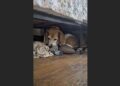
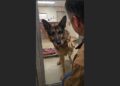
Every afternoon, Lu knew what came next.
Grandpa would move through the house, collect whatever he needed, and head toward the door.
Sometimes it was only a short trip outside.
Sometimes they were gone longer.
The details did not seem to matter much to Lu.
What mattered was that when Grandpa went, Lu usually went too.
The routine had repeated so many times that nobody in the family thought about it anymore.
Grandpa stood up.
Lu noticed.
A leash came out, or the door opened, and the dog was already waiting.
Then the two of them left together.
Until one day, Grandpa did not get up.
Lu still went to the door.
He still waited.
Only this time, the person he expected was never going to follow him outside.
Lu Had Built His Days Around Grandpa
Dogs learn households through repetition.
They notice when breakfast happens.
They learn which sound means someone is getting ready for work.
They know which door leads to the yard and which drawer contains treats.
Lu had learned Grandpa just as carefully.
The older man had been part of nearly every important routine in his day.
Around the house, they were seldom far apart.
If Grandpa moved into another room, Lu often followed.
When Grandpa settled into his chair, the dog usually found a place nearby.
And whenever Grandpa prepared to leave the house, Lu paid attention immediately.
The relationship did not need constant activity.
Much of it was simply proximity.
A man doing ordinary things.
A dog choosing to remain close while he did them.
Over the years, those ordinary moments accumulated.
For Lu, they became the shape of daily life.
The House Changed Before Lu Could Understand Why
When Grandpa died, the people around Lu understood what had happened.
They understood why relatives were arriving.
They knew why conversations suddenly became quieter.
They recognized the clothes being chosen for a funeral, the phone calls, and the long pauses that appeared in the middle of ordinary tasks.
Lu could not understand those events in the same way.
Dogs do not have the same abstract concept of death that people do.
But they notice absence.
A familiar voice stops coming from another room.
A scent slowly becomes less present.
Footsteps that once appeared every morning no longer arrive.
A chair remains empty.
A routine suddenly stops.
For Lu, that was the reality he had to process.
Grandpa had been there.
Then Grandpa was not.
At First, Lu Still Followed the Old Schedule
The family began noticing him near the door.
It happened around times when Grandpa normally would have gone outside.
Lu would move toward the familiar place and wait.
Sometimes he sat.
Sometimes he stood facing the doorway.
At the slightest movement behind him, his attention shifted.
Someone crossing the room could make his ears lift.
A coat being moved might bring him to his feet.
But the person Lu expected never appeared.
The family did not know exactly what he was thinking.
No one could.
Still, his behavior reflected something they all understood.
His routine had been interrupted.
And dogs often continue expecting familiar patterns even after circumstances have changed.
There Was No Dramatic Breakdown
Lu did not collapse beside the door.
He did not howl continuously.
Most of the time, nothing about his behavior would have looked unusual to someone who did not know the family.
That made the scene harder to watch.
He simply waited.
The same place.
The same attentive posture.
The same quiet expectation.
Then, after enough time passed, Lu would eventually move away.
Later, he might return.
Grief in dogs does not always look dramatic.
Changes may appear in appetite, sleep, activity, social behavior, or familiar routines.
Some dogs become restless.
Others grow quieter.
A dog may search rooms or spend more time where a missing person used to sit.
Lu’s behavior centered on the door.
That was where so many of his days with Grandpa had begun.
Grandpa Had Taken Him Almost Everywhere He Could
For years, the family had watched the pair leave together.
Grandpa did not treat Lu like an accessory.
He simply made room for him.
A short walk around the neighborhood became something they did together.
An afternoon outside meant Lu was nearby.
If Grandpa sat for a while, Lu usually settled close.
The dog did not need every outing to be interesting.
Being included seemed to be enough.
Over time, Lu learned the small signals that meant they were going somewhere.
Grandpa changing shoes.
Keys being picked up.
A jacket coming off a hook.
Movement toward the front door.
Those signals had once predicted something reliable.
Now some of them still happened because other people lived in the house.
But Grandpa no longer followed.
The Door Had Always Meant He Would Return
Before Grandpa’s death, departures were temporary.
That pattern matters to dogs.
A familiar person walks out.
Time passes.
Then the person comes home.
The sequence repeats hundreds or thousands of times.
Dogs cannot understand a promise like “I’ll be back later” in the same abstract way humans do.
They learn through experience instead.
People leave.
People return.
Grandpa had taught Lu that pattern simply by living his life.
Every walk eventually ended at home.
Every errand eventually ended with familiar footsteps coming back through the door.
That history may have made the new absence especially difficult for Lu to adjust to.
For the first time, the pattern did not complete itself.
Grandpa left Lu’s daily life.
He did not return.
The Family Began Watching Lu More Closely
Everyone in the house was dealing with the same loss differently.
They also began paying more attention to the dog.
Had he eaten?
Was he drinking normally?
Was he sleeping?
Did he still want to go outside?
Those questions mattered.
A change in behavior after losing a familiar person can be related to stress, but physical illness can look similar.
The family did not want to assume every quiet moment was grief.
Lu still needed normal care.
Regular meals.
Fresh water.
Walks.
Veterinary attention if anything seemed physically wrong.
Most importantly, he needed the household to remain as predictable as possible.
Grandpa’s absence had already changed enough.
The rest of Lu’s world did not need to change all at once too.
Someone Else Began Taking Him Outside
Eventually, another family member picked up the leash.
Lu watched.
The gesture had once belonged mostly to Grandpa.
Now a different hand held it.
At first, Lu seemed hesitant.
He looked toward the room behind them.
Then toward the door.
No one tried to imagine that the new routine would replace the old one.
It could not.
This was simply a walk.
Still, Lu needed exercise.
He needed familiar streets and opportunities to sniff.
He needed something to happen at the time of day when he had once expected Grandpa to stand up.
So the door opened.
Lu stepped outside.
The person holding the leash followed.
Familiar Streets Still Carried Familiar Smells
Outside, many things had not changed.
The pavement smelled the same.
Neighbors still moved around their yards.
Other dogs had passed along the same sidewalks.
Trees, grass, parked cars, and fences offered the normal information that dogs gather through scent.
For Lu, walks were never only about covering distance.
They were also opportunities to investigate the world.
Still, the person beside him was different.
There was no reason to assume Lu compared the two walks in human terms.
He did not have to think, This is where Grandpa used to walk me.
His body already knew the routine.
The pace.
The turns.
The pauses.
The places worth smelling.
Those patterns can remain familiar even when one participant is missing.
He Still Checked the Door
The new walks helped maintain structure.
But Lu continued returning to the door at certain times.
Sometimes he lay nearby.
Other times he sat facing it.
A sound in the hallway could bring his head up.
The family learned not to call him away immediately.
If he was comfortable there, they let him stay for a while.
There was no need to force him to stop checking.
Adjustment takes time.
Dogs cannot be talked through grief with explanations about funerals or mortality.
They learn from what happens next.
Day after day, the absent person remains absent.
Meanwhile, new patterns slowly form around the space that person once occupied.
Grandpa’s Chair Became Another Familiar Place
The door was not the only location connected to him.
Grandpa’s chair remained in the house.
For a while, Lu spent more time near it.
Sometimes he sniffed the seat.
Other times, he simply rested on the floor beside it.
The family did not move the chair immediately.
There were enough decisions to make already.
Besides, nobody seemed ready.
The chair carried its own memories for the humans.
For Lu, it may also have retained familiar scent.
Gradually, those scents would fade.
But at first, they were another piece of a world that still contained traces of the person who had disappeared.
Lu sometimes slept there.
Nobody disturbed him.
Dogs Notice More Than Words
People often focus on what animals cannot understand.
Lu could not understand the conversations happening around him.
He did not know what “passed away” meant.
He did not understand why Grandpa’s belongings were being sorted.
He could not know why family members sometimes cried while sitting at the kitchen table.
But dogs are highly sensitive to other information.
Tone.
Posture.
Movement.
Scent.
Changes in routine.
Changes in how people interact.
Lu likely noticed that the entire household behaved differently.
Voices softened.
People gathered more often.
Someone might reach down to touch him while crying.
The emotional climate of the home had changed.
Lu was living inside that change along with everyone else.
He Could Offer Comfort Without Understanding Why
Sometimes Lu approached a family member and sat nearby.
Nobody claimed he knew exactly what that person was grieving.
He did not need to.
Dogs often seek proximity to familiar people.
In a grieving household, that ordinary behavior can become especially comforting.
A hand resting on Lu’s fur gave someone something physical to focus on.
A walk provided a reason to leave the house.
Feeding him maintained structure on days when everything else felt disorganized.
In that sense, caring for Lu helped the family too.
They were keeping Grandpa’s dog safe.
At the same time, Lu was giving them another familiar presence in the house.
Neither side needed to understand the arrangement in words.
The Waiting Slowly Changed
Weeks passed.
Lu did not forget Grandpa.
There is no need to frame adaptation that way.
Instead, his behavior gradually changed.
He still noticed the door.
But he spent less time waiting there.
When another family member reached for the leash, he began responding more quickly.
Meals became normal again.
He settled in different places around the house.
The chair remained familiar, but it was no longer the only place he chose to rest.
These changes did not prove that grief had ended.
They showed that Lu was adapting to the life now in front of him.
Animals often do that.
They learn the new routine because life keeps happening.
Some Days Brought the Old Expectation Back
Progress was not perfectly steady.
A familiar sound could still send Lu toward the door.
Once, a visitor approached with footsteps that sounded enough like Grandpa’s that Lu stood immediately.
He waited.
When the person entered, Lu watched for a moment.
Then he turned away.
No one knew exactly what he had expected.
Still, the family noticed.
Such moments became less frequent over time.
That made them more noticeable when they happened.
It also reminded everyone that memory does not disappear simply because daily life has moved forward.
Growing Older Made Routine Matter Even More
Lu was no longer a young dog.
As dogs age, predictability can become especially useful.
Their energy changes.
Bodies become stiffer.
Sleep patterns may shift.
Some older dogs become more sensitive to disruptions.
The family tried to keep Lu’s days steady.
Meals happened around the same time.
Walks were adjusted to his pace.
He had comfortable places to rest.
Nobody expected the new routine to duplicate what Grandpa had done.
Instead, they built one around the dog Lu was now.
Older.
Quieter.
Still interested in familiar walks.
Still happiest when someone stayed nearby.
No One Tried to Replace Grandpa
That was important.
One family member began doing more of the walking.
Another handled meals.
Someone else became the person Lu often settled beside in the evenings.
But nobody treated those changes as replacing the relationship he had lost.
A new bond does not erase an old one.
Dogs can form attachments to multiple people.
Lu could become comfortable with the people still in his life while retaining familiar responses associated with Grandpa.
The family could do the same.
They could care for Lu without pretending the empty chair belonged to someone new.
Both things could exist together.
The Leash Stayed Near the Door
Grandpa’s old routine left traces around the house.
The leash was one of them.
For years, reaching for it often meant the same thing.
Grandpa and Lu were going outside.
Now another hand reached for it.
The meaning slowly changed.
Not completely.
But enough.
The leash still meant a walk.
Fresh air.
Familiar smells.
A chance to move through the neighborhood.
And when the walk ended, Lu came back through the same door.
Over time, that new repetition helped rebuild predictability.
People still left.
People still came home.
Meals still happened.
Night still ended with the family nearby.
Life continued in a form Lu could learn.
The Door Was No Longer Only a Place to Wait
Eventually, Lu began resting there differently.
Instead of sitting upright and watching for movement, he sometimes stretched out in the patch of afternoon light near the entrance.
The family noticed the change.
The place had not moved.
But Lu’s relationship to it seemed different.
The door was still where walks began.
It was still where people entered.
And perhaps it would always carry an association with Grandpa.
Yet it had become part of current life again instead of only a place connected to absence.
One afternoon, a family member picked up the leash.
Lu raised his head.
For a second, he looked toward Grandpa’s old chair.
Then he stood.
The door opened.
Lu walked outside.
Grandpa Was Still Part of the Routine in a Different Way
The family continued talking about him.
Sometimes his name came up while they walked Lu.
They remembered how he had let the dog stop at the same tree for far too long.
They laughed about how Lu always seemed to know Grandpa was preparing to leave before anyone else did.
Those memories belonged to the people.
Lu could not understand the stories.
Still, he remained at the center of many of them.
Grandpa and Lu at the door.
Grandpa and Lu in the yard.
Grandpa sitting while Lu slept nearby.
An ordinary relationship had produced hundreds of ordinary memories.
Those were what remained.
Lu Did Not Need to Understand Death to Notice Love Was Missing
People sometimes ask whether dogs understand death.
The answer is complicated.
We cannot know exactly what any individual dog believes about a person who disappears permanently.
What can be observed is much simpler.
Dogs notice when familiar people are no longer present.
They can show behavioral changes after a loss.
They may search.
Wait.
Eat differently.
Sleep differently.
Become more clingy or more withdrawn.
Lu’s waiting by the door fit within that kind of observable response.
There was no need to claim he understood that Grandpa had died.
It was enough to say that a deeply familiar person had vanished from his routine.
And Lu noticed.
One More Walk Wasn’t Coming
For years, Grandpa had made room for Lu in the ordinary parts of life.
That was the heart of their relationship.
Not dramatic rescues.
Not tricks.
Not extraordinary adventures.
Just daily companionship.
A dog beside a chair.
A leash near the door.
Two figures walking outside together.
Then the pattern ended.
Lu continued showing up for it because that was what he had learned to do.
For a while, he waited for one more familiar departure.
One more moment when Grandpa stood.
One more walk with the person whose movements he had studied for years.
That walk never came.
But others did.
Slowly, Lu learned to take them.
The Empty Place Remained
Even after new routines formed, some things stayed different.
Grandpa’s chair was still Grandpa’s chair.
His voice did not return.
There were no footsteps from his room.
The family stopped expecting those things long before the dog could understand why.
But they all continued living around the same absence.
Lu had not forgotten the person who once included him in nearly everything.
The family had not either.
What changed was the way they carried the absence.
They kept feeding Lu.
Walking him.
Making room for him.
Staying near him as he grew older.
In caring for the dog Grandpa had loved, they preserved one small part of the daily life they had all shared.
Eventually, Lu Stopped Waiting Quite So Long
The afternoon routine became different.
Someone else picked up the leash.
Lu followed.
The front door opened.
He stepped outside.
Sometimes he still paused before leaving, glancing into the house.
Maybe he was checking where everyone was.
Maybe it was simply an old habit.
There was no way to know.
Then he moved forward.
The walks were slower as he aged.
The person beside him was different.
But the world outside still offered grass to smell, sidewalks to follow, and familiar corners to investigate.
Grandpa was no longer there.
That fact could not be changed.
What could be changed was what happened to Lu afterward.
He would not be left to wait alone.
For the rest of his life, the family would keep making room for him the way Grandpa had.
And every time the leash came off the hook, the door still opened.
Editor’s Note: The characters in this story are fictional. Through these stories, we hope to share the intelligence, loyalty, compassion, and loving nature of dogs with people everywhere.