The little dog had food and water beside her. Someone had made sure of that before leaving her tied to a fire hydrant on a street in Southern California. But the eight-month-old puppy wasn’t eating or drinking. She was curled into herself, her body tucked into a tight ball, barely lifting her head.
From a distance, a passerby might have thought she was resting. Up close, it was harder to mistake what was happening. Her leash had wound around the hydrant, leaving her increasingly tangled. She had no way to walk away, find somewhere quiet, or choose whether to approach the people passing by.
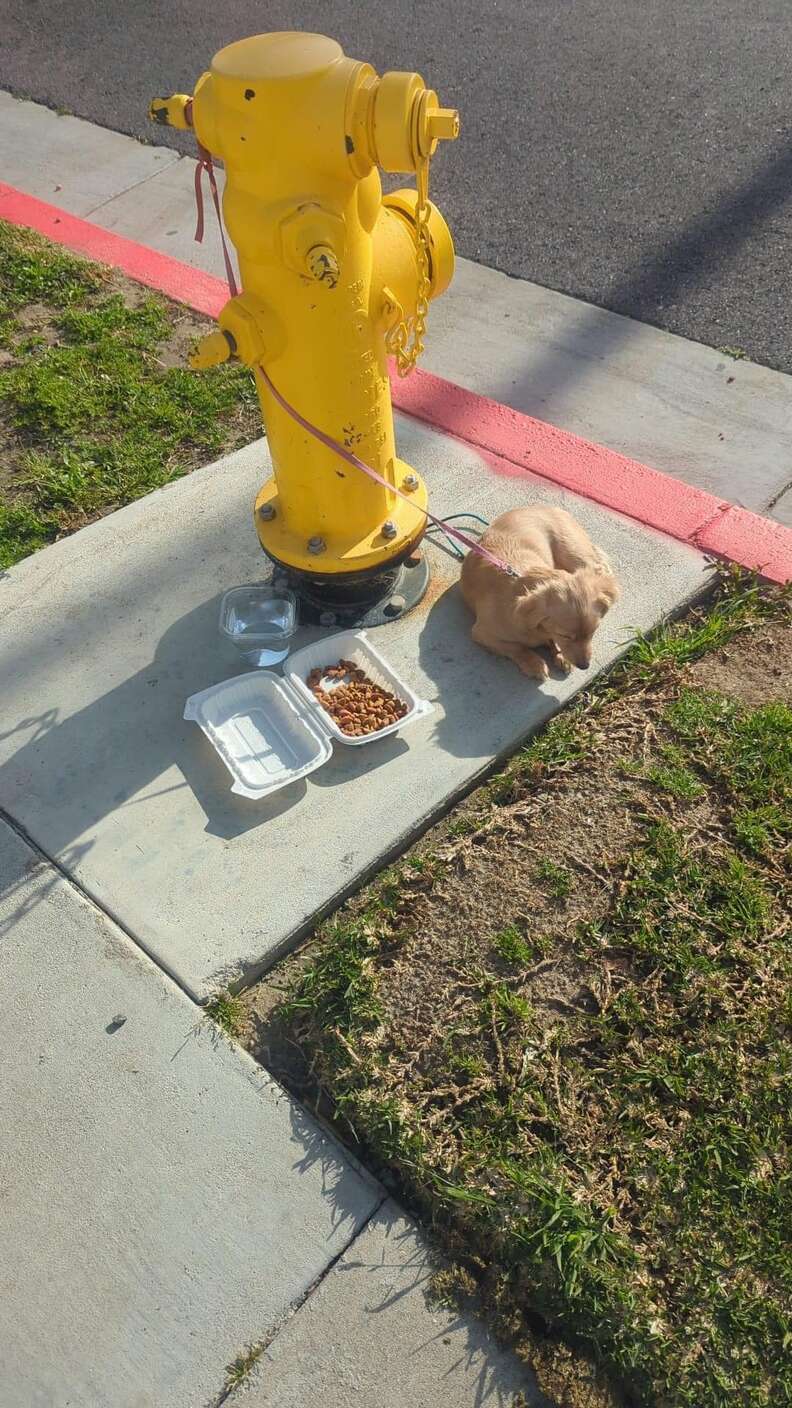
The puppy, who would soon be named Cici, had been left behind. And for the moment, all she could do was stay where she was.
When word of her reached Suzette Hall, founder of Logan’s Legacy dog rescue, Hall was heartsick. Unfortunately, the location was familiar. She had recently rescued several dogs from that same street. Hearing that another small dog had been abandoned there was painful, but it wasn’t entirely unexpected.
What troubled Hall most was Cici’s condition. The person who contacted her explained that the puppy had hardly moved from her curled-up position. Food and water had been left within reach, yet neither seemed to have been touched.
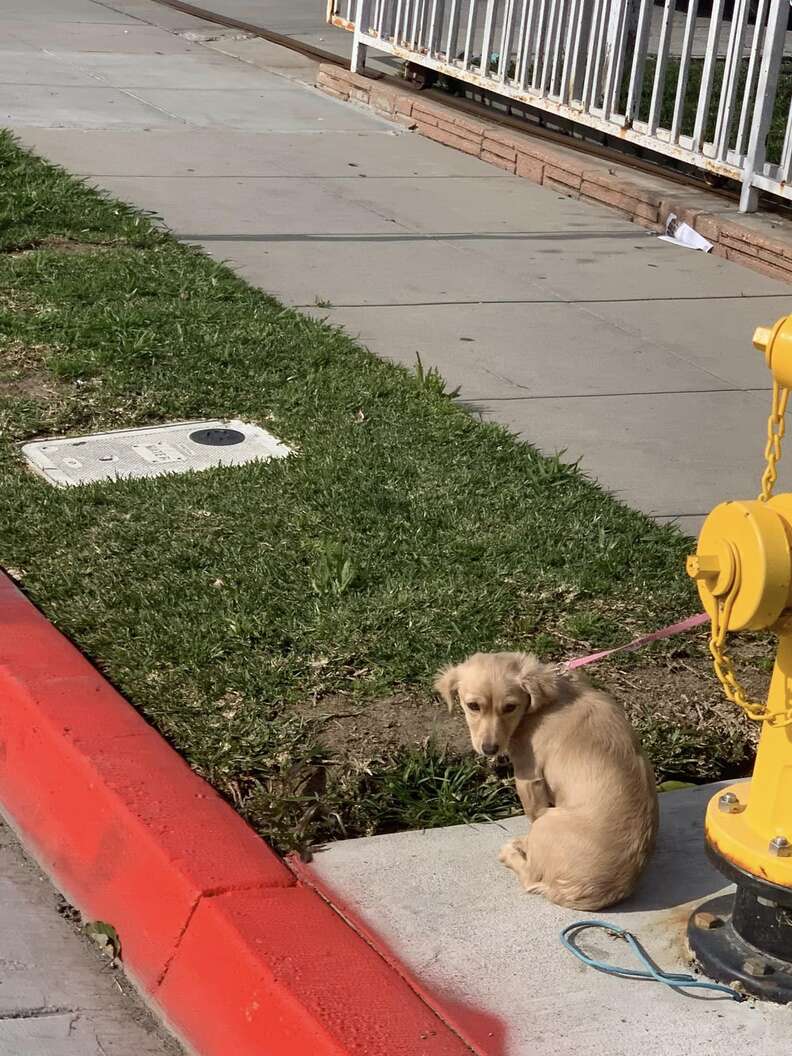
That detail mattered. A dish of food beside an abandoned dog can give the impression that someone has provided for her. But being tethered in an unfamiliar place, with no one she knows nearby, is a very different experience from being safe at home. Whatever Cici’s former family intended by leaving those containers, the puppy was frightened enough that she wasn’t taking care of her most basic needs.
Hall wanted to go directly to her. She knew the dog needed help, and she didn’t want her to spend another unnecessary moment at the hydrant. But Hall couldn’t reach the location quickly enough herself.
So she did something rescuers often have to do: She asked someone nearby to be the hands that could get there first.
Hall called a woman she knew who lived close to the street and explained the situation. The woman stopped what she was doing and went to find the puppy. Hall stayed available by phone to guide her through the rescue.
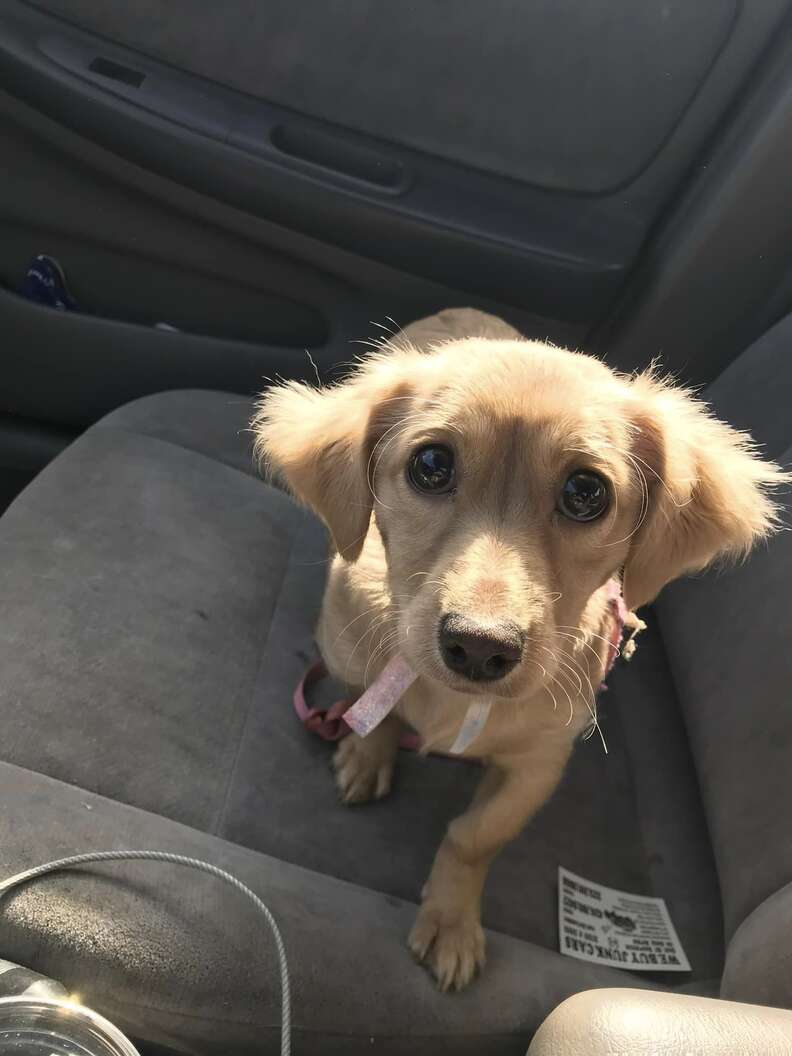
The neighbor found exactly what had been described: a very young dog tethered to the hydrant, her leash twisted around it again and again. Cici had apparently moved in circles until the line became a tangle. Instead of giving her freedom to move, the leash had made her situation more restrictive.
Seeing a little dog in that condition is upsetting enough. Helping her, though, required more than simply reaching down and untying a knot.
Cici didn’t know the woman approaching her. She couldn’t know that this stranger had come because someone was worried about her. When the neighbor knelt beside her and started working on the leash, Cici growled.
It would have been easy to misunderstand that sound. A frightened animal may warn people away even when she desperately needs their help. Growling doesn’t necessarily mean a dog is mean or unwilling to be cared for. Sometimes it is the only way she knows to ask for space.
In that moment, Cici had good reason to be uncertain. She was tied in place and couldn’t choose to step back. A person she had never met was leaning into the small area she could still occupy. The neighbor needed to free her without making the experience more frightening.
With Hall talking her through it on the phone, the woman took her time. She gradually earned enough of Cici’s trust to work the leash loose and unwind it from the hydrant.
The change was simple but enormous. Cici was no longer trapped at the corner where she had been left.
The neighbor wrapped her in a soft blanket, gently lifted her, and held her for a moment before settling her into the car. Those actions didn’t erase what had happened to Cici. They did, however, put her in the care of someone who could respond when she needed help.
Getting her away from the hydrant was only the first part of the rescue.
On the drive to the veterinary hospital, Cici became very sick. Hall later told The Dodo that she believed the puppy’s distress could have been related to fear and to not having eaten or drunk the food and water left beside her. It was an explanation, not a confirmed diagnosis, but it fit with what the rescuers had seen at the scene.
The sudden change was worrying. A dog may look quiet from the outside without being physically well. In Cici’s case, she had been so withdrawn at the hydrant that there had been little opportunity to tell whether she was simply exhausted, deeply frightened, or developing a medical problem. Once she was in the car, it was clear that she needed veterinary attention promptly.
The neighbor brought her to Camino Pet Hospital, where the staff could examine her and provide care. Cici was given fluids and monitored closely.
The immediate concern was getting her stable and watching how she responded. The fluids and careful attention helped. According to Hall, the little dog began to perk up while the hospital team was keeping an eye on her.
For anyone who had seen her curled beside the hydrant, that improvement was significant. Earlier, she had barely raised her head. Now she was becoming more responsive to the people around her.
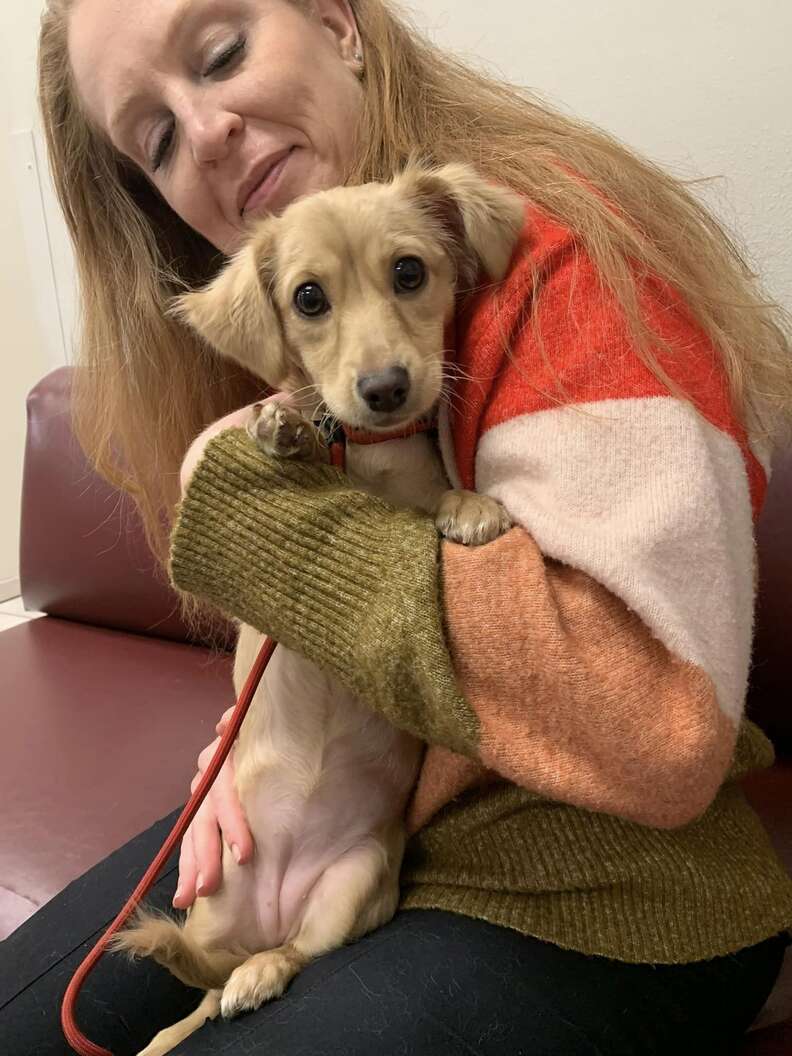
Her recovery didn’t end with the fluids or the medical monitoring. The hospital also gave Cici a place to experience ordinary human kindness, something she had been unable to count on while tied outside.
At Camino Pet Hospital, she met several people who cared for her. One of them became especially important: Hedy Herold, the hospital’s office manager.
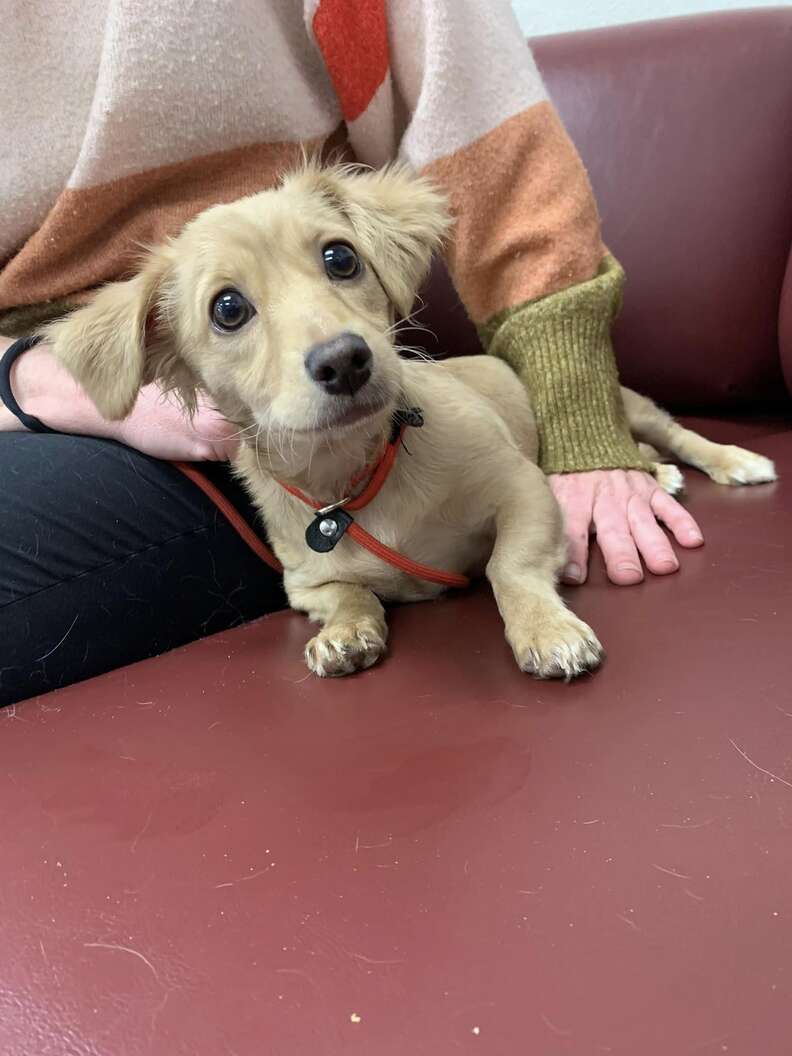
Cici’s reaction to Hedy was unmistakable. Hall described how the puppy would begin wagging and wiggling her tail when Hedy walked past. Cici seemed to recognize the person who had become a familiar source of comfort. The small dog who had growled when a stranger first reached for her could now show open excitement at seeing someone she knew.
It was an encouraging change, and it happened in the ordinary course of her days at the hospital. Hedy didn’t have to be a miracle worker or make a grand gesture. Her attention and presence were enough for Cici to begin feeling at ease.
While Cici waited for the veterinary team to decide she was ready to leave, she spent much of her time curled up in Hedy’s arms. It was a different kind of curling up from the tight little ball she had made beside the hydrant. At the street corner, she had been alone and unable to get away. At the clinic, she could rest while someone held her.
No one could know exactly what Cici remembered or understood about the change in her circumstances. But the people helping her could see the difference in her behavior. She was becoming comfortable enough to seek and enjoy affection.
For a puppy only eight months old, that opportunity matters. She was still young, with much of her life ahead of her. The experience of abandonment had been frightening, but it did not have to define every relationship that followed. The patient care she received offered a chance to learn that being near people could also mean safety.
The people around Cici were careful not to rush the next step. Before she could move into a home, even a temporary one, she needed to be medically cleared. A foster placement would give her a quieter setting outside the hospital and a chance to settle into a regular routine while the rescue searched for a permanent family.
By the time Hall shared her update in March 2023, there was good news. Cici had been cleared for foster care and was expected to leave the clinic soon to meet the family who would look after her temporarily.
It was a hopeful development, but it wasn’t the end of the story. Cici had not yet been reported as adopted into a permanent home. She still needed people who could make a lasting commitment to her, people who would see a growing puppy rather than only the sad circumstances in which she had been found.
Hall was looking forward to finding that family. Her description of Cici after the rescue was strikingly different from the first report she had received. The dog who had once been too frightened to eat was now cheerful and affectionate. Hall called her happy and sweet.
Perhaps the most meaningful part of Cici’s story is that no single person did everything. Someone noticed the tethered puppy and contacted the rescue. Hall recognized the urgency and reached out to a nearby woman. The neighbor went to the corner, patiently freed Cici, and drove her to get medical help. The team at Camino Pet Hospital treated her. Hedy gave her the steady affection that helped make the hospital a place of comfort.
Each person was responsible for one part of the journey. Together, they changed what could happen next for a small dog who had no control over what had happened before.
There are still things no one has explained. We don’t know why Cici’s former owners left her tied to the hydrant or how long she waited there. We don’t know whether she had been loved in her earlier home, or what her days were like before someone found her. Those missing details can’t be supplied by looking at a photograph of a frightened dog.
What we do know is enough to understand why the rescue mattered. A frightened puppy was left tethered outdoors. She wasn’t eating or drinking. When a stranger approached, she was afraid. Once she was freed, her health became a concern. She received medical care, recovered, and began responding warmly to the people around her.
The image that stays with me isn’t only the little dog curled up by the hydrant. It’s also the image of Cici safe in someone’s arms at the hospital, looking forward to familiar footsteps and greeting Hedy with a wagging tail.
One image shows how vulnerable she was when she had been left alone. The other shows what became possible when people noticed and followed through.
At the time of the original report, Cici’s permanent home was still ahead of her. But she no longer had to wait tied to a post for someone to come. She had people looking after her, a foster home on the way, and a rescue working to give her the lasting care she deserved.
For a little puppy who once couldn’t even bring herself to lift her head, that was a very good beginning.