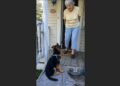
Every evening, when the animal shelter grew quiet and the day’s activity finally settled, a tiny Chihuahua named Bella would curl herself into a ball and begin to whimper.
She was only one year old.
At an age when many young dogs are discovering the pleasures of family life, Bella was struggling to understand an unfamiliar world of kennel doors, barking dogs, and people she didn’t recognize.
No one at the shelter knew why her previous family had surrendered her. There was no detailed history explaining where she had lived or what her life had been like before she arrived.
But the staff didn’t need to know her entire past to recognize that something was wrong.
During the day, Bella watched the activity around her with wide, uncertain eyes. At night, when there were fewer distractions and the building became still, she seemed especially distressed.
Her cries were soft enough that someone walking past might have missed them.
The volunteers who cared for her did not.
They saw a frightened little dog who needed reassurance, and they tried to give her whatever comfort they could.
What they couldn’t give her, at least not immediately, was the one thing that might make the greatest difference: a quiet, dependable home where she could feel secure again.
For Bella, that home was still somewhere in the future.
A One-Year-Old Chihuahua Facing an Unfamiliar World
No One Knew Why Bella Had Been Surrendered
Bella’s arrival at the shelter came with very few answers.
The workers knew her name and age, but little else about the circumstances that had brought her into their care.
They didn’t know whether she had previously lived with one person or a larger family. They couldn’t say what routines she was accustomed to or how she had responded to other dogs before entering the shelter.
Most importantly, they had no clear explanation for why she had been given up.
Those missing details made it difficult to understand exactly what Bella was experiencing.
A dog may become unsettled in a shelter for many reasons. Some are frightened by unfamiliar sounds. Others struggle with the loss of established routines or the sudden absence of people they know.
For some animals, adapting takes only a short time. Others need considerably more patience.
Bella belonged to the group that was having a difficult adjustment.
The shelter itself was not an unkind place. Staff members worked throughout the day to feed the animals, clean their living areas, and make sure their needs were met.
But even a well-run shelter can be overwhelming for a small, sensitive dog.
There were unfamiliar smells, constant movement, and the sounds of other animals responding to their surroundings.
Visitors occasionally passed through, hoping to meet a dog they might bring home.
Some of the shelter’s residents greeted that attention enthusiastically. They barked, moved toward the front of their kennels, or appeared excited by the possibility of meeting someone new.
Bella’s response was different.
She tended to remain quiet, observing the people and animals around her rather than eagerly joining the activity.
Her small body often trembled.
The staff could see that she wasn’t yet comfortable in her new surroundings.
And when the busiest part of the day ended, her distress became even more apparent.
The Hardest Part of Bella’s Day Came After Dark
As evening approached, the shelter gradually became quieter.
The daytime movement slowed. Fewer people walked through the kennel area, and the building settled into its nighttime routine.
For many dogs, those quieter hours offered a chance to rest.
For Bella, they were often the most difficult.
She would curl into a tight little ball inside her kennel, trying to settle herself for the night. Before falling asleep, she sometimes began making small, sorrowful sounds.
The staff described her as a dog who seemed to cry herself to sleep.
She wasn’t a particularly loud dog. Rather than barking continuously or demanding attention, Bella often expressed her distress through quiet whimpers.
At times, volunteers could see her chest moving rapidly as she tried to settle down.
It was difficult to watch such a young animal struggle with something the people around her couldn’t simply explain away.
A person entering an unfamiliar place can ask questions. They can learn why they’re there, when they might leave, and what will happen next.
A dog doesn’t have that reassurance.
Bella couldn’t be told that the shelter workers wanted to help her or that they hoped to find her another family.
She had to learn about her surroundings through the experiences she had each day.
And for the moment, those experiences were still too unfamiliar for her to feel completely at ease.
The workers tried to comfort her without overwhelming her further.
They understood that Bella needed gentleness, but they also knew that she might not respond to every effort right away.
There was no reason to expect that one affectionate gesture would immediately resolve her fear.
So they continued showing up for her.
The Volunteers Who Refused to Overlook Her
Quiet Company and a Little Pink Sweater
Throughout Bella’s stay, volunteers made an effort to spend time near her kennel.
They sat with her, spoke softly, and offered the kind of calm attention that wouldn’t add to the activity already surrounding her.
Their goal wasn’t to make Bella suddenly outgoing.
They wanted her to become more comfortable with the people caring for her.
That meant allowing her to observe them and accept affection at her own pace.
Even while frightened, Bella remained gentle with the volunteers.
She allowed them to approach and comfort her, although the trembling didn’t always stop.
Her willingness to accept their attention gave the staff encouragement. Beneath her uncertainty was an affectionate little dog who seemed interested in human companionship.
One volunteer decided to try something practical.
Bella was given a tiny pink sweater.
The sweater fit her small frame and made her look especially sweet. The volunteer hoped that the added warmth might help her feel a little more comfortable.
It was a thoughtful gesture, but it wasn’t an instant solution.
Bella still trembled.
The sweater could provide warmth, but it couldn’t make the shelter familiar or remove the uncertainty of living somewhere new.
That didn’t mean the effort was wasted.
Sometimes caring for a frightened animal involves trying small things and paying attention to the response.
A quiet voice may help one dog settle. Another may prefer additional space. Something that seems comforting to a person won’t necessarily have the same effect on every animal.
The important thing was that the volunteers continued watching Bella closely enough to recognize what did and didn’t seem to help.
They wanted her to feel better.
And they were willing to be patient while they figured out how.
A Gentle Dog Beneath the Fear
As the volunteers spent more time with Bella, they came to appreciate her affectionate nature.
Despite her nervousness, she did not respond to their attempts at comfort with hostility.
She remained patient when they approached, accepting their gentle attention even when she seemed uncertain about her surroundings.
Some staff members wondered whether Bella had experienced kindness in her previous home.
They couldn’t know that for certain. Her history was still unknown, and a dog’s present behavior doesn’t tell us everything about its past.
What they could see was that Bella was capable of forming a connection with people.
That mattered.
Her fear was only one part of her personality.
She was also a young, gentle Chihuahua with the potential to become a loving companion in the right environment.
The volunteers hoped that someone visiting the shelter would look beyond her trembling and recognize those qualities.
Until then, they kept trying to make her days a little easier.
An Unexpected Moment in Front of a Mirror
One day, a staff member decided to try something unusual.
Bella was placed in front of a mirror.
It wasn’t an elaborate activity or a complicated training exercise. The idea was simply to observe how the little Chihuahua might respond to seeing her reflection.
What happened surprised the people watching.
For the first time since arriving at the shelter, Bella appeared noticeably curious.
She studied the image in front of her.
The small dog in the glass moved whenever she moved. When Bella tilted her head, the reflection tilted with her.
Instead of turning away, she continued looking.
Then she moved closer.
It was a modest moment, but the volunteers noticed something different about her behavior.
Bella wasn’t whimpering.
She was paying attention to something that seemed to interest her.
For a little while, the anxiety that had been so visible in her daily routine appeared less prominent.
Did Bella Think She Was Seeing Another Dog?
The volunteers wondered whether Bella might have found some comfort in the reflection.
Perhaps she was responding to what appeared to be another small dog nearby.
Or perhaps the unfamiliar image simply caught her attention strongly enough to distract her from the surrounding activity.
There was no way to know exactly what she understood.
Dogs don’t necessarily interpret mirrors the way humans do, and Bella’s response alone couldn’t establish what she believed she was seeing.
Still, the experience revealed something encouraging.
Even in an environment where Bella had been struggling, she could become interested in something new.
Her behavior wasn’t limited to fear.
She could investigate, observe, and respond to her surroundings with curiosity.
The mirror didn’t transform her personality or solve the difficulties she was experiencing.
But it offered the shelter workers a brief glimpse of a more relaxed side of Bella.
For people who had spent so much time listening to her soft cries, that was a welcome change.
They continued hoping that, with the right family, she would have many more opportunities to feel comfortable enough to explore the world around her.
The Nights Were Still Difficult
The moment with the mirror was encouraging, but Bella’s adjustment remained incomplete.
When evening arrived, she sometimes returned to the same behavior the volunteers had noticed since her first days at the shelter.
She curled up in her kennel and whimpered quietly.
Her surroundings were becoming more familiar, yet nighttime continued to be a challenge.
That was one reason the staff remained so eager to find her a permanent home.
A shelter can provide food, protection, medical attention when needed, and dedicated people who care about an animal’s well-being.
What it cannot always provide is the ordinary continuity of life with a family.
In a home, a dog may gradually become accustomed to the same voices, familiar places to rest, and predictable daily routines.
Those patterns can help a newly adopted animal understand what to expect.
Bella needed an opportunity to experience that kind of consistency.
The shelter workers couldn’t promise how quickly she would settle into another environment. Moving to a new home would be another change, and even a welcome change can take time for a nervous dog to understand.
But they believed Bella deserved a chance.
They wanted someone who would recognize that she might need reassurance at first, without expecting her to become confident overnight.
Someone willing to appreciate her quiet affection.
Someone who understood that bringing home a frightened little dog meant giving her time to adjust.
Eventually, that opportunity arrived.
The Family Who Finally Came for Bella
After learning about Bella, a family became interested in meeting her.
They came to the shelter to spend time with the tiny Chihuahua whose difficult nights had concerned the volunteers so much.
The meeting wasn’t described as a burst of instant excitement.
Instead, the family approached Bella quietly and allowed her to become comfortable in their presence.
That suited her.
She had already shown the staff that she responded best when people were patient and gentle.
Rather than expecting her to rush forward, the visitors spent time sitting with her and letting her decide how quickly to engage.
Gradually, Bella began to warm up.
Then came a small gesture that said more than any dramatic display could have.
She wagged her tail.
It was only a little wag, but for a dog who had spent so much time trembling and watching people cautiously, it was encouraging.
The family had come to meet a Chihuahua who needed a home.
They were also meeting a dog who might need extra time to become comfortable in that home.
Bella didn’t have to behave like the most confident animal in the shelter to be chosen.
She didn’t need to impress anyone with boundless energy or an outgoing personality.
Her gentleness was enough for the family to see something worth welcoming into their lives.
The adoption moved forward.
The paperwork was signed.
At just one year old, Bella was being given another chance to belong to a family.
For the shelter workers who had cared for her, it was the outcome they had been hoping for.
The little dog who had spent so many evenings whimpering in her kennel was finally leaving.
A New Home, and the Time to Feel Safe Again
Moving into a new home didn’t mean Bella immediately understood that everything would be different.
She still needed to adjust.
Her new surroundings brought unfamiliar sights, smells, and routines. The people were kind, but they were also new to her.
Fortunately, the family offered the patience she needed.
Bella was surrounded by calm voices, soft blankets, and gentle attention.
Instead of expecting her to adapt all at once, they allowed her to settle gradually.
Over time, the little Chihuahua began to relax.
The trembling that had been so noticeable at the shelter slowly became less frequent as she grew more comfortable.
Her family gave her something that had been missing from her recent life: a predictable place to rest and people she could become accustomed to seeing every day.
There was no single event that explained the change.
It was the accumulation of ordinary experiences.
A familiar voice.
A comfortable place to lie down.
A household that remained steady from one day to the next.
For a nervous dog, those everyday comforts can be important.
Bella didn’t need an extravagant home or constant excitement.
She needed care, patience, and the opportunity to become familiar with her surroundings.
And little by little, that was happening.
The Smallest Change Meant the Most
The greatest difference appeared in a part of Bella’s life that had once been especially difficult.
Nighttime.
At the shelter, the quiet hours had often brought trembling and soft cries.
In her new home, Bella eventually began sleeping peacefully beside her family.
The change was simple enough that someone who hadn’t known her earlier might not have recognized its significance.
She was a small Chihuahua, curled up comfortably near the people who loved her.
Nothing extraordinary needed to happen.
There was no dramatic rescue scene, no remarkable feat, and no complicated treatment that suddenly changed her life.
A family had welcomed her into their home and given her time to become comfortable.
For Bella, that was enough to make an enormous difference.
The volunteers who had once worried about her nights had hoped someone would recognize the affectionate dog beneath her fear.
Someone had.
And the frightened Chihuahua who had struggled to sleep alone in a kennel was now resting peacefully in a home of her own.
What Bella’s Story Reminds Us About Shelter Dogs
Bella’s experience illustrates something that can easily be overlooked when people visit animal shelters.
Not every dog responds to the environment in the same way.
Some animals are outgoing from the beginning. They approach visitors enthusiastically and seem eager to make friends with anyone who stops.
Others are more reserved.
A nervous dog may sit quietly, tremble, or hesitate when approached. Those behaviors can make it harder for prospective adopters to recognize the companion the animal might become in a different setting.
Bella was one of those dogs.
During her time at the shelter, her behavior reflected how difficult she was finding the adjustment. It didn’t reveal everything about her personality or determine what she would be like in a permanent home.
The people who cared for her recognized that distinction.
They didn’t dismiss her as unfriendly because she was frightened.
They spent time with her, offered reassurance, and continued looking for a family who could meet her needs.
And when that family finally arrived, Bella was given the opportunity to adjust at her own pace.
Her story is also a reminder that patience doesn’t always produce an immediate, visible result.
The pink sweater didn’t stop her trembling. The mirror held her attention for a while, but it didn’t eliminate her nighttime distress.
Those efforts were still part of caring for her.
They showed that the volunteers were paying attention, trying to understand her needs, and refusing to overlook a small dog who was having a difficult time.
Ultimately, what changed Bella’s circumstances was finding a family prepared to welcome her.
The frightened Chihuahua didn’t have to become a different dog to deserve that chance.
She simply needed people willing to care for the dog she already was.
And that is perhaps the loveliest part of Bella’s story.
The little Chihuahua who once curled into a ball and whimpered through the quiet hours now has familiar people beside her when night comes.
She has a place to rest, a routine she knows, and a family who has made room for her.
Bella no longer has to spend her evenings alone in a shelter kennel.
These days, when she curls up to sleep, the surroundings are familiar.
And the little dog who once struggled so much at bedtime can finally close her eyes in peace.
If Bella’s journey touched you, consider sharing her story with someone who loves animals. Her experience is a gentle reminder that even the shyest shelter dogs deserve patience, understanding, and the opportunity to feel at home.