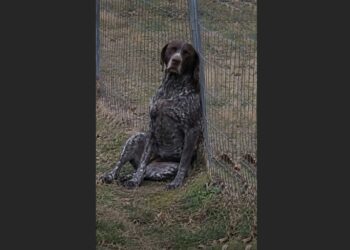
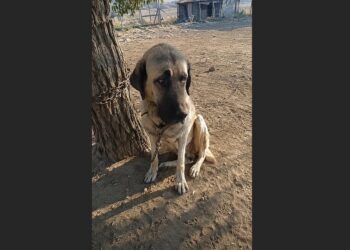
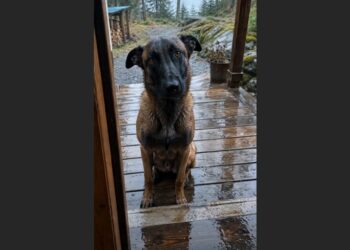
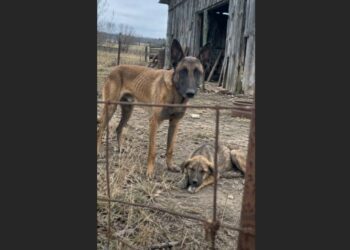
His muzzle had turned gray, his legs were stiff, and the powerful body that had once carried him through years of search-and-rescue work was beginning to show its age.
He had spent most of his life helping people in danger.
Now he was behind a kennel door, waiting for someone to decide what happened next.
I remember reading the paperwork that accompanied him. Most of it was ordinary information about his age, breed, and background.
But one sentence stopped me.
“Surrendered by his service.”
After years of training and working alongside people who depended on him, Max had been surrendered when he could no longer perform the job he’d known for so long.
I looked through the kennel door.
He was sitting upright, watching me with the quiet attention of a dog accustomed to receiving instructions.
My name is Charlotte. I’ve worked as a canine behaviorist for several years, and I’ve evaluated hundreds of shelter dogs.
But something about that aging Belgian Malinois stayed with me.
I didn’t know it then, but Max would eventually help save another person’s life.
And the memory I would treasure most wouldn’t be the rescue.
It would be the sight of him sleeping peacefully on my couch, with nothing left to prove.
The Dog Behind the Kennel Door
I had met many dogs during my years working with animal behavior.
Some approached eagerly, looking for attention. Others remained at the back of their kennels, uncertain about unfamiliar people. Some needed considerable time before they felt comfortable engaging with anyone.
Max was different in a way I noticed almost immediately.
When I approached his kennel, he didn’t bark or rush toward the door.
He watched me.
His ears responded to my movements, and his eyes followed me as I came closer. Even while sitting, he seemed attentive to everything happening around him.
He had the appearance of a dog who had spent a lifetime learning to pay attention.
His gray muzzle made his age unmistakable. When he shifted his position, I could see that his movements were slower than those of a younger, healthier Malinois.
Belgian Malinois are athletic dogs, often associated with demanding working roles. Max had once possessed the physical ability required for search-and-rescue assignments.
But thirteen years is an advanced age for a dog of his size.
He was no longer the strong young animal he had once been.
Still, there was something steady and dignified about the way he sat in that kennel.
I opened the door and entered carefully.
Max stayed where he was.
A Lifetime Spent Searching for Others
From the information available about his past, I knew that Max had spent much of his life as a search-and-rescue dog.
His work had taken him into situations where people needed urgent assistance.
Search dogs rely on their remarkable sense of smell, along with extensive training, to help locate missing or endangered people.
The work requires cooperation between a dog and handler, careful attention to scent, and the ability to remain focused in difficult environments.
Max had spent years practicing those skills.
I couldn’t know every mission he’d completed or every person he’d helped.
But I knew the kind of commitment required to train and work with a dog in that role.
A working partnership is built over countless hours. The dog learns to recognize instructions, respond to familiar cues, and associate certain equipment and routines with particular tasks.
Over time, those experiences become deeply familiar.
Max’s working years were now behind him.
His aging legs no longer had the endurance they once possessed, and the demanding physical requirements of search-and-rescue work were no longer appropriate for him.
He needed a quieter life.
Somewhere warm, comfortable, and safe.
A place where he could be cared for as an elderly dog, rather than evaluated for what he could accomplish.
Instead, he had been surrendered to a shelter.
The Hour I Spent Sitting Beside Him
I sat down quietly inside Max’s kennel.
I didn’t call him toward me or attempt to make him accept affection.
After years of evaluating dogs, I’d learned that allowing an animal to approach voluntarily often tells you more than trying to force an interaction.
Max remained seated for a while.
He watched me, occasionally shifting his attention toward sounds outside the kennel.
I stayed where I was.
There was no urgent reason to hurry him.
As the minutes passed, I began thinking about how much his life had changed.
For years, he had followed established routines alongside people who knew him well. Now he was in an unfamiliar shelter, surrounded by different sounds, smells, and people.
I couldn’t know exactly how he felt about the change.
But I wanted him to have time to become comfortable with my presence.
Nearly an hour passed.
Then Max slowly stood.
He moved toward me with the careful steps of an older dog.
When he reached me, he lowered his gray head and rested it gently against my body.
I placed a hand against his fur.
He stayed beside me.
It was a quiet interaction, but it settled something in my mind.
I didn’t want Max to spend the rest of his life waiting behind a kennel door.
Bringing Max Home
I decided to adopt him.
I knew taking home a thirteen-year-old Belgian Malinois would involve responsibilities that were different from those of adopting a young dog.
His body was aging, and he needed a home where his comfort and physical limitations would be respected.
He might have good days and difficult ones.
He might need extra time to stand, shorter periods of activity, and adjustments to his routine as he grew older.
None of that changed my decision.
I wasn’t looking for a working dog.
I wasn’t searching for an animal to train for demanding assignments.
I wanted Max to have a peaceful retirement.
When I brought him home, I hoped he would enjoy the simple comforts of an ordinary household.
A warm place to sleep.
Meals provided regularly.
The freedom to rest whenever he wanted.
And someone who would care about him even if he never followed another command.
But during those first days, I discovered that adjusting to retirement wasn’t going to be as simple as opening the front door and allowing him to settle in.
Max had spent years learning how to work.
Now he had to become familiar with a very different routine.
The Old Dog Who Didn’t Know What to Do With Free Time
The first thing I noticed was how often Max seemed to be waiting.
He would stand in the living room, watching me.
Sometimes he remained upright for longer than I expected, as though he was anticipating a direction.
If I moved across the room, his attention followed.
There was no task for him to perform.
No search to begin.
No working partner giving him instructions.
But Max’s old habits were still visible.
He had spent so much of his life responding to people that the freedom to do nothing appeared unfamiliar.
I encouraged him to rest.
I provided comfortable places where he could settle without being disturbed.
When he lay down, I let him sleep.
I didn’t demand obedience exercises simply because I knew he could perform them.
He had already spent years working.
I wanted his days to become quieter.
At first, he seemed uncertain about the change.
But I reminded myself that learning a new routine takes time, especially for an older animal whose life has followed a predictable pattern for years.
Max didn’t need to become a different dog overnight.
He simply needed an opportunity to discover that he no longer had to work.
Every Morning, He Waited by the Door
At dawn, Max would position himself beside the front door.
It became one of the most noticeable habits of his early days in my home.
He would stand or sit there, alert to the activity around him.
When I came into the room, he watched me closely.
I could only imagine how many mornings of his working life had begun with a similar routine.
For years, the beginning of the day may have meant preparing to accompany a handler, respond to instructions, or participate in training.
Now there was no assignment waiting.
I would approach him and speak gently.
He could relax.
We didn’t have anywhere urgent to go.
Sometimes I guided him toward a comfortable resting place.
Other mornings, I simply allowed him to decide when he was ready to move away from the door.
I tried not to interpret every behavior as evidence of distress.
Dogs develop habits through repetition, and Max had a long history of structured work.
But I wanted him to become comfortable with a life that no longer depended on constant readiness.
Little by little, the mornings began changing.
He spent more time resting.
He became familiar with the quiet rhythms of the house.
And I began seeing moments when his attention was no longer fixed on what I might ask him to do next.
He was learning to live without a job.
The Winter Storm That Changed Everything
Then one winter evening, a powerful snowstorm moved through our area.
Snow covered the surrounding countryside, and the roads became dangerously icy.
The weather made even ordinary travel difficult.
I stayed inside with Max, grateful that he had a warm place to rest while the storm continued outside.
He was an elderly dog, and the harsh conditions were not something I wanted him exposed to unnecessarily.
The wind was strong, and snow continued collecting across the landscape.
Then I received an urgent phone call.
An elderly man named Mr. Bernard was missing.
He suffered from severe memory loss and had wandered into a nearby forest.
His family had been unable to locate him.
Emergency crews were responding, but the weather was making their work difficult. Some roads were blocked or dangerous, slowing access to the area.
The situation was frightening.
A person exposed to freezing conditions can become dangerously cold, particularly if unable to find shelter or return home.
Mr. Bernard needed to be found quickly.
As I listened to the information, I looked toward Max.
He was resting nearby.
I knew he was old.
I knew that returning him to demanding work could be risky.
But I also knew he had spent years learning how to locate people.
For the first time since bringing him home, I wondered whether those skills might still help someone.
The Vest He Remembered
Max’s old working vest had been stored away.
Until that evening, I hadn’t planned to use it.
I took it from its storage box and brought it into the room.
Max noticed immediately.
His posture changed.
His ears lifted, and his attention became sharply focused on me.
For a moment, I saw something familiar from the descriptions of his working life.
He recognized the vest as something associated with activity and training.
That didn’t mean his body had suddenly become young again.
He was still thirteen.
His legs were still stiff, and he could not safely be expected to work with the endurance of a younger search dog.
But the equipment clearly captured his attention.
I contacted those coordinating the search and informed them of Max’s background and my willingness to assist.
I understood the importance of working within the coordinated rescue effort, particularly under such dangerous conditions.
I also knew that if Max showed signs of exhaustion or discomfort, I would need to stop.
His welfare mattered.
He had already given years of service, and I wasn’t willing to jeopardize his health simply because he had responded eagerly to a familiar vest.
Still, the situation was urgent.
And Max had skills that might prove useful.
Into the Snow-Covered Woods
When we joined the search, the forest was covered in snow.
The paths were difficult to distinguish, and the cold wind made the conditions uncomfortable.
I stayed close to Max as we moved carefully through the trees.
He began investigating the ground and the surrounding area, lowering his nose and following scents that appeared to interest him.
Watching him work brought a mixture of admiration and concern.
His attention was remarkable.
But his movements were those of an older dog, and I remained mindful of his limitations.
I didn’t expect him to move quickly or cover large distances.
I let him proceed at a manageable pace while watching for signs that he needed to stop.
The weather complicated everything.
Snow covered low vegetation and familiar paths. Wind moved through the trees, and the surrounding landscape offered little shelter from the cold.
I kept thinking about Mr. Bernard.
Somewhere in those woods was an elderly man who might not be able to find his way back.
I didn’t know how long he had been exposed or how much longer he could remain there safely.
I concentrated on Max and the search.
He continued working, occasionally pausing to investigate a scent before moving again.
The familiar training was still there.
Even after retirement, he retained an ability that had been developed and reinforced over many years.
Then, without warning, he stopped.
The Bark Beneath the Fir Tree
Max became still.
His attention was directed toward an area beneath a large fir tree.
I watched him closely.
A moment later, he barked.
I moved toward him.
There, partially sheltered by the branches, was Mr. Bernard.
The elderly man was huddled in the snow.
He appeared dangerously cold, but he was alive.
I immediately contacted emergency assistance and reported our location.
I felt tremendous relief at finding him, but I knew the situation was still serious.
Mr. Bernard needed professional medical attention. Being found was the beginning of getting him to safety, not the end of the emergency.
I remained with him while waiting for the rescuers.
Max moved near the elderly man and settled close by.
He didn’t need to perform another search.
There was nowhere else he needed to go.
For years, he had been trained to help locate people in danger.
Now, at thirteen years old, his experience had contributed to finding someone who desperately needed assistance.
I looked at the gray muzzle and the aging body beside Mr. Bernard.
The dog who had been considered too old for his former work had helped make a difference once again.
But even as I felt grateful for what he’d done, I knew something else.
I never wanted him to feel that he had to prove his value to anyone.
When the Rescue Team Arrived
We remained with Mr. Bernard until emergency personnel could reach us.
The weather was still difficult, and I was relieved when trained responders arrived to take over his care.
They were equipped to assess his condition and arrange the assistance he needed.
Max stayed near me as the situation was brought under control.
He had done enough.
I was proud of him, but I was also conscious of the effort the search had required.
He was an elderly dog who had already spent much of his life working in demanding conditions.
One successful search did not change his age or restore the endurance he had lost.
I knew I had made a difficult decision by bringing him into the winter conditions, and I was grateful he had come through the experience.
As we prepared to return home, I thought about the first time I’d seen him sitting inside the shelter.
He had watched me with the same attentive expression.
Back then, I had wanted to give him a place where he would never again be valued solely for his ability to work.
That goal hadn’t changed.
Helping Mr. Bernard was meaningful.
But Max’s retirement wasn’t going to become another series of assignments.
He had already devoted enough of his life to serving others.
Now I wanted him to have the comfort he deserved.
There Would Be No More Missions
After that winter night, life returned to its quieter rhythm.
Max was no longer expected to join search efforts.
I put away the old working vest.
He could continue enjoying familiar activities, but I wasn’t going to ask his aging body to endure another demanding mission.
Instead, I focused on the ordinary pleasures that had slowly become part of his new life.
Comfortable places to sleep.
Gentle attention.
Activities suited to his age and physical ability.
Time spent together without any particular goal.
I watched him become increasingly familiar with the house.
He no longer spent every morning waiting beside the door for a task.
He learned that the day could begin slowly.
Sometimes he wanted to spend time near me.
Sometimes he preferred to sleep.
There was no schedule he had to satisfy.
And when he settled into a comfortable place, I let him rest.
It was a simple change from the highly structured life he’d known before.
But I think it was the kind of change he needed most.
The Small Pleasures of an Ordinary Life
As time passed, Max began enjoying things that had little to do with his former work.
He liked gentle play.
He enjoyed resting in patches of sunlight that warmed the floor.
And he became comfortable sleeping on the couch.
The first time I noticed him resting there without seeming concerned about what I might ask him to do next, I smiled.
It was exactly the kind of life I’d wanted for him when I adopted him.
He wasn’t a young dog.
His gray muzzle remained gray, and his movements continued to reflect his age.
There were times when he needed to move more slowly or take extra care getting comfortable.
I adjusted our routine accordingly.
He had nothing to gain from being pushed beyond what his body could manage.
I wanted him to enjoy the years he had left.
Sometimes I sat near him while he slept.
Other times, he would look up when I entered the room before settling again.
I grew familiar with his habits, the places he preferred, and the small ways he communicated what he wanted.
Those interactions were different from the dramatic responsibilities of search-and-rescue work.
But they were no less meaningful to me.
Max was becoming my companion.
Not my working partner.
Not a dog waiting for orders.
Just Max.
The Old Malinois Who Finally Learned to Rest
One of the changes I appreciated most was seeing Max become comfortable doing nothing.
During his first days with me, he had often stood watching, ready to respond.
Now he could settle on the couch while I went about my day.
He didn’t always need to follow me.
He didn’t need to position himself by the front door at dawn.
And he didn’t have to remain alert every moment someone moved through the house.
There was something reassuring about seeing him sleep deeply.
His breathing would become slow and steady, and his gray muzzle would rest comfortably against the couch.
Sometimes sunlight reached the place where he was lying.
He seemed content to remain there.
I often thought about how different those moments were from the life he had once known.
Search-and-rescue dogs are trained to remain focused in circumstances that can be physically and mentally demanding.
Max had spent years doing that work.
Now he could choose whether to move, play gently, seek affection, or simply rest.
I never forgot what he’d accomplished.
But I was glad he no longer needed to accomplish anything for the day to be worthwhile.
The Winter Night I Would Always Remember
News of Mr. Bernard’s rescue remained one of the most remarkable experiences I’d shared with Max.
I sometimes thought about that night.
The snowstorm.
The urgent call.
The familiar working vest.
And the way Max had become attentive when he saw something associated with his years of training.
I remembered following him through the cold forest and watching his movements carefully, concerned about his age.
Then I remembered his sudden stop beneath the fir tree.
His bark.
And the sight of Mr. Bernard lying in the snow.
There was no doubt that Max’s previous training had been valuable.
Even though he was old, he had retained the ability to use familiar search behaviors in a meaningful way.
I felt grateful that we’d found the missing man.
But whenever I remembered the rescue, I also remembered how vulnerable Max had become with age.
His success didn’t mean he should continue taking those risks.
If anything, the experience reinforced my decision to protect his retirement.
He had helped people for years.
He had helped one more person that winter night.
And now he deserved to spend his remaining time in peace.
Watching Max Grow Older
Eventually, Max began showing more of the limitations that come with advanced age.
His body had already been aging when I met him, and no amount of affection could stop that natural process.
I tried to make his days as comfortable as possible.
He was never expected to keep up with activities beyond his ability.
When he needed rest, he rested.
When he wanted gentle company, I stayed nearby.
As his world became quieter, our relationship changed too.
I had adopted him knowing that our time together might be limited.
But knowing that something will eventually end doesn’t make the companionship any less valuable.
I had grown accustomed to having him in the house.
I knew the sound of his movements and the places where he preferred to sleep.
I could glance toward the couch and often find him resting there.
There was comfort in that predictability.
I also understood that every elderly animal eventually reaches a point when its body can no longer continue.
It was something I had accepted when I brought Max home.
Still, accepting it in theory was easier than facing it when the time came.
His Final Day on the Couch
Eventually, Max reached the end of his life.
When his final day came, he was at home.
He lay on the couch where he had spent so many peaceful hours during his retirement.
I stayed beside him.
His gray muzzle rested against the cushion, and his old body was no longer capable of the strength it had once possessed.
I thought about all the years he had spent helping people.
The training.
The searches.
The long hours working alongside handlers who depended on him.
I thought about the shelter kennel where I’d first met him and the quiet way he had approached me after nearly an hour.
Then I looked at the old dog resting beside me.
He was no longer wearing a working vest.
There were no instructions for him to follow.
No one was waiting for him to find a missing person.
He was simply Max, an elderly dog in a familiar home, with someone who loved him close by.
He passed peacefully on my couch.
I remained beside him.
Afterward, the house felt terribly quiet.
The Difference Between Being Needed and Being Loved
In the days after losing Max, I found myself thinking about how his life had changed during the time we shared.
Before I met him, he had spent years in service.
His extraordinary sense of smell, intelligence, and training had allowed him to help people who were in danger.
Those abilities were important.
They had made him a valuable working dog.
But as he grew older, his physical limitations meant he could no longer perform the same demanding duties.
He had been surrendered to a shelter.
That was the part of his story that had troubled me most.
I couldn’t know every circumstance surrounding the decision, and I didn’t want to invent motives for the people involved.
But I knew what Max needed when I met him.
He needed a home.
He needed patience.
He needed someone willing to care for him despite the challenges that come with advanced age.
Most of all, he needed the opportunity to spend his remaining time without being required to work.
I had wanted him to discover that he could be valued simply for being himself.
And over time, I watched him become comfortable with that kind of life.
He learned where he liked to sleep.
He enjoyed gentle affection.
He became familiar with the warmth of the house.
And he gradually stopped waiting by the front door every morning for an assignment.
Those were the changes that mattered most to me.
The Memories I Keep
People might expect the winter rescue to be my favorite memory of Max.
It was certainly extraordinary.
A thirteen-year-old Belgian Malinois, long retired from search-and-rescue work, helped locate an elderly man in dangerous winter conditions.
I will always be grateful that Mr. Bernard was found alive.
And I’ll never forget seeing Max become attentive when I brought out his old working vest.
But when I think about him now, my mind usually returns to quieter moments.
I remember his gray muzzle resting against the couch.
I remember the sunlight falling across his fur while he slept.
I remember how slowly he approached me in that shelter kennel, and how gently he placed his head against me.
I remember standing in the living room during his first days at home, watching him remain alert when there was nothing for him to do.
And I remember the gradual change as he learned that he could simply lie down and rest.
Those memories aren’t dramatic.
They don’t involve dangerous weather, missing people, or remarkable discoveries.
But they remind me of the life I had hoped to give him.
A life in which being old didn’t make him unwanted.
A life in which slowing down didn’t mean he had failed.
A life where he could enjoy comfort, companionship, and affection without having to earn any of them.
The Place Where Max Finally Belonged
Sometimes I still look toward the couch where Max liked to sleep.
For a moment, I can almost picture him there.
An old Belgian Malinois with a gray muzzle and stiff legs, resting in the warmest part of the room.
I think about the first day I met him.
He was thirteen years old, sitting behind a shelter kennel door.
The paperwork described him as having been surrendered by his service.
His working years were over, and nobody could have expected him to continue performing the demanding tasks of a search-and-rescue dog.
Yet he still watched people with the steady attention of an animal trained to respond.
I sat beside him for nearly an hour before he approached.
That was the beginning of our life together.
I didn’t adopt Max because I thought he might someday save another person.
I adopted him because I believed he deserved a home after everything he’d already done.
The winter rescue was an unexpected chapter in his story.
But it wasn’t what made him worthy of love.
He was worthy of that when he sat quietly in the kennel.
He was worthy of it when his legs were too stiff for demanding work.
And he was worthy of it on his final day, when he lay peacefully on the couch with me beside him.
I used to think about Max as a dog who had spent his life finding people who needed help.
But in the end, what stays with me is something much simpler.
After all those years of searching for others, he had a place where nobody needed him to search anymore.
A familiar couch.
A patch of afternoon sunlight.
And someone who was happy just to have him there.
Editor’s Note: The characters in this story are fictional. Through these stories, we hope to share the intelligence, loyalty, compassion, and loving nature of dogs with people everywhere.