Gerald arrived at the shelter at 9:15 on a Thursday morning.
The doors had barely opened.
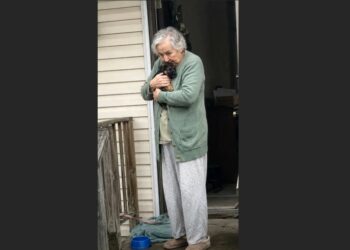
He was 81 years old, dressed against the cold, and walking slowly beside an eight-year-old tan Beagle named Otto.
Between them was an old leather leash.
The leather had softened with age and darkened where Gerald’s hand had held it through years of walks.
In his other hand, Gerald carried a paper bag.
Inside were Otto’s food and two favorite toys.
There were also several pages of handwritten instructions.
Gerald had spent two evenings preparing them.
What time Otto ate.
How far he usually walked.
Where he preferred to sleep.
What frightened him.
What settled him.
And one detail so small that nobody would have thought to ask about it.
Otto liked to sit on the left side of the person he was with.
Gerald knew because for seven years, that was where Otto had sat.
Now Gerald was standing at an intake counter, preparing to leave him behind.
Otto Had Not Originally Been Gerald’s Choice
Seven years earlier, Gerald had not been looking for a dog.
His wife, Eleanor, was.
Otto was about a year old then.
Young.
Busy.
Curious in the relentless way Beagles can be.
Gerald remembered him moving constantly during that first meeting.
Nose down.
Tail up.
Investigating chairs, shoes, corners, and anything else that might contain a useful smell.
Gerald looked at Eleanor.
“He has too much energy.”
Eleanor disagreed.
She had already watched Otto long enough to make up her mind.
Somehow, what had begun as an afternoon drive ended with adoption paperwork.
Gerald spent the ride home wondering what they had done.
Three months later, he stopped wondering.
Eleanor Had Been Right About Otto
The young Beagle settled into their life as though there had always been a place for him.
He followed Eleanor into the kitchen.
He learned the sound of Gerald opening the back door.
He discovered which chair produced the best chance of receiving a piece of whatever Gerald was eating.
Walks became routine.
So did evenings together.
Otto was energetic, just as Gerald had predicted.
He also made them laugh.
The dog could spend five minutes investigating one patch of grass as though solving a case nobody else knew existed.
He occasionally ignored Gerald when a smell seemed more important than his name.
Eleanor found this hilarious.
Gerald pretended not to.
By the end of the first year, Otto had become part of the household rather than a dog who had been added to it.
Then Eleanor Was Gone
Four years before that Thursday morning, Gerald lost his wife.
The house changed immediately.
Her side of the bed remained empty.
Her chair stayed in the same position for months because Gerald could not bring himself to move it.
There were mornings when he made coffee and briefly reached for a second cup before remembering.
Otto could not understand bereavement in the human sense.
He did not know why Eleanor stopped appearing in the rooms where she had always been.
But he experienced the same missing presence.
And he remained with Gerald.
That mattered.
Not because Otto erased grief.
He couldn’t.
But a dog still needs breakfast after a funeral.
A leash still needs clipping on.
A door still needs opening.
Those ordinary responsibilities kept appearing whether Gerald wanted the day to begin or not.
Their Walks Gave the Day Its Shape
Gerald’s neighborhood was quiet.
He and Otto usually followed the same route.
Down the block.
Past the house with the white fence.
Toward the corner where Otto always stopped longer than necessary.
Then home.
As both of them aged, the walks became slower.
Gerald did not mind.
Neither, apparently, did Otto.
A Beagle does not need speed to find a walk interesting.
There were smells everywhere.
Rain changed them.
Snow covered some and revealed others.
Trash collection day provided its own universe.
Some mornings, Gerald barely wanted to leave the house.
Otto did.
So they went.
By the time they returned, Gerald had been outside.
He had spoken to a neighbor.
He had moved.
Sometimes that was enough.
Otto Began Sitting on Gerald’s Left
Nobody trained him to do it.
At least Gerald didn’t remember doing so.
But over time, the pattern became obvious.
If Gerald sat on the porch, Otto settled to his left.
If Gerald sat on a bench during a walk, the dog positioned himself on that side.
On the couch, same thing.
At the kitchen table, Otto’s preferred place was near Gerald’s left leg.
Maybe the habit had begun because of where furniture happened to be arranged.
Maybe Eleanor had once sat on the other side.
Gerald never figured it out.
Eventually, he stopped questioning it.
The left side simply belonged to Otto.
Gerald Had Resisted Moving
For months, his son Robert had been trying to talk with him about senior living.
Gerald did not want to discuss it.
He was managing.
At least, that was how he described things.
He still cooked.
Still drove short distances.
Still handled most of his own affairs.
But after a minor health problem the previous fall, Robert became more concerned.
So did Gerald’s doctor.
The conversations became harder to postpone.
Robert lived about twenty minutes away from the community the family was considering.
That would make visits easier.
There would be people nearby if Gerald needed help.
Services he could use as his needs changed.
Gerald understood the logic.
Understanding did not make leaving his home easier.
By December, He Agreed
The decision did not happen in one dramatic conversation.
It came in pieces.
One discussion with Robert.
Another with a physician.
Paperwork.
Tours.
Questions.
Gerald kept finding reasons to wait.
Then eventually, he stopped.
“All right,” he told his son.
They began planning.
Furniture had to be sorted.
Things donated.
Things kept.
Documents organized.
A lifetime inside one home gradually became a smaller collection of possessions.
Gerald could handle most of that.
The problem was Otto.
Under the arrangement Gerald believed he would be moving into, he did not expect to be able to keep the dog with him.
That turned a practical move into something else.
Robert Tried to Find Another Solution
He asked people they knew.
Friends.
Neighbors.
Family acquaintances.
Some liked Otto.
That was different from being able to take him permanently.
An eight-year-old Beagle could still have years ahead.
He needed regular veterinary care.
Exercise.
Food.
Someone prepared to take responsibility for him every day.
Robert considered bringing Otto into his own home.
That solution ended quickly.
His wife had a severe dog allergy.
They explored other possibilities.
Several rescue contacts were made.
The family hoped they might find a private home without requiring Otto to enter a shelter environment.
But the move date kept approaching.
No arrangement became definite.
Gerald Did Not Blame Anyone
That almost made it harder.
There was nobody convenient to be angry with.
Robert was trying.
His wife could not choose not to have an allergy.
Friends had their own circumstances.
The move had become necessary for reasons Gerald himself had finally accepted.
Otto had done nothing wrong.
No one had.
Still, one morning Gerald found himself sitting at his kitchen table with a legal pad.
He wrote:
Breakfast — 7:00.
Then he stopped.
Otto was lying on the left side of his chair.
Gerald continued writing.
The Instructions Took Two Evenings
At first, he planned to make a simple list.
Food.
Medication.
Veterinarian.
Walking schedule.
Then the list grew.
Otto preferred shorter morning walks and a longer walk later if the weather was good.
He liked his blanket folded rather than bunched.
He sometimes moved in his sleep.
He disliked loud trucks.
If one passed too close during a walk, he might stop.
Gerald wrote that whoever was holding the leash should not pull.
Just wait.
Otto would move again.
He wrote down the command words the dog knew.
Where he liked being scratched.
What kind of treats upset his stomach.
The list stopped looking like instructions.
It began looking like seven years of observation.
Gerald Added the Detail About the Left Side Last
He nearly left it out.
It was not medically important.
It would not affect feeding.
It would not help a veterinarian.
Still, Gerald returned to the page.
Otto likes to sit on your left side.
He read the sentence.
Then left it there.
Someone caring for Otto might never need to know.
But Gerald wanted them to.
Tiny routines are often the things that make a dog feel familiar.
Anyone could learn Otto’s weight.
Only someone who had lived beside him knew where he would choose to sit.
He Packed Otto’s Toys
There were more than two.
Gerald chose the favorites.
One was worn enough that Robert had once suggested throwing it away.
Gerald refused.
Otto still carried it.
That settled the issue.
The other was newer.
He placed both in the paper bag with food.
Then he folded the written pages.
For a while, the bag stayed beside the kitchen door.
Otto sniffed it once.
Then walked away.
Gerald spent the rest of that evening pretending he was watching television.
Robert Didn’t Know About the Appointment
Gerald arranged it himself.
He contacted the shelter.
Explained the situation.
Scheduled a time.
He did not tell his son until that Thursday morning.
Robert immediately said he would come.
“No.”
“Dad, you don’t have to do that alone.”
Gerald repeated himself.
“No.”
Robert argued.
Gerald rarely raised his voice with his son.
He did not then either.
He simply said this was something he needed to do himself.
Eventually, Robert stopped pushing.
That did not mean he agreed.
It meant he understood his father had already decided how the morning would happen.
Gerald Put the Old Leash on Otto
The leash had been used for years.
Newer ones existed.
Gerald chose the old leather one.
Otto knew what the sound meant.
His body changed when Gerald picked it up.
He came toward the door.
A normal response.
For Otto, a leash usually predicted a walk.
He could not know that this trip was different.
Gerald clipped it onto his collar.
Then he picked up the paper bag.
They went outside together.
The Drive Was Quiet
Gerald did not turn on the radio.
Otto rode where he usually did.
At traffic lights, the Beagle looked through the window.
When they slowed near grassy areas, his nose worked toward the cracks around the glass.
Gerald kept one hand on the steering wheel.
At one point, his other hand moved toward Otto.
He rested it briefly on the dog’s shoulder.
Otto stayed where he was.
Gerald returned his hand to the wheel.
The shelter was getting closer.
There was no reason to rush.
There was also no road long enough to make the drive last forever.
They Arrived at 9:15
The shelter had just opened.
That was intentional.
Gerald wanted the building quiet.
He did not want to stand in a crowded lobby.
He parked.
For a moment, he did not move.
Otto waited.
Then Gerald opened his door.
He walked around the vehicle and helped Otto out.
Paper bag in one hand.
Leather leash in the other.
The two of them crossed the parking lot.
Otto walked slightly ahead.
Then stopped to smell something near a curb.
Gerald waited.
He did not pull.
He had written that instruction down for somebody else.
He followed it himself one more time.
A Young Intake Coordinator Met Them
His name was Philip.
He greeted Gerald and asked whether he had an appointment.
Gerald gave his name.
Then Otto’s.
Philip checked the schedule.
His voice remained professional but gentle.
He asked Gerald to come to the counter.
Otto stood beside him.
On the left.
Gerald placed the paper bag down.
“His things are in there.”
Philip nodded.
“What do you have?”
“Food. Toys.”
Gerald paused.
“And some instructions.”
Philip opened the top slightly and saw the folded pages.
“You wrote all this?”
Gerald looked down at Otto.
“I wanted whoever gets him to know him.”
Philip Did Not Rush the Conversation
Intake work can become procedural.
Forms.
Signatures.
Medical records.
Questions.
But the reason an animal arrives matters.
Some pets are found as strays.
Some come from unsafe situations.
Others arrive because a person is sick, loses housing, enters long-term care, dies, or reaches circumstances they never expected.
Gerald was not casually giving away a dog because caring had become inconvenient.
He was standing beside an animal who had shared seven years of his daily life and trying to make an impossible transition orderly.
Philip seemed to understand that.
He asked questions slowly.
Gerald answered every one.
Otto Had No Idea What the Paperwork Meant
He stood beside the counter.
Sniffed once toward the bag.
Looked at Philip.
Then looked toward Gerald.
Nothing about the room would have told him that his routine was about to change.
Dogs do not understand surrender documents.
They understand what happens around them.
A familiar leash.
A familiar person.
An unfamiliar building.
New smells.
Gerald’s movements.
The tension in the lead.
Those were the things Otto could experience.
So Gerald tried to keep his hands steady.
He Explained the Trucks Again
“Loud trucks bother him.”
Philip wrote it down.
“He won’t bite?”
“No.”
Gerald shook his head.
“He just stops.”
“What should someone do?”
“Wait.”
Gerald looked at Otto.
“Don’t drag him. Give him a minute.”
Philip nodded.
Gerald continued.
“He’ll go when he’s ready.”
There was something about explaining these small habits to a stranger that made the morning feel more final.
Anybody could hold Otto’s leash.
But Gerald knew what every pause meant.
The Paper Bag Sat Between Them
Two toys.
Food.
Instructions.
It looked absurdly small.
Seven years did not fit into a paper bag.
The mornings after Eleanor died were not inside it.
Neither were the neighborhood walks.
The evenings Otto slept beside Gerald’s chair.
The nights Gerald spoke aloud simply because another living creature was there to hear his voice.
The bag contained only objects.
The routine lived somewhere else.
Mostly in Gerald.
And, in whatever form dogs retain familiar patterns, perhaps in Otto too.
Gerald Had Already Lost Eleanor
That fact hovered over everything.
Four years earlier, there had been no choice about whether Gerald’s wife would remain in the house.
She was simply gone.
Otto remained.
Gerald had never asked the dog to carry his grief.
But the Beagle was present through it.
That presence had practical consequences.
Gerald still went outside.
Still measured food.
Still spoke during the day.
Still laughed occasionally when Otto did something ridiculous.
The dog had not cured loneliness.
He had made loneliness less absolute.
Now Gerald was preparing for another empty space.
He Kept One Hand Near Otto
Not gripping him.
Just close.
Every so often, his fingers touched the dog’s shoulder.
Otto remained beside his left leg.
The shelter lobby began getting busier.
A phone rang.
A door opened somewhere farther inside.
Another dog barked.
Otto’s ears moved toward the sound.
Then he looked back at Gerald.
Gerald lowered his hand again.
Philip brought over the forms.
There Were Boxes to Check
Basic information first.
Name.
Address.
Phone number.
Otto’s age.
Veterinary history.
Behavior around people.
Behavior around dogs.
Medical conditions.
Diet.
Medications.
Gerald answered carefully.
He did not rush simply because the questions hurt.
If the shelter was going to care for Otto, Gerald wanted them to have accurate information.
Then Philip reached the surrender section.
Gerald’s shoulders shifted.
He looked toward the form.
The pen remained in his hand.
The Camera Saw Only a Quiet Old Man at a Counter
There was nothing outwardly dramatic about the scene.
No shouting.
No struggle.
No dog pulling toward the exit.
Gerald stood with his head lowered.
Otto remained near him.
The paper bag sat on the counter.
From a distance, it might have looked like an ordinary shelter intake.
An elderly man filling in forms.
A Beagle waiting beside him.
A staff member doing his job.
But inside the bag were two evenings of instructions written by someone trying to transfer seven years of knowing a dog to people who had never met him before.
And beside Gerald’s left leg stood Otto.
Exactly where Gerald had written that he liked to be.
The pen touched the page.
Gerald began filling out the paperwork.
Editor’s Note: The characters in this story are fictional. Through these stories, we hope to share the intelligence, loyalty, compassion, and loving nature of dogs with people everywhere.