I Went to the Shelter Expecting Nothing More Than a Visit
My name is Amanda Reynolds.
I was forty years old when my seven-year-old son Noah walked into an animal shelter outside Columbus, Ohio, and did something I had never seen him do before.
He hugged someone.
Not me.
Not his father.
Not a grandparent, cousin, teacher, or therapist.
A dog.
More specifically, an aging German Shepherd named Kaiser.
Until that Saturday morning, Noah had never voluntarily wrapped both arms around another living creature and stayed there.
Touch had always been complicated for him.
We understood that.
We respected it.
And I had long ago stopped expecting affection to look like an embrace.
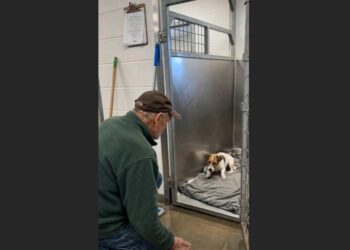
Then Noah reached the last kennel in the adoption hallway.
Kaiser was sitting inside.
And everything became very quiet.
Becoming Noah’s Mother Changed What I Thought I Understood
I am a speech-language pathologist.
For nearly fifteen years, I had worked with children whose communication, sensory processing, and development differed from what people often expected.
I knew professional terminology.
I knew intervention plans.
I knew how easily behavior could be misunderstood when adults focused only on what a child was doing instead of what the environment was asking of them.
Then Noah was born.
He was diagnosed with autism spectrum disorder shortly before his third birthday.
Becoming his mother did not make my professional training useless.
It did make me much more humble about what training can tell you from the outside.
No two autistic children experience the world identically.
No textbook could tell me exactly how Noah experienced his.
He had to teach us that.
Touch Had Never Been His Preferred Language
Noah was affectionate.
That is important.
He laughed with us.
Shared things that fascinated him.
Came looking for us when he wanted company.
Sat near his father while they studied weather maps.
Called me into his room to explain train schedules he had memorized.
He loved us deeply.
Physical contact simply did not carry the same comfort for him that it did for many people.
A hand placed unexpectedly on his shoulder could make him pull away.
If someone attempted a hug without warning, his body stiffened.
Crowded spaces were difficult.
People leaning against him could become overwhelming quickly.
So we stopped assuming touch was required to demonstrate closeness.
That was one of the best things we ever did.
We Learned to Ask Instead of Reach
“Can I hug you?” became a real question.
Noah was allowed to say no.
Often, he did.
We stopped treating refusal as rejection.
At bedtime, I sat beside him.
Sometimes we talked.
Sometimes he wanted me nearby while he read.
Sometimes he wanted no conversation at all.
His father and I learned that love could look like bringing him exactly the correct cup because the other one felt wrong in his hand.
It could look like listening to twenty minutes about atmospheric pressure.
It could look like sitting in the same room without touching.
Once we stopped insisting that affection had to resemble our own habits, Noah became easier to understand.
There Was Still a Feeling I Kept to Myself
I missed hugs.
That was mine to manage.
Not Noah’s.
I never wanted him to grow up believing his body existed to satisfy someone else’s emotional expectations.
I did not want him hugging relatives because adults looked disappointed when he declined.
I did not want physical affection turned into a performance.
Still, I would be dishonest if I said I never wondered what it might feel like if he chose to hug me one day.
That thought could exist without becoming an expectation.
So I kept it private.
Noah did not owe me a hug.
He never did.
By Seven, He Had Developed an Interest in Shelter Dogs
It began with questions.
Where did dogs go if their families could not keep them?
Did shelters have bedrooms for dogs?
Why did some animals get adopted quickly while others stayed?
Did old dogs know they were old?
Could dogs hear each other barking through kennel walls?
For almost a month, shelter operations became one of Noah’s recurring subjects.
Then he started asking another question.
“Can we go see them?”
He did not ask to adopt a dog.
He wanted to see.
His occupational therapist had also suggested offering more opportunities for calm, voluntary interactions with animals if Noah showed interest.
Not because animals would “fix” anything.
Not as a replacement for evidence-based support.
Simply because Noah was curious, and predictable animal encounters could be another experience available to him.
So one Saturday morning in spring 2025, we went.
The Shelter Was Immediately a Sensory Challenge
The building was older.
Concrete floors amplified sound.
Dogs barked from different directions.
Metal kennel gates clicked.
Cleaning smells lingered in the hallway.
Fluorescent lights made the adoption wing brighter than Noah preferred.
He stopped shortly after entering.
My first instinct was to ask whether he wanted to leave.
Before I could, he held up one hand.
That meant wait.
So we waited.
A volunteer noticed.
She did not approach him enthusiastically or ask him to pet a dog.
She simply told us we could take as much time as we needed.
That helped.
After a minute or two, Noah started walking again.
He Observed Every Kennel
He did not rush.
A young hound jumped against his gate.
Noah watched.
A small terrier barked repeatedly.
Noah moved past.
One dog slept through our entire visit.
Another brought a toy to the front.
Noah seemed interested in all of them, but he did not ask to touch any.
That did not surprise me.
Observation was often how he entered unfamiliar situations.
First he watched.
Then he decided whether he wanted to participate.
We reached kennel after kennel.
Eventually, there was only one left at the end of the corridor.
That was where Kaiser sat.
Kaiser Was Hard to Miss
He was an estimated eight-year-old German Shepherd.
Nearly ninety pounds.
Dark sable coat.
Gray spreading around his muzzle.
One ear stood straight.
The other leaned slightly sideways, possibly from an old injury.
There were several healed scars along his front legs.
The shelter had limited information about his earlier life beyond a history of inadequate care before surrender.
Staff did not use the scars to invent additional trauma.
They could not know exactly how each one happened.
What they did know was the dog in front of them.
Kaiser was older.
Large.
Calm with familiar handlers.
And routinely overlooked.
He Was Not Performing for Visitors
Most of the dogs became more animated when people entered the adoption wing.
Kaiser remained seated.
He watched.
That was all.
He did not bark.
Did not jump.
Did not push himself against the kennel gate.
His stillness was one reason some visitors found him intimidating.
A large German Shepherd staring quietly through a kennel door can be harder for strangers to read than a smaller dog wagging frantically.
Noah apparently read him differently.
He stopped.
Kaiser looked at him.
Neither moved.
They Stayed That Way for Several Minutes
I almost interrupted.
Then I remembered everything we had learned about giving Noah time.
The volunteer did the same.
Noah studied Kaiser’s ears.
His paws.
His breathing.
Kaiser occasionally shifted his gaze.
There was nothing cinematic about it.
A boy stood in a hallway.
A dog sat behind a kennel gate.
Eventually, the volunteer asked Noah quietly:
“Would you like to meet him?”
I expected no.
Noah nodded.
We Did Not Simply Send a Seven-Year-Old Into a Strange Dog’s Kennel
The meeting was supervised.
Staff knew Kaiser’s handling history and felt comfortable arranging a controlled introduction.
Even gentle dogs should not be treated as automatically safe simply because a touching story is unfolding around them.
Kaiser was brought into a quieter meeting area rather than being crowded.
Noah was given space.
Nobody instructed him to pet the dog.
Nobody told him where to stand.
Kaiser remained composed.
His leash stayed loose.
The dog did not rush forward.
That seemed to matter to Noah.
Kaiser was present without demanding anything.
Noah Took One Step Closer
Then another.
Kaiser sniffed the air.
His head lowered slightly.
I cannot say he was intentionally making himself less intimidating.
That would assign a human motive we could not know.
But physically, the effect was exactly that.
A nearly ninety-pound shepherd appeared smaller with his head lowered and body relaxed.
Noah stopped within arm’s reach.
I held my breath without meaning to.
He raised one hand.
Then the other.
His Fingers Went Into Kaiser’s Fur
Noah touched the thick fur around the shepherd’s neck.
Kaiser stayed still.
Noah removed his hands.
For half a second, I assumed the interaction was finished.
Then my son stepped forward.
He placed both hands on Kaiser again.
And leaned his body into the dog’s chest.
His arms moved around him.
His face disappeared into the fur along Kaiser’s neck.
No one said anything.
I was too stunned to speak.
Noah Was Hugging Him
Not because someone asked.
Not because a therapist had created a goal.
Not because an adult promised a reward.
Noah had initiated it himself.
Kaiser remained calm while the handler monitored his body language closely.
That detail mattered.
Dogs are not objects for children to hug, and many dogs find embracing uncomfortable.
If Kaiser had turned away, stiffened, licked repeatedly, tried to leave, or otherwise appeared uncomfortable, the interaction would have been ended.
Instead, his body remained loose.
Noah stayed close.
Then eventually released him on his own.
It lasted much longer than any physical contact Noah typically tolerated.
To me, it felt enormous.
To Noah, it may simply have felt right.
“He Feels Quiet”
The shelter volunteer looked at me.
“Has he done that before?”
I shook my head.
Speaking felt impossible for a moment.
Noah stepped away from Kaiser.
He looked at the dog.
Then said:
“He feels quiet.”
That sentence explained the moment better than anything I could have invented.
Not soft.
Not nice.
Not friendly.
Quiet.
For Noah, “quiet” was not merely about volume.
It often meant manageable.
Predictable.
Not demanding.
A state in which his nervous system did not have to defend itself from too much incoming information.
Whatever he experienced in Kaiser’s stillness, he wanted to remain near it.
I Was Crying, but I Tried Not to Make Noah’s Hug About Me
This was important.
It would have been easy to turn toward him and say:
“Can Mommy have one too?”
I did not.
His decision to hug Kaiser did not create an obligation to hug anyone else.
It did not mean touch suddenly felt easy.
It did not mean we had discovered a technique to generalize.
The moment belonged to Noah.
I could be moved by it without converting it into a demand.
So I wiped my face.
Sat down.
And watched my son sit beside an old German Shepherd.
Noah did not touch him continuously.
For most of the meeting, he simply stayed nearby.
That seemed just as meaningful.
Then We Learned Kaiser Had Been Waiting for Months
The volunteer told us more.
Large senior shepherds can be difficult to place.
Some adopters worried about his age.
Others about his size.
Some wanted puppies.
Some simply found his appearance intimidating.
Kaiser had remained gentle with staff and had passed the shelter’s behavioral assessments, but those facts did not automatically make him appropriate for every household.
He was strong.
His senior years were beginning.
Future veterinary expenses needed consideration.
His compatibility with a child, especially one with sensory differences, had to be evaluated over more than one emotional meeting.
My husband and I understood that.
So when Noah said he wanted Kaiser to come home, we did not sign immediately because we had witnessed one extraordinary hug.
We started asking questions.
The Practical Questions Mattered More Than the Tears
How did Kaiser behave around sudden movement?
How did he respond to noises?
Was he comfortable with children outside the shelter environment?
Any food guarding?
Any handling sensitivities?
How strong was he on leash?
Did he have orthopedic problems?
What did his veterinary exam show?
What would a senior shepherd likely need over the coming years?
The shelter answered carefully.
Kaiser needed moderate exercise.
He was beginning to show some age-related stiffness.
He benefited from rugs on slippery floors and would eventually likely need more mobility support.
He had shown no concerning resource guarding during assessment.
He generally preferred calm interactions.
Those answers were promising.
They were not guarantees.
We Visited Again
And again.
That was partly for Kaiser.
It was also for Noah.
We wanted to see whether the first meeting had been a singular moment or whether he actually enjoyed being around this dog.
On the second visit, Noah did not hug Kaiser.
I was glad nobody acted disappointed.
He sat beside him.
Kaiser lay down.
Noah read a book.
On the third visit, Noah rested one hand on the dog’s shoulder for several minutes.
Then removed it.
The fourth time, Kaiser walked over and settled near Noah’s feet.
Their relationship looked different on each visit.
That made it feel more real.
We Also Consulted the People Who Knew Noah
His occupational therapist helped us think through the environment at home.
Kaiser would need a retreat space where Noah did not follow him.
Noah also needed assurance that the dog would not enter his space unpredictably.
Boundaries had to work both ways.
A dog should not become a sensory tool available on demand.
Kaiser needed autonomy.
Noah needed autonomy.
We could teach our son that even though he enjoyed hugging Kaiser, the dog’s body language still mattered.
Sometimes Kaiser might want contact.
Sometimes he might walk away.
“No” had to be respected for both of them.
That became a family rule.
We Prepared the House Before Adoption
We put down non-slip runners for Kaiser’s older joints.
His bed went outside Noah’s room, but not inside it.
That gave the dog a place nearby without requiring him to sleep with a child.
We created another quiet bed in the living room.
Food and water stayed in an area Noah understood was Kaiser’s space.
My husband and I took responsibility for walking, feeding, veterinary care, and training.
Noah could participate.
He would never be responsible for the dog’s essential care.
The shelter also discussed adjustment.
Kaiser might behave differently once removed from the kennel environment.
We knew that.
A calm shelter meeting did not guarantee a perfectly calm home.
Adoption Day Was Much Less Dramatic Than the First Meeting
Paperwork took time.
Kaiser sniffed around.
Noah sat in a chair reading.
At one point the shepherd lay beside his shoes.
That was all.
The staff took a photograph.
I cried again, though less impressively.
Then Kaiser walked outside with us.
He did not know he had been “chosen.”
He could not understand the paperwork.
He knew only that familiar people from several recent visits were leaving the building with him.
The rest would have to be learned through repetition.
The First Weeks Were About Routine
Kaiser checked the house carefully.
He followed us more than he would later.
He sometimes slept near the front entrance.
New sounds brought his head up.
Noah was fascinated but surprisingly good about giving him space.
The phrase “Kaiser is resting” became enough to stop him from approaching.
At night, the shepherd began choosing the bed outside Noah’s room.
We never trained that location as a guarding position.
He was not acting as a service dog.
He had no formal task related to Noah’s autism.
He simply appeared to prefer sleeping there.
If he chose another room, we let him.
Noah Began Hugging Kaiser in the Morning
Not immediately.
Several weeks passed first.
Then one morning, Noah crouched beside the dog before school.
He placed his arms around Kaiser’s neck briefly.
Released him.
Then put on his backpack.
The next morning, he did it again.
Some days the contact lasted one second.
Other days longer.
If Kaiser turned his head away or stood up, Noah stopped.
We reinforced that.
The remarkable thing was not that Noah had suddenly become “a hugger.”
He hadn’t.
He still rarely wanted prolonged physical contact with people.
His relationship with touch remained his own.
Kaiser was simply an exception he had chosen.
I Never Used Kaiser to Practice Human Hugging
People suggested it.
“If he can hug the dog, maybe you can transition that to hugging family.”
No.
That was never the goal.
Noah did not need to learn that the correct endpoint of his development was greater physical affection toward adults.
If he eventually wanted more touch, fine.
If not, also fine.
Kaiser’s role in our house was not to normalize Noah.
The dog’s presence gave Noah another relationship in which he could make choices about proximity, contact, and trust.
That was valuable without turning it into treatment.
Kaiser Was Not a Miracle Cure
I became protective of that distinction after people heard our story.
Autism is not an illness a dog cures.
Kaiser did not remove Noah’s sensory sensitivities.
Noah still wears hearing protection in certain environments.
Fluorescent lighting can still overwhelm him.
Unexpected changes can still be difficult.
He still dislikes many forms of touch.
The fact that he voluntarily hugs one dog does not invalidate any of those realities.
It tells us something narrower and more beautiful.
Under the right circumstances, Noah found a kind of physical contact that felt comfortable enough for him to seek.
That discovery belonged to him.
Kaiser Also Had Needs of His Own
By nine, his joints were noticeably stiffer.
We adjusted.
His walks became somewhat shorter.
A veterinarian evaluated him and guided his senior-care plan.
We added thicker bedding.
Kept his weight controlled.
Watched his mobility.
Noah learned that Kaiser could be tired.
That sometimes the dog did not want interaction.
That loving him meant allowing him to sleep.
One afternoon, Noah came toward Kaiser for his usual contact.
The shepherd stood and moved to another bed.
Noah stopped.
“He said no,” he told me.
“Yes.”
Noah accepted it.
I remember feeling as proud of that moment as I had of the first hug.
Trust Goes in Both Directions
That is something children can learn beautifully when adults stop treating animals as endlessly patient props.
Kaiser trusted us because we protected his boundaries too.
Nobody climbed on him.
Nobody disturbed him while eating.
Noah did not follow when he moved to his quiet bed.
Visitors were told not to overwhelm him.
In return, Kaiser increasingly chose proximity.
He lay near Noah during homework.
Rested beside the couch when Noah watched weather videos.
Sometimes followed him into the backyard.
Their relationship grew through repeated choices.
That felt healthier than saying the dog had somehow been born specifically for my son.
The Shelter Staff Still Sends Messages
They enjoy photographs of Kaiser stretched across our rug.
One volunteer once wrote that she could not believe the serious-looking shepherd from the end kennel now had a child using him as a reading companion.
I sent back a photograph that probably explained their relationship better.
Noah was sitting on the floor.
Kaiser was three feet away.
Neither touching.
Both relaxed.
That is what closeness often looks like in our house.
It does not always require physical contact.
Noah taught us that years before Kaiser arrived.
I Eventually Understood Why “He Feels Quiet” Mattered So Much
Kaiser did not rush Noah.
He did not demand a response.
His body was large, but his behavior during those meetings was measured.
Noah could observe first.
Approach second.
Touch only when he wanted.
That sequence gave him control.
For someone who can experience unexpected touch as overwhelming, control changes the entire experience.
I cannot know precisely what Noah felt when he placed his face against Kaiser’s fur that first afternoon.
I do not need to know.
He told us what mattered.
Quiet.
Safe enough to approach.
Safe enough to leave.
Safe enough to come back.
I Still Haven’t Received the Hug I Once Imagined
And I am okay with that.
Noah is affectionate with me in his ways.
He sits beside me when he is tired.
Brings me strange facts because he knows I will listen.
Checks the weather forecast on my phone before I leave the house.
Sometimes he places his hand briefly against mine.
I do not measure any of those things against the hugs he gives Kaiser.
They are different relationships.
Different kinds of sensory experience.
Different expressions of trust.
My son’s love was never missing.
I had only needed to become fluent in how he expressed it.
Nearly a Year Later, Kaiser Is Grayer
He moves more slowly on cold mornings.
The crooked ear remains crooked.
He sleeps more.
Most nights, he still chooses the bed outside Noah’s room.
Sometimes Noah closes his bedroom door.
Kaiser sleeps elsewhere.
Nothing terrible happens.
In the morning, Noah usually finds him.
He kneels.
Checks whether the dog appears receptive.
Then, many mornings, his arms go around the old shepherd.
Kaiser stands or lies quietly for the contact.
Then the day begins.
Breakfast.
School.
Walks.
Medication when needed.
Homework.
Ordinary family life.
The First Hug Was Never Important Because It Made Noah More Like Other Children
That is what I wish people understood.
The value was not that my autistic son finally performed an expected form of affection.
He did not cross some developmental finish line.
He did not become less autistic.
He found one relationship in which a form of touch that had usually felt difficult became something he voluntarily sought.
That difference matters.
A child’s boundaries do not become less valid because there is one person or animal they allow closer.
If anything, Noah’s relationship with Kaiser taught me again how meaningful consent can be when it is respected completely.
Kaiser Was Overlooked for Many of the Same Reasons Noah Was Drawn to Him
He was older.
Quiet.
Serious.
Not performing.
Not pushing himself into people’s attention.
Visitors who wanted enthusiasm moved toward other kennels.
Noah noticed the dog who sat still.
I sometimes think about that.
The trait that made Kaiser less immediately appealing to some families was one of the traits that made Noah willing to remain in front of his kennel.
Compatibility can be that specific.
Not magical.
Specific.
The right temperament meeting the right household at the right time.
Some Mornings, I Watch Them Without Saying Anything
Noah kneels.
Kaiser lifts his head.
My son moves closer.
If the dog stays relaxed, Noah puts his arms around him.
Then he lets go.
No applause.
No therapist taking data.
No one calling it progress.
It is simply theirs.
A boy who experiences touch on his own terms.
An old German Shepherd who seems comfortable with calm, predictable company.
Two individuals with boundaries the people around them have learned to respect.
That is enough for me.
I Went to the Shelter Thinking We Were Only Going to Look
I certainly did not expect an older ninety-pound shepherd.
I did not expect adoption paperwork.
And I did not expect to stand in a quiet room watching my child press his face into a dog’s gray-flecked fur.
But the part I remember most is not my own tears.
It is what Noah said afterward.
“He feels quiet.”
Nearly a year later, I understand that sentence better.
Kaiser did not teach Noah to tolerate touch.
He did not cure anything.
He did not earn the label of miracle because my son hugged him.
He simply offered the kind of presence Noah could approach without pressure.
And Noah, when given complete freedom to decide, chose to come closer.
Most mornings, he still does.
Editor’s Note: The characters in this story are fictional. Through these stories, we hope to share the intelligence, loyalty, compassion, and loving nature of dogs with people everywhere.