I had waited ten months to tell Thomas that he finally had somewhere to live.
Ten months of applications.
Appointments.
Phone calls.
Forms that had to be completed again because something was missing.
Waiting lists that barely seemed to move.
Programs that looked promising and then fell through.
And, through every conversation, one question Thomas asked before almost anything else:
“Can Max come with me?”
Max was his dog.
Golden-coated, mixed breed, permanently cheerful around people he knew.
For Thomas, housing that excluded Max was not really housing at all.
Then, on a Thursday morning, the email arrived.
An apartment had been approved.
Thomas and Max could move in together.
I read the message twice.
Then I grabbed my coat and went looking for them beneath the bridge where Thomas had been staying.
I expected to find Max running toward me.
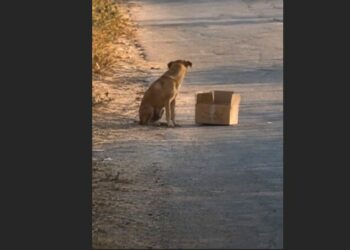
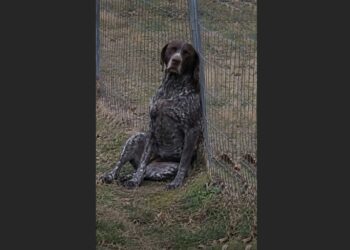
Instead, I found him lying beside the concrete wall.
Thomas was gone.
Max Had Never Failed to Greet Me Before
My name is Camille.
At the time, I had been working as a social worker for about three years.
I first met Thomas the previous fall.
He was in his sixties and had once worked as a cabinetmaker.
By the time I knew him, a series of financial and personal setbacks had left him without stable housing.
He did not tell his life story easily.
Some people do.
Thomas didn’t.
He was polite.
Quiet.
Careful about what he accepted.
He disliked feeling as though he was asking anyone for too much.
Max was the opposite.
The first time I approached them, the dog acted as though we had been friends for years.
He came toward me with his whole body moving.
Tail first.
Then hips.
Then the rest of him.
Thomas smiled.
“Max. Give her a minute.”
Max did not give me a minute.
That was how I learned his name.
Thomas Had Very Few Things He Was Protective Of
His tools were mostly gone by then.
So was the workshop where he had once made cabinets.
What remained fit into a few bags.
Clothing.
Documents.
Basic supplies.
A blanket.
Dog food when he could get it.
And Max.
Thomas never spoke about the dog as a possession.
Max was simply part of every plan.
If I asked whether Thomas had eaten, he often answered by telling me whether Max had.
If I brought supplies, he checked the dog food first.
When we discussed shelter options, his first concern was always whether dogs were permitted.
That made the housing search more complicated.
It also made the goal clearer.
Separating them was not something Thomas was willing to consider unless there was an emergency.
The Search Took Most of a Year
People sometimes imagine that helping someone move from homelessness into housing is a matter of finding an empty apartment.
It rarely works that way.
Eligibility has to be established.
Documents have to exist.
Programs have requirements.
Units have restrictions.
Some accept pets.
Some do not.
There are inspections.
Applications.
Medical appointments.
Transportation problems.
Missed calls because the person does not always have reliable phone service.
Long stretches where everyone has done what they can and nothing happens anyway.
Thomas was patient longer than I expected.
Sometimes frustrated.
Sometimes discouraged.
But he kept meeting me.
Max usually lay nearby while we worked.
Max Became Part of Our Routine
When I approached, he ran toward me.
Every time.
If I had a clipboard, he sniffed it.
If I sat beside Thomas, Max found the space between us.
If I stopped petting him, he usually offered a paw or leaned his shoulder against my leg until I reconsidered.
Thomas pretended to apologize.
“He thinks everybody came to see him.”
Maybe Max did.
Maybe he simply knew that people who sat with Thomas often brought food, attention, or both.
Either way, his enthusiasm became one of the predictable parts of my visits.
That was why the Thursday morning felt wrong almost immediately.
Max Did Not Get Up
He was lying on an old blanket beneath the bridge.
His head was down.
When I said his name, his eyes lifted.
His tail did not start beating against the ground.
He did not jump toward me.
He made a quiet sound.
Then looked toward the empty place where Thomas usually sat.
I stopped walking.
“Where is he, Max?”
Of course Max could not answer.
I looked around.
Thomas’s things were still there.
A bag.
The blanket.
Several small items I recognized.
No Thomas.
My excitement about the apartment vanished.
I Started Calling People
Outreach workers.
Nearby service providers.
Anyone who might have seen him.
I checked with people who knew the area.
Eventually, the explanation emerged.
Three days earlier, Thomas had become seriously ill.
Someone nearby had called for emergency help.
He had been transported to a hospital.
Max had remained beneath the bridge.
That answered one question.
It created several more.
How sick was Thomas?
Why had no one been able to take Max?
Had the dog eaten?
Had anyone been checking on him?
Most importantly, did Thomas know where Max was?
Max Had Been There for Three Days
People in the area had put out food and water.
That helped.
But Max had stayed close to the belongings.
It would have been easy to say he was guarding them.
Maybe he was.
Maybe the familiar objects simply gave him a place to remain after Thomas disappeared.
Dogs do not understand hospitalization.
Max could not know Thomas had been taken somewhere for medical treatment.
He knew only that his person had vanished suddenly and the place where they normally stayed still smelled familiar.
For three days, he remained.
I Crouched Beside Him
“Come on.”
Max looked at me.
Normally I would not expect a dog under stress to understand a sentence like:
“We’re going to find Thomas.”
But my voice was familiar.
I was familiar.
And I had a leash.
Max allowed me to get close.
He stood slowly.
Then followed me toward the car.
That was already more than I had expected.
The Hospital Could Not Simply Admit a Dog
When I arrived, the first answer was understandably cautious.
Hospitals have rules.
Other patients have allergies.
There are infection-control concerns.
Dogs moving through clinical areas have to be managed safely.
Max was not a service dog.
He did not have automatic access to Thomas’s room.
So I explained.
Thomas had been living outside.
Max was his primary companion.
The dog had remained at their sleeping place for three days.
I was not asking for permanent accommodation.
I was asking whether there was a safe way to arrange a brief visit.
The nurse listened.
Then began making calls.
Permission Took Time
Max waited with me.
He seemed restless in the unfamiliar environment.
Every door opened to new smells.
Disinfectant.
Food.
People.
Medical equipment.
I kept him close.
Eventually, the nurse returned.
The visit had been approved under special conditions.
Short.
Controlled.
Max had to remain with me.
We would leave immediately if there was any problem.
I agreed to all of it.
Then we walked toward Thomas’s room.
Max Changed Before We Reached the Bed
At first, he was cautious.
Then his head lifted.
His pace changed.
He pulled slightly forward.
Maybe he heard Thomas.
Maybe he smelled him.
Dogs can identify familiar people through combinations of scent, voice, and movement that humans barely notice.
Whatever Max picked up, something in his behavior shifted.
When we entered the room, his tail started moving.
Thomas was awake, but weak.
He looked toward us.
For a second, his expression did not change.
Then he saw Max.
“Max.”
It was barely louder than a breath.
That was enough.
The dog moved toward the bed.
I kept the leash controlled so he would not jump.
Max seemed to understand the need for caution, or perhaps Thomas’s position changed how he approached.
He put his front paws near the bedside.
Then rested his head in Thomas’s hand.
Thomas’s fingers moved over his face.
Slowly.
His eyes closed for a moment.
When they opened again, they were wet.
I Had Brought More Than Max
I almost forgot.
The apartment.
The email that had started the morning.
The news I had imagined delivering beneath the bridge.
I waited until Thomas had settled.
Then I stepped closer.
“Thomas.”
He looked at me.
“Your apartment was approved.”
For a moment, he seemed not to understand.
I repeated it.
“You have housing. You and Max.”
His hand stopped on the dog’s head.
“You mean that?”
“Yes.”
“You’re sure?”
“Yes.”
He Looked at Max Before He Looked Back at Me
That did not surprise me.
For months, every housing conversation had included the same condition.
Max came too.
This time, there was no condition left to negotiate.
The apartment allowed him.
Thomas held the dog’s face gently between both hands.
His mouth moved before words came.
Finally, he managed:
“We got it, boy.”
Max leaned forward.
Thomas laughed once.
Then cried.
I looked away because sometimes giving people a little privacy is the only useful thing a social worker can do.
The Apartment Did Not Fix the Medical Problem
That mattered.
Thomas was still sick.
He could not simply walk out of the hospital because housing had become available.
The medical team needed to stabilize him.
He had lost strength.
Recovery would take time.
Over the next several weeks, he remained under care.
Max could not stay in the hospital continuously.
Arrangements had to be made.
A temporary foster placement was organized with people Thomas trusted.
Visits happened when the hospital could accommodate them.
Each one seemed to settle Thomas.
But Max was not medicine.
He did not replace clinical treatment.
He provided something different.
Familiarity.
Routine.
Contact with the life Thomas wanted to return to.
Thomas Asked About the Apartment Constantly
“Still mine?”
“Yes.”
“Still okay with Max?”
“Yes.”
“Nothing changed?”
“Nothing changed.”
I understood why he kept asking.
When you have lived for months in systems where approval can disappear because a document is missing or a deadline passes, good news can feel temporary.
The apartment existed.
The paperwork was complete.
We just needed Thomas healthy enough to leave.
Three Weeks Later, Discharge Became Possible
He was not fully recovered.
But he was strong enough to continue outside the hospital with follow-up care and support.
Moving day was modest.
There was no moving truck full of furniture.
No boxes labeled kitchen or bedroom.
Thomas owned too little for that.
The housing program and local organizations helped provide basic furnishings.
A bed.
A small table.
Kitchen supplies.
Linens.
Food.
And a dog bed.
Max returned to Thomas before the move.
The reunion was less dramatic the second time.
Max simply pressed close.
Thomas kept a hand on him.
Then we drove to the apartment.
It Was a Small Studio
Thomas stopped just inside the door.
Sunlight came through one window.
There was a compact kitchen.
A bed.
A bathroom that belonged only to him.
A lock on the door.
Heat.
Ordinary things.
He looked around as if the room were much larger than it was.
I had shown apartments to clients before.
Some people walked in and immediately inspected cabinets.
Others checked the bathroom.
Thomas stood still.
Max did not.
Max Inspected Everything
He sniffed the doorway.
The floor.
The bed.
The dog bed.
The kitchen.
The edge of the sofa.
Every corner seemed to require investigation.
Thomas watched him.
“Think it’ll do?”
Max continued sniffing.
Thomas smiled.
Then he sat on the bed.
It was the first time I had seen him sit somewhere knowing no one could ask him to leave at closing time.
“We’re Home.”
Thomas said it quietly.
Mostly to Max.
The dog returned from investigating the kitchenette.
He stood in front of Thomas.
Then settled on the floor beside the bed.
Not in the new dog bed.
Naturally.
Within minutes, he was asleep.
That was when the image from the bridge returned to me.
Max lying against concrete.
Head lowered.
Watching the empty place Thomas normally occupied.
Now Thomas was less than three feet away.
The dog did not need to watch for him.
There Was No Way to Know What Max Understood
It would be easy to say he knew they had a home.
Dogs do not understand leases or supportive-housing programs.
Max could not know that Thomas now had legal permission to remain in that room.
He knew other things.
Thomas was there.
Their belongings were there.
The temperature was comfortable.
Food appeared.
The door closed.
They slept.
Morning came.
Thomas was still there.
Those repetitions would teach Max what the paperwork could not.
Thomas Had to Learn the Same Thing
Stability can feel unfamiliar after a long period without it.
The first few weeks were not simply joyful.
Thomas had appointments.
Medication.
Household routines to rebuild.
Benefits paperwork.
Follow-up visits.
He had to remember what it felt like to manage a private space again.
He also had to get used to silence.
Under the bridge there had always been traffic.
Voices.
Weather.
Other people moving nearby.
Inside the apartment, nights could be almost too quiet.
Max helped with that.
There was always another body moving around.
Another set of breathing sounds.
Another reason to get up in the morning.
Housing Changed Their Problems
It did not eliminate every one.
Thomas still had limited income.
His health needed monitoring.
Max needed food and veterinary care.
Transportation remained difficult.
There were still appointments.
Still social-service systems.
Still uncertainty.
But the nature of the uncertainty changed.
Thomas could leave an appointment and return to the same door.
His belongings could stay in one place.
Max could sleep without being alert to every passing stranger.
Those differences were enormous.
The Dog Bed Took Time
Max ignored it at first.
He preferred the floor beside Thomas.
Then the corner near the bed.
Then an old blanket.
Eventually, Thomas moved the dog bed to the exact spot Max had chosen.
That solved the problem.
“I guess he wanted to pick the location,” Thomas said.
It made sense.
After months of adapting to spaces neither of them controlled, Max finally had some choice.
So did Thomas.
I Visited Several Weeks Later
The apartment already looked different.
There were groceries.
A jacket hanging near the door.
A mug in the sink.
A stack of mail.
Small evidence of a life accumulating in one place.
Max met me enthusiastically again.
That was when I knew how much the day beneath the bridge had frightened me.
There he was.
Tail moving.
Jumping badly despite being told not to.
Thomas laughed.
“See? He’s back to bothering people.”
I was glad.
Thomas Had Put a Photograph Near the Bed
It showed Max sitting beside him outdoors.
Someone from outreach had taken it months earlier.
Thomas looked thinner in the picture.
Max looked exactly the same.
I asked why he had chosen that one.
Thomas shrugged.
“We made it through.”
I did not ask him to explain further.
He Rarely Talked About the Hospital
He remembered pieces.
The ambulance.
Bright lights.
Waking up without Max.
That had been one of his first questions.
Where was the dog?
Nobody at the hospital knew.
For three days, Thomas had been unable to do anything about it.
Meanwhile, Max had remained beneath the bridge.
Neither knew where the other was.
That separation seemed to bother Thomas more than many details of the medical emergency itself.
Max Was Not “Guarding” the Past Forever
Once housed, he stopped hovering around the bags.
He no longer slept with his body positioned beside all of Thomas’s belongings.
The behavior had made sense outside.
Possessions could disappear.
People moved through shared spaces.
Nothing was guaranteed.
Inside the apartment, Max had other options.
A window.
A bed.
A rug.
Thomas.
The bags themselves became less important.
Thomas Stopped Carrying Everything With Him
That was another change.
When you have no secure place to leave belongings, mobility becomes complicated.
Everything important has to stay near you.
In the apartment, Thomas could leave a jacket on a chair.
Food in a cupboard.
Documents in a drawer.
A blanket on the bed.
He could go to an appointment without moving his entire life.
Max could stay home when appropriate.
That ordinary separation took practice.
At first, Thomas worried.
So did Max.
They learned.
Thomas left.
Thomas returned.
Again.
Again.
Reliability accumulated.
The Story Was Never Simply About a Loyal Dog
Max’s behavior was memorable.
Three days beneath the bridge while Thomas was gone.
His subdued response when I found him.
The change when he saw Thomas again.
But the story was also about something less sentimental.
Housing.
Access.
Pet-friendly policy.
Healthcare.
Administrative persistence.
Without those things, Max’s loyalty would not have produced a safe home.
He could wait beside Thomas forever and still be sleeping outside.
Someone had to solve the housing problem.
Keeping Them Together Mattered
For some people without stable housing, an animal companion is one of the few relationships that has remained constant.
That does not make every housing placement with a pet automatically safe or workable.
There are practical questions.
Veterinary care.
Building rules.
Space.
Noise.
Ability to manage the animal.
But where possible, keeping a person and a well-cared-for companion animal together can remove one more barrier to accepting housing.
Thomas had made his position clear for ten months.
He would not abandon Max simply to make the paperwork easier.
The final apartment respected that.
I Thought About How Close the Timing Had Been
The apartment approval arrived while Thomas was in the hospital.
If it had come earlier, perhaps he would already have been indoors when he became ill.
Maybe someone would have found him sooner.
Maybe the medical crisis would have unfolded differently.
There was no way to know.
I tried not to live in those possibilities.
What mattered was what could still be changed.
Thomas had survived.
Max was safe.
The apartment was available.
The work became helping those three facts stay true.
Months Later, the Bridge Was Still There
Of course it was.
Cars passed above it.
People still sought shelter underneath.
Thomas occasionally asked about people he knew from that period.
He did not speak about homelessness as though obtaining one apartment had erased what came before.
He remembered cold nights.
Constant vigilance.
The difficulty of finding somewhere Max was accepted.
Housing did not rewrite those months.
It ended one part of them.
Max Had New Concerns
The vacuum cleaner.
A neighbor’s dog.
The sound of food packaging.
A particular patch of sunlight near the window.
He developed an impressive ability to occupy the exact stretch of floor between Thomas’s bed and the kitchen.
Thomas complained.
Max ignored him.
These were good problems.
The kind people rarely write stories about.
One Afternoon, I Found Both of Them Asleep
Thomas was sitting in a chair near the window.
His head had fallen slightly to one side.
Max was curled beside his feet.
The television was on quietly.
A half-finished cup of coffee sat nearby.
Nothing was happening.
No emergency.
No housing appointment.
No rescue.
No hospital.
I stood near the door for a moment before knocking louder.
That scene meant more to me than the reunion had.
Safety is often boring when it is working.
Thomas Woke and Looked Embarrassed
“Didn’t hear you.”
“Clearly.”
Max opened one eye but did not get up.
“What happened to my greeting?”
Thomas looked down.
“He’s gotten lazy.”
Max’s tail moved once.
That was all I got.
I decided stability had ruined him.
Neither of Them Needed to Stay Alert All the Time
That was the real change.
Outside, Thomas had slept lightly.
Max had too.
Weather.
Traffic.
Other people.
Security.
Every night required awareness.
Inside, they could stop monitoring everything.
Thomas could close a door.
Max could sleep through footsteps in the hallway.
The nervous system does not always adjust immediately after prolonged instability.
But routine gives it a chance.
The apartment did not simply provide walls.
It reduced the number of things both of them had to worry about at once.
Thomas Never Forgot the Day I Found Max Alone
Neither did I.
When I told him how the dog had looked toward his empty place, Thomas became quiet.
“I hate that he thought I left him.”
I corrected that gently.
“We don’t know what he thought.”
Thomas nodded.
He knew I was right.
Max did not need a human explanation for abandonment.
He had experienced a disruption in routine.
His familiar person disappeared.
He stayed in the familiar place.
That was enough.
Thomas Reached Down and Rubbed Max’s Head
“Well,” he said, “I came back.”
That was true.
More importantly, he kept coming back.
From medical appointments.
From meetings.
From the store.
From walks without the dog.
Each return became part of a new pattern.
No bridge.
No bags packed for immediate movement.
No wondering whether someone would clear the sleeping place.
Home became something learned through repetition.
Ten Months of Work Ended With a Key
That sounds cleaner than it felt.
Housing work rarely has a perfect final moment.
There are inspections.
Move-in documents.
Utilities.
Follow-up visits.
Problems that appear after the celebration.
But the key mattered.
Thomas kept it on a simple ring.
Nothing decorative.
Just the apartment key and one other small key.
I saw him check his pocket for it several times during the first week.
Then less often.
Eventually, having a key stopped feeling unusual.
That may have been the point.
Max Never Needed One
He needed Thomas.
Food.
Water.
Medical care.
Safe routines.
A place where he was permitted to stay.
All of those things finally existed in the same room.
The dog who had once spent three days lying beneath a bridge no longer needed to wait beside an empty space hoping his person would return.
He could sleep.
Thomas was nearby.
When I Left That First Afternoon, Max Stayed Behind
I had expected him to follow me toward the door.
He usually followed people.
Instead, he remained beside Thomas’s bed.
I opened the door.
Max raised his head.
Looked at me.
Then lowered it again.
Thomas smiled.
“Guess you’re not important anymore.”
“I worked ten months for this.”
He laughed.
I stepped into the hallway.
I Closed the Door Behind Me
For the first time since I had met Thomas, I knew exactly where he would sleep that night.
So did he.
There was a bed.
Heat.
A kitchen.
A lock.
And Max stretched out nearby.
The dog could not understand what it had taken to secure that room.
Ten months of forms.
Phone calls.
Waiting lists.
Meetings.
Denials.
One more application.
One more call.
He did not need to.
He only needed what came after.
Night fell.
The door stayed closed.
Thomas stayed.
Morning came.
They were both still there.
And for two lives that had spent so long moving between uncertainty and waiting, that ordinary fact was more than enough.
Editor’s Note: The characters in this story are fictional. Through these stories, we hope to share the intelligence, loyalty, compassion, and loving nature of dogs with people everywhere.