Every day at 6:35, I stopped my delivery van near the rusted fence, brought him food and water, and watched from a distance until he felt comfortable enough to approach.
He wasn’t my dog.
He didn’t have a collar, and I didn’t know whether he’d ever belonged to someone.
For more than a year, I deliberately avoided giving him a name. I told myself that keeping a little distance would make it easier to drive away each morning.
But I knew exactly where to look for him.
Then, one Tuesday, he wasn’t there.
Wednesday passed without a sign of him.
Thursday was the same.
By Sunday morning, I was searching among abandoned vehicles nearly 300 yards inside the junkyard.
I found him lying motionless behind a damaged car.
His breathing was weak and uneven, and his body showed signs of serious injury.
For one terrible moment, I thought I’d arrived too late.
Then he opened his eyes.
I knelt beside him and whispered, “Hey, buddy. I’m here.”
I’d spent 415 mornings making sure that dog had something to eat.
I had no idea how much he had become part of my life until I thought I might lose him.
The Gray Dog Beside the Rusted Fence
I’m forty-seven years old, and I work as a delivery van driver.
My name isn’t important to this story. What matters is that I’ve spent a large part of my adult life driving the same kinds of roads, delivering packages, keeping appointments, and trying to finish each route before the day gets away from me.
People sometimes assume delivery work is nothing more than moving boxes from one place to another.
But when you spend that much time behind a windshield, you begin noticing details that other drivers might overlook.
You recognize familiar vehicles parked outside certain buildings. You notice when a business closes or when an empty property begins falling apart.
And sometimes, you notice an animal that seems to have nowhere else to go.
That’s how I first saw the Pit Bull.
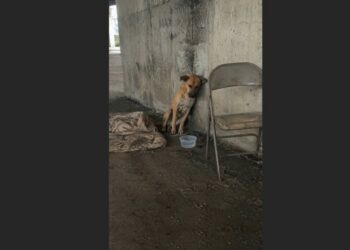
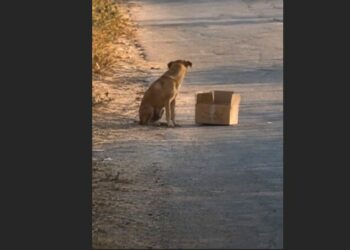
He was standing beside the fence of the Carter junkyard, an old property filled with abandoned cars and piles of scrap metal.
His coat was gray, with a distinctive patch of white across his chest.
He wasn’t barking at passing vehicles or running along the fence.
He simply stood near an old car, watching the road.
I noticed how dirty his coat was and how cautiously he observed his surroundings.
I didn’t know where he’d come from.
But when I saw him in the same place the following morning, I began paying closer attention.
The First Time I Left Him Food
The next day, the dog was still there.
And the morning after that, I saw him again.
He seemed to have established a place near the abandoned car where he could watch the road without moving far from the junkyard.
I began wondering whether he was getting enough to eat.
Eventually, I decided to stop.
I brought some food and water, approached carefully, and left them where he could reach them.
The dog watched me from a distance.
He made no attempt to come closer.
I didn’t call him repeatedly or try to catch him. I knew that an unfamiliar person approaching a cautious dog could make the animal uncomfortable.
So I returned to my van.
Only after I moved away and started the engine did the Pit Bull approach what I’d left.
I watched long enough to see him investigate the food.
Then I continued my route.
The interaction was brief, but I thought about him later.
There was something troubling about leaving a dog alone beside an abandoned property, particularly when I couldn’t be certain how he was surviving.
The following morning, I brought food and water again.
And then I did it the next day.
Before long, stopping at the junkyard had become part of my routine.
Every Morning at 6:35
I began organizing the early part of my delivery route so I could reach the Carter junkyard at approximately 6:35 each morning.
The dog became accustomed to seeing my van.
At first, he remained cautious.
He wouldn’t approach the food while I stood nearby, and he kept a comfortable distance whenever I stepped out.
I respected that.
I didn’t need him to become friendly for the food and water to help him.
There were mornings when he seemed particularly interested in what I’d brought.
Other mornings, he watched from beside the old car until I returned to my seat.
I learned to move slowly and avoid making the interaction more complicated than it needed to be.
After a while, I began looking forward to seeing him.
The junkyard was hardly a pleasant place. Rusted cars stood in uneven rows, and piles of scrap metal occupied much of the property.
But there was always a familiar gray shape near the fence.
I found myself checking for him before I’d even brought the van to a stop.
It became one of the few parts of my working day that didn’t involve delivery schedules or addresses.
For a few minutes each morning, I was simply making sure an animal had something to eat and drink.
Then I went back to work.
The First Time His Tail Moved
About three months after I started feeding him, something changed.
I arrived at the usual time and stepped out of my van.
The Pit Bull was waiting near the abandoned car.
He noticed me.
Then the tip of his tail moved.
It was a small gesture, nothing like the excited greeting of a dog welcoming someone home.
But it was the first time I’d seen him respond to my arrival that way.
I stopped for a moment, surprised.
He still didn’t rush toward me.
He still preferred to maintain some distance.
But his body language appeared more relaxed than it had during our earliest meetings.
I smiled.
After leaving his food and water, I returned to my van and continued my deliveries.
I remember feeling unusually happy during the drive.
It seemed such a minor thing to be pleased about: a stray dog’s tail moving slightly when he saw me.
But I’d spent months watching him remain cautious.
Now he appeared to recognize my arrival as a familiar part of his morning.
There was no dramatic change in his behavior after that day.
Trust continued developing slowly.
Still, I never forgot the first small wag.
Why I Refused to Give Him a Name
By then, I’d become attached to the dog, although I wasn’t eager to admit it.
I deliberately avoided naming him.
Giving him a name felt like acknowledging a responsibility I wasn’t sure I could manage.
My life revolved around delivery routes, long working days, and a small studio apartment.
I hadn’t planned to have a dog.
And I didn’t know how an animal accustomed to living around the junkyard would adjust to being taken somewhere unfamiliar.
So I continued doing what had become familiar.
I brought food.
I left water.
I gave him room to approach when he felt comfortable.
Then I drove away.
It was easier to tell myself that I was simply helping an animal I happened to encounter on my route.
But that explanation became less convincing with time.
I worried when I didn’t immediately see him.
I felt relieved whenever his gray coat appeared beside the car.
And every morning, I found myself anticipating those few minutes more than almost anything else on my schedule.
The dog didn’t belong to me.
But he had become part of my day.
I just hadn’t understood how important that had become.
The Tuesday Morning He Was Gone
On the 416th morning, I arrived at 6:35 as usual.
The abandoned car was still there.
The rusted fence looked the same.
But the dog was missing.
I slowed my van and looked carefully toward the spot where he normally waited.
Nothing moved.
I parked and stepped outside.
For a moment, I assumed he’d gone somewhere else on the property.
Perhaps he’d found food or followed a scent that interested him.
I called softly, hoping he might appear from behind one of the old vehicles.
Nothing.
I waited, looking through the fence toward the abandoned cars.
Eventually, I had to continue my route.
I tried to convince myself there was no reason to panic.
He was a stray dog, after all. He could move around, and I had no way of knowing where he went when I wasn’t there.
But the absence unsettled me.
I’d become accustomed to seeing him in that same place every morning.
And after 415 consecutive days, an empty spot beside the car felt strangely wrong.
Five Days Without Seeing Him
On Wednesday morning, I returned to the junkyard.
He wasn’t there.
I called for him again and watched the area near the fence.
Nothing.
Thursday brought the same silence.
As the days passed, I found it increasingly difficult to concentrate on my usual routine.
I kept considering possible explanations.
Perhaps he’d moved somewhere else.
Perhaps someone had taken him in.
Or perhaps something had happened to him.
I had no evidence to support any particular possibility.
That uncertainty was the hardest part.
I didn’t know whether he was somewhere safe or whether he needed help.
I continued driving past the junkyard, but the place no longer felt familiar in the same way.
The abandoned car was still there, yet the one thing I’d come to expect beside it was missing.
By Sunday, I couldn’t stop thinking about him.
I decided that looking through the fence wasn’t enough.
I needed to search farther inside the property.
Three Hundred Yards Among the Abandoned Cars
I returned to the Carter junkyard before sunrise on Sunday.
The property was still quiet.
I entered through a broken section of the fence and began searching among the abandoned vehicles.
It wasn’t a safe or welcoming place.
There were damaged cars, scattered scrap materials, and narrow spaces between objects that had been left there for years.
I moved carefully, watching where I stepped.
I called softly from time to time, hoping the familiar gray dog might recognize my voice.
There was no response.
I continued searching.
After nearly 300 yards, I reached an area behind a damaged vehicle.
Then I saw something on the ground.
Gray fur.
A white chest.
My stomach tightened.
The Pit Bull was lying on his side, almost completely motionless.
I approached quickly, then slowed as I reached him.
His body showed signs of serious injury.
He looked terribly weak.
For a moment, I was afraid to find out whether he was still breathing.
The Moment He Opened His Eyes
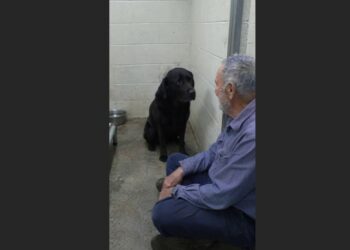
I knelt beside him.
His breathing was weak and uneven.
He didn’t rise or attempt to move away.
I looked over his body and could see that something serious had happened.
I couldn’t tell whether he’d been struck by a vehicle, injured among the junkyard debris, or hurt in some other way.
There was no evidence that allowed me to determine the cause.
But whatever had happened, he needed emergency veterinary care.
I leaned closer.
Then he opened his eyes.
I recognized that familiar face immediately.
The same gray dog who had watched me from beside the fence for more than a year was now lying helplessly in front of me.
“Hey, buddy,” I whispered. “I’m here.”
He couldn’t respond in the way he used to when I arrived with food.
But his eyes were open, and he was alive.
I knew I couldn’t leave him there.
Moving an injured animal can be dangerous, especially when fractures or internal injuries are possible. But he was in urgent need of treatment, and I had to get him to professional help.
I carefully lifted him, doing my best to support his injured body.
As I carried him back toward the van, his heavy head rested against my neck.
I remember feeling the weight of him in my arms.
I had spent more than a year keeping a cautious distance.
Now I was carrying him through the junkyard, hoping he would survive long enough to receive treatment.
The Emergency at Clinique Vétérinaire du Val
I drove straight to Clinique Vétérinaire du Val.
When we arrived, the veterinary team began examining him immediately.
I explained where I’d found him, how long he’d been missing, and what I’d observed about his condition.
The team needed to assess the extent of his injuries and determine what treatment he required.
I waited while they worked.
I kept picturing him lying behind that damaged vehicle.
I wondered how long he’d been there.
Had he been injured on Tuesday, the first day he disappeared?
Had he managed to move through the junkyard before collapsing?
I couldn’t know.
The uncertainty made waiting difficult.
Eventually, the veterinarian explained that the dog had multiple injuries, including fractures and internal trauma.
His treatment would be complicated.
He would need extensive veterinary care and time to recover.
And there was another problem.
The cost would be substantial.
I listened carefully as the veterinarian explained the financial commitment involved.
Then I thought about the savings I’d spent years putting aside.
The Decision I Made at the Clinic
I wasn’t wealthy.
I worked long hours driving a delivery van, and the money I’d saved represented years of careful decisions.
I’d been putting it aside because I knew unexpected expenses could arise.
Now I was facing one far larger than I’d imagined.
I looked toward the area where the veterinary team was treating the dog.
I thought about how long he’d been part of my mornings.
Four hundred and fifteen days.
More than a year of pulling over, leaving food and water, and watching him approach only when he felt safe.
I had never promised him anything.
I hadn’t even given him a name.
But when I found him injured and struggling to breathe, I understood that he mattered to me far more than I’d allowed myself to acknowledge.
I turned back to the veterinarian.
“Please do whatever you can for him,” I said.
I used my savings to begin paying for his treatment.
There was no guarantee of a full recovery.
I understood that.
But I wanted him to have a chance.
The Weeks That Followed
The next several weeks changed my routine completely.
I continued working my regular delivery routes.
Then I began accepting extra shifts at night.
Whenever small jobs became available and I could manage them, I took those too.
The veterinary expenses were significant, and I wanted to keep up with the care he needed.
Members of the veterinary team also contributed toward his treatment.
Their generosity meant more than I could easily express.
They were already responsible for providing his medical care, yet some chose to help with the financial burden as well.
I was grateful.
During those weeks, I visited whenever I could and followed the updates from the clinic.
His recovery was not immediate.
Multiple injuries required careful treatment, and his body needed time.
There were limits to what could be predicted about how well he would eventually move.
But he was receiving the attention he needed.
And little by little, there were encouraging signs.
He began eating better.
He became more responsive.
His ability to move gradually improved as his rehabilitation continued.
For the first time, I could begin imagining him leaving the clinic.
And this time, I wanted him to come home with me.
The Name I Finally Gave Him
During those difficult weeks, I finally gave the dog a name.
Shadow.
It seemed appropriate for the quiet gray animal who had spent so long living among abandoned cars.
For more than a year, he’d been a familiar presence at the edge of my working day.
Sometimes I would see only the shape of him beside the old vehicle before he moved closer to the fence.
He had always seemed more comfortable remaining at a distance.
A quiet figure among the rusted metal.
A shadow I looked for every morning.
But he wasn’t simply part of the scenery anymore.
He was an injured dog receiving treatment, with people working to help him recover.
And he had a name.
I began calling him Shadow when I visited.
I didn’t expect a name to change what he had experienced or make his injuries disappear.
But it changed something for me.
I no longer thought of him as the stray dog I fed beside the junkyard.
He was Shadow.
And I wanted to be there when he was ready to leave the clinic.
Two Months Before He Could Come Home
It took two months of veterinary treatment and rehabilitation before Shadow was ready to leave.
By then, I’d become accustomed to the extra work and the regular concern about his progress.
I knew recovery from serious injuries wasn’t a simple matter.
There were good developments, but also physical limitations that had to be respected.
When the veterinary team determined that Shadow could continue his life outside the clinic, he was eating well and moving around again.
He still had a slight limp in one front leg.
That was something I would need to accommodate.
I didn’t expect him to return immediately to the activity level he’d had before his injuries.
But I was grateful he could walk.
I was grateful he had an appetite.
And I was especially glad to see his tail wagging when I visited.
I thought about the first time he’d greeted me that way, about three months after I began feeding him.
Back then, the movement had been so slight that I almost wondered whether I’d imagined it.
Now he was greeting me again.
The road to recovery had been difficult, and his life would still require care and attention.
But he was ready to leave the clinic.
And I was ready to take him home.
The First Evening in My Studio Apartment
The day I brought Shadow home, I was nervous.
I’d spent more than a year watching him live outdoors around the junkyard.
Now he was entering a small studio apartment with unfamiliar rooms, furniture, and household sounds.
I didn’t know how quickly he’d adjust.
I wanted to give him time to explore without overwhelming him.
Shadow stepped inside carefully.
He lowered his nose and began investigating the furniture and corners of the room.
I watched him move, mindful of the slight limp that remained in his front leg.
He was curious, but he didn’t rush.
I let him take his time.
After exploring, he eventually settled near my feet.
I sat quietly, looking down at him.
For so long, our routine had ended the same way.
I’d left food and water near the fence.
He’d approached when he felt comfortable.
Then I’d returned to the van and driven away.
That evening was different.
When I sat down, Shadow remained beside me.
I didn’t have another delivery to make.
I didn’t have to leave him among the abandoned cars.
He was inside my apartment.
And he could stay.
Learning to Live Together
Shadow’s arrival changed the way I organized my days.
I had to consider his meals, exercise, rest, and continuing physical limitations.
I also had to make sure my work schedule allowed me to care for him properly.
It was an adjustment, but one I was happy to make.
Shadow had spent a long time living outdoors, and I couldn’t assume he’d immediately understand everything about household life.
He needed predictable routines and an environment where he could become comfortable at his own pace.
I tried to provide that.
I paid attention to his movements, especially the front leg that still gave him a slight limp.
I didn’t expect him to participate in activities that might be too demanding.
I wanted him to enjoy ordinary things without unnecessary strain.
Over time, he became familiar with the apartment.
He learned where he could rest.
He became accustomed to my daily routine.
And I began noticing how different it felt to have another living creature waiting for me when I returned home.
My apartment wasn’t large.
But it was enough for the two of us.
A Familiar Passenger in My Delivery Van
Today, Shadow sometimes accompanies me during deliveries.
He rides safely secured in the passenger area of my van, and I make sure the arrangements are appropriate for him.
I enjoy having him nearby.
For years, I’d driven those routes alone.
My days had been organized around packages, delivery addresses, and the constant need to keep moving.
Now, when circumstances allow, Shadow comes with me.
There is something comforting about glancing toward the passenger area and seeing the familiar gray dog resting there.
He’s no longer standing beside a fence, watching vehicles pass.
He’s traveling with someone he knows.
Sometimes our route takes us past the Carter junkyard.
I always recognize the old property immediately.
The rusted fence.
The abandoned vehicles.
The place where I’d stopped every morning for more than a year.
Sometimes I slow down a little as we pass.
I remember the old car where Shadow used to wait.
But we don’t stop anymore.
He has food waiting for him at home.
He has a safe place to sleep.
And he doesn’t need to remain beside a junkyard fence hoping someone will bring him his next meal.
The Savings I Never Expected to Spend
Sometimes people might wonder why I spent so much of my savings on a dog who hadn’t belonged to me.
I understand the question.
The treatment was expensive, and the financial responsibility affected my life.
I worked extra delivery shifts and accepted additional jobs to help cover the cost.
It wasn’t an easy decision.
But when I remember finding Shadow lying injured behind that damaged car, I can’t imagine wishing I’d walked away.
I had spent 415 mornings caring about whether he was hungry.
I knew the way he watched me from a distance.
I remembered his first small wag and the gradual changes in his behavior as he became more comfortable with my presence.
By the time he disappeared, he had become important to me, even though I’d never said it aloud.
I couldn’t have known whether treatment would succeed.
And I couldn’t have known how much of his mobility he would regain.
But I wanted to give him the opportunity to recover.
The veterinarians provided the medical care.
I helped pay for it.
Other people contributed.
And over two months, Shadow gradually became well enough to leave.
That outcome still means a great deal to me.
Four Hundred and Fifteen Mornings
I still remember the exact time I used to reach the junkyard.
6:35 a.m.
My route would bring me along the road, and I would look toward the old car before pulling over.
Sometimes Shadow was already standing near the fence.
Other mornings, I had to look carefully before spotting his gray coat among the abandoned vehicles.
I’d step out with food and water.
He’d watch from a safe distance.
Then, once I’d moved away, he’d approach.
That routine repeated for 415 consecutive mornings.
I didn’t realize how much those small encounters mattered to me until the Tuesday he disappeared.
There was no familiar gray shape beside the car.
No dog watching as I stepped out.
Only the empty space where I’d expected to see him.
Five days later, I found him injured and barely breathing.
That was when I finally understood how much I’d come to care about him.
I had told myself that giving him a name would make the attachment too real.
But the attachment had developed long before I ever called him Shadow.
It had grown through hundreds of ordinary mornings.
A little food.
A bowl of water.
A cautious dog who slowly became familiar with my presence.
And a delivery driver who found himself looking forward to seeing him each day.
The Door We Walk Through Together
Now, at the end of a working day, I return to my studio apartment with Shadow.
Sometimes he has accompanied me in the van.
Other times, I come home after arranging for his needs to be met while I’m working.
Either way, I look forward to seeing him.
There are meals to prepare, ordinary routines to follow, and the responsibilities that come with caring for a dog recovering from serious injuries.
His slight limp is still part of his life.
I don’t expect him to move like a dog who has never been hurt.
But he’s eating well, getting around, and enjoying a home where he no longer has to survive among abandoned vehicles.
I think about the difference between our mornings now and the ones we shared before.
Back then, I parked outside the junkyard and left food near the fence.
I waited for Shadow to approach.
Then I drove away.
Now, when the day is finished, he comes home with me.
I open the apartment door, and he walks inside.
Sometimes he pauses to investigate something familiar.
Other times, he heads toward a place where he likes to rest.
Then he settles down, often somewhere near my feet.
It’s such an ordinary sight that someone else might not think twice about it.
But I remember what it took for him to get there.
I remember 415 mornings beside a rusted fence.
The Tuesday he disappeared.
The Sunday I found him lying behind a damaged car.
The veterinary clinic.
The two months of treatment.
And the day he first stepped into my apartment.
For more than a year, I brought food to a dog who lived among abandoned cars.
Now, every evening, I bring that same dog home.
And when Shadow walks through my apartment door, I no longer have to wonder where he’ll sleep that night.
I know exactly where he belongs.
Editor’s Note: The characters in this story are fictional. Through these stories, we hope to share the intelligence, loyalty, compassion, and loving nature of dogs with people everywhere.