By the time the last Saturday of the county fair arrived in Beloit, Kansas, most of the livestock competitions were nearly finished.
The steers had been judged. The hog sale was approaching. Families who had spent years attending the fair were settling into the bleachers for another afternoon in the show ring.
But this year, something unusual was about to happen.
Instead of bringing in another group of calves or young livestock, twelve 4-H members led sixteen elderly shelter dogs into the sawdust-covered arena.
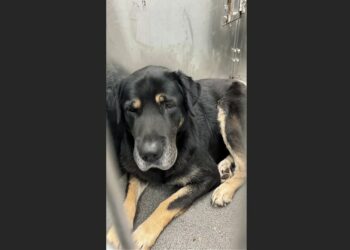
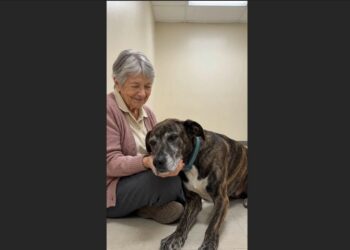
There were gray muzzles, stiff legs, and dogs who moved more slowly than the animals usually presented to the judges.
Some had spent months waiting at the county shelter.
Others had grown so accustomed to being overlooked that they barely seemed interested when visitors approached.
But that afternoon, every one of them had a child standing proudly beside them.
And by the time the show was over, the families in the bleachers were doing something nobody had quite expected.
They were coming down to meet the dogs.
It had all started with a question from a fifteen-year-old girl named Kenzie.
The dogs nobody stopped to see
Kenzie had been showing calves at the county fair since she was nine years old.
She understood what went into preparing an animal for the show ring.
There were early mornings, regular feeding schedules, grooming, and hours spent helping an animal become comfortable being led and examined.
She also understood the excitement of competition.
At a county fair, a well-presented animal could draw plenty of attention. People gathered around the ring, admired the work the children had done, and celebrated when ribbons were awarded.
The animals had a chance to be seen.
The previous spring, while completing her 4-H community service hours at the county animal shelter, Kenzie began noticing something that bothered her.
Families came in looking for dogs.
They walked past the kennels, stopped to admire the young animals, and spent time with the ones who were eager to greet them.
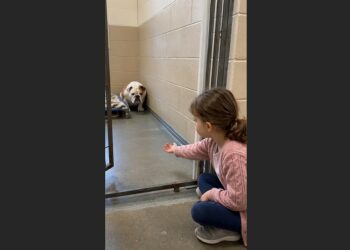
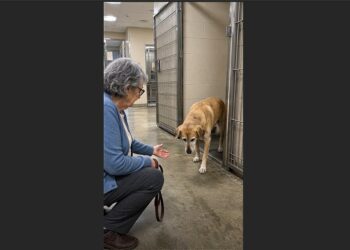
But the older dogs rarely received the same attention.
Kenzie watched visitors pause near the first row of kennels and then move along.
By the time they reached the senior dogs, many had already found someone younger they wanted to meet.
And the elderly animals remained where they were.
Some barely got up anymore when people passed.
Kenzie kept thinking about them.
An unusual idea for the county fair
One day, Kenzie approached her 4-H club leader with a question.
Why couldn’t the old shelter dogs be shown at the county fair, just like the animals the children raised for competition?
It was an unusual suggestion.
The fair had long been a place for livestock judging, with children presenting cattle, hogs, and other farm animals they’d spent months preparing.
Senior shelter dogs weren’t part of the usual program.
But Kenzie’s club leader couldn’t find a rule that prevented the idea.
And the more they discussed it, the more sense it began to make.
The children already knew how to handle animals carefully.
They were familiar with grooming, leash work, and the patience required to prepare an animal for a public event.
Why not use those skills to help older shelter dogs get noticed?
The fair brought together farm families from across the county.
People who understood the responsibilities of caring for animals.
People who might be willing to consider adopting an older dog if they had the chance to meet one.
So the club decided to try.
Twelve children and sixteen senior dogs
In June, twelve members of the 4-H club selected sixteen older dogs from the county shelter to participate.
The dogs weren’t chosen because they were the most energetic or the easiest to show.
They were chosen because they needed homes.
For the next six weeks, the children prepared them for the fair.
After finishing their regular farm chores, they spent their evenings working with the dogs.
They practiced walking calmly on a lead.
They helped them become comfortable standing while someone looked them over.
And they worked on the same kind of patient handling they used when presenting livestock.
For some of the dogs, the training came easily.
Others needed more time.
An elderly dog with stiff joints wasn’t going to move like a young show animal, and the children had to adjust their expectations.
There was no point rushing a dog who needed to walk slowly.
The goal wasn’t perfection.
It was helping each animal become comfortable enough to stand in the ring beside its young handler.
And perhaps, in the process, meet someone who might want to take it home.
Six weeks of work for one afternoon
Every evening, the children returned to their responsibilities.
There were walks.
Grooming sessions.
Practice in the yard.
And plenty of time spent getting to know the dogs.
The young handlers learned which animals preferred moving slowly and which were more willing to follow a lead.
They discovered who enjoyed being brushed and who needed extra patience.
Over time, the dogs became more familiar with the routines.
They learned to stand calmly while being examined.
They became accustomed to having someone beside them.
And the children began to recognize the individual personalities that shelter visitors had so often missed.
The dogs might have been old, but they still had preferences.
Some liked attention.
Some preferred quiet company.
Others were content simply to stand beside their handler and wait.
Those details would become important on show day.
Because Kenzie and the other children wanted the audience to see more than a row of aging animals.
They wanted people to see dogs with personalities, habits, and the ability to become loving companions.
The night before the show
On the evening before their appearance, the children gathered to get the dogs ready.
They used the livestock wash area to clean and groom them, removing sawdust and dirt from their coats.
The preparations resembled those for a traditional livestock competition.
There were animals to wash, coats to brush, leads to organize, and last-minute details to check.
But this time, the animals being prepared weren’t calves or heifers.
They were sixteen senior shelter dogs.
Dogs who had spent far too long waiting for somebody to choose them.
The next afternoon, they would enter the same ring where generations of farm children had shown their animals.
And for the first time, the older dogs would be the center of attention.
Sixteen dogs enter the show ring
The bleachers were already filling when the children arrived on Saturday.
Many of the families had come for the livestock events, particularly the hog sale.
They weren’t necessarily expecting a dog show.
Then the twelve 4-H members began leading the shelter dogs into the arena.
Sixteen senior dogs walked into the sawdust-covered ring.
Some moved with a little enthusiasm.
Others took their time.
There were older faces, slower steps, and a variety of coats and sizes.
The children stood beside them, holding their leads and making sure each dog was comfortable.
The announcer began introducing them.
For every dog, the announcer read a card with its name and one thing it liked.
It was a simple idea, but it gave each animal an identity beyond being another dog waiting at the shelter.
The people in the bleachers learned who enjoyed attention, who liked a particular activity, and what made each dog special.
Then the judging began.
A retired cattle judge takes the ring
The judge was a retired cattle judge wearing a straw hat.
He was accustomed to examining livestock and asking young handlers questions about the animals they’d raised.
That afternoon, he approached each senior dog with the same seriousness.
He moved down the line, bending to look at each animal.
He asked the children questions.
He watched the dogs stand beside their handlers.
There was something wonderfully unusual about seeing an elderly shelter dog presented with the same care usually reserved for prized livestock.
The children had spent six weeks preparing.
The dogs were doing their best.
And the judge treated them as though their time in the ring mattered.
When the judging ended, every dog received a blue ribbon.
All sixteen.
The judge had a practical explanation.
Every one of those elderly dogs, he said, had earned its ribbon by standing patiently for so long in the summer heat.
The children had good reason to be proud.
But the best part of the afternoon was still ahead.
The families came down from the bleachers
As the dogs finished their time in the ring, people began leaving their seats.
They wanted to meet the animals they’d just watched.
Families approached the children and asked about the dogs.
They learned more about their personalities and the homes they might need.
The same senior dogs who had been passed over at the shelter were now attracting attention from people who had come to the fair for an entirely different reason.
The show had changed how the audience encountered them.
At the shelter, visitors often made decisions after a quick look through a row of kennels.
At the fair, the dogs had been introduced one by one.
They’d stood beside children who knew them.
And each had been given a moment in front of a crowd.
People could see that an older dog didn’t need to be lively or physically perfect to make a wonderful companion.
Some families began asking about adoption.
By the time the fair weekend ended, fourteen of the sixteen dogs had found homes.
Fourteen adoptions by Sunday night
For Kenzie and the other children, the results must have been hard to believe.
Six weeks earlier, they’d begun working with sixteen dogs who had been waiting at the shelter.
Now, by Sunday night, fourteen had gone home with families who’d met them through the fair.
Only two remained.
But the children weren’t finished helping.
During the following week, homes were found for those final two dogs as well.
Every one of the sixteen senior dogs had been adopted.
Not because they’d won a competition based on youth, strength, or appearance.
Not because they could run faster or stand more perfectly than the others.
They had been given a chance to be seen.
And the people who met them discovered that they still had plenty to offer.
The last dog waiting
Among the sixteen dogs was an elderly basset hound named Doodle.
He was the last one to be chosen.
Doodle wasn’t the kind of dog who would make a dramatic entrance into a show ring.
He was old, and like many basset hounds, he had a long body, short legs, and an unhurried way of moving.
He had participated in the show alongside the other senior dogs.
But as families began coming down from the bleachers and asking about the animals, Doodle was still waiting.
For much of the afternoon, the retired judge remained near the ring rail with Doodle’s lead in his hand.
The other dogs were receiving attention.
Adoption conversations were taking place.
The children were watching their weeks of work pay off.
And Doodle remained beside the man in the straw hat.
Eventually, the club leader approached to collect his lead.
The judge looked at her and asked a question.
Was Doodle still available?
It was a small moment, particularly compared with the excitement of the show.
But it said something about what the afternoon had accomplished.
The man who had spent years judging cattle had found himself interested in an old basset hound.
One of the very dogs the children had brought to the fair because nobody seemed to want him.
The idea behind the blue ribbons
Kenzie hadn’t started the project because she wanted a trophy.
She already knew what it was like to participate in a livestock show.
She’d been doing it since she was nine.
What bothered her was watching older shelter dogs remain invisible while younger animals attracted visitors.
So she asked whether those dogs could have a place in a different kind of show.
Her club leader listened.
The other children joined in.
And for six weeks, they gave their time to animals who needed help finding homes.
The ribbons mattered because they recognized the work the children and dogs had done.
But the adoptions mattered more.
By Sunday night, fourteen dogs had left with families.
Within another week, the remaining two were adopted.
Sixteen elderly animals who might otherwise have continued waiting were given the opportunity to begin a new chapter.
And the entire effort grew from a fifteen-year-old girl’s willingness to ask a question.
A different kind of county fair victory
There is something particularly touching about the way the dogs were presented.
The children didn’t try to disguise their age.
They didn’t pretend stiff legs or gray muzzles didn’t exist.
They worked with the animals as they were.
Some needed slower walks.
Some needed extra patience.
All needed kindness.
And when the judge reached the end of the line, he didn’t choose one dog as the winner and send the others away without recognition.
He gave every one of them a blue ribbon.
His explanation was simple enough to make people smile.
Those old dogs had stood in the heat and behaved themselves.
As far as he was concerned, that was worth celebrating.
But perhaps the real achievement was the fact that people had finally stopped to look.
The same families who might have walked past an older dog at the shelter were now meeting them in the show ring.
And some were ready to take them home.
I keep thinking about Doodle.
The last basset hound waiting while the other dogs were finding families.
The retired cattle judge standing at the ring rail with his lead.
And the moment the club leader came to collect him.
“Is Doodle still available?”
It wasn’t an elaborate speech.
It was just a question from someone who had spent the afternoon looking closely at an old dog.
But those were exactly the kinds of questions Kenzie had hoped people would ask.
She hadn’t wanted the shelter dogs to remain unnoticed.
She wanted people to meet them, learn something about them, and consider whether they might belong in a family.
And by the following week, every dog had found a home.
Sixteen senior shelter dogs entered the county fair show ring in Beloit, Kansas. Twelve 4-H members had spent six weeks getting them ready. Every dog received a blue ribbon.
By Sunday night, fourteen had been adopted. The remaining two found homes the following week.
For the children, it was a lesson in the difference a little effort could make.
For the families, it was an opportunity to discover companions they might never have met otherwise.
And for sixteen older dogs, it meant leaving the shelter.
The county fair would continue with its usual livestock shows, familiar traditions, and children proudly presenting the animals they’d raised.
But that summer, it had also made room for something new.
A ring full of gray muzzles.
A retired judge in a straw hat.
A blue ribbon for every elderly dog.
And families coming down from the bleachers to ask if they could take one home.
Kenzie was only fifteen when she came up with the idea.
She’d watched people pass the senior kennels and wondered why those dogs couldn’t have the same chance to be noticed as any animal in the show ring.
By the end of the fair, she had her answer.
They could.
And when someone finally gave them that chance, all sixteen went home.