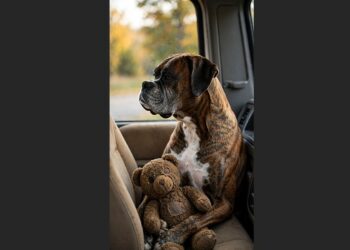
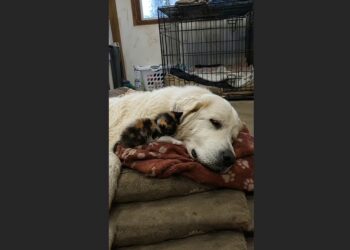
I was seventy-six when I brought home a senior Golden Retriever named Benny.
My husband had been gone for several years, and by then the quiet inside the house had become harder to live with than I liked admitting.
I did not want a puppy.
I wanted company, and I thought an older dog deserved a comfortable place to spend whatever years remained.
In my mind, the arrangement was simple.
I would help Benny.
What I did not understand yet was that Benny had arrived with almost a decade of routines, attachments, and memories that had nothing to do with me.
I discovered the first of them at exactly 6:48 one morning.
Benny Was Already an Old Dog When We Met
He had the pale face of a Golden Retriever who had lived a long life.
Silver had spread around his muzzle and eyes. Arthritis made his hips stiff, especially when he first stood after sleeping, and one of his back legs occasionally trembled if he remained upright too long.
Still, he was gentle and interested in people.
When I visited the rescue, Benny did not rush toward me.
He walked over slowly, sniffed my hand, and rested his chin against my knee.
That was enough.
His paperwork contained very little history.
A short intake note said his former owner had moved into residential care and could no longer keep him.
There were medical records for his arthritis, vaccination information, and feeding instructions.
That was about it.
I assumed everything important about his previous life was gone.
I was wrong.
The First Morning, I Thought He Was Digging for Something
I was outside watering the garden shortly after sunrise.
According to the old clock by the patio door, it was 6:48.
Benny walked past me toward the back corner of the yard, where an aging oak fence bordered one of my flower beds.
Then he began moving the soil.
He did not dig the way most dogs dig.
There was no frantic burst of paws and flying dirt.
Benny worked slowly.
Four scrapes with one front paw.
Then four with the other.
He paused.
Started again.
Because of his arthritis, each movement looked deliberate simply because nothing came easily to him anymore.
Within several minutes, he had created a shallow hollow roughly as long as his body.
Then he stopped.
“Benny?”
One ear moved toward me.
He did not come.
He Lay Beside the Hole
Benny stood at the edge for several seconds.
A light breeze moved the pale fur along his face.
Then he lowered himself carefully beside the disturbed soil.
His muzzle rested against the loose earth.
I watched from across the garden.
There was something strangely peaceful about him.
After several minutes, Benny stood again.
I assumed he was finished.
Instead, he began pushing soil back into the hollow.
Slowly.
Patiently.
He used his paws and nose until most of the dirt was back where it had been.
Then he walked toward the house.
I had owned dogs before.
I had seen them dig holes under fences, bury toys, chase insects, and destroy carefully planted gardens with great enthusiasm.
I had never watched one repair his own excavation.
The Next Morning, He Returned at the Same Time
At 6:48, Benny went back to the corner.
Same location.
Same slow movements.
Same pause beside the loosened soil.
Then he covered it again.
By the third morning, I was standing at the kitchen window waiting to see whether it would happen.
It did.
The routine continued through the week.
Benny might spend the rest of the day sleeping beside my chair or following me from the kitchen to the laundry room, but shortly after dawn he always returned to that particular patch of garden.
Nothing else in the yard received the same attention.
Only that corner.
Only in the morning.
Living With Benny Was Otherwise Surprisingly Easy
He slipped into the house quietly.
At night, he preferred sleeping near my bedroom doorway rather than on the expensive dog bed I had purchased for him.
In the morning, I woke to the soft sweep of his tail against the floor.
If I moved from one room to another, Benny usually followed.
Not constantly.
He was too old for that.
Sometimes he watched me leave the room, considered whether the journey was worth the effort, and decided that absolutely nothing in the kitchen could be important enough to justify standing.
But increasingly, the house felt occupied again.
There was another set of footsteps.
Another creature waiting while I made breakfast.
A warm body sleeping in the afternoon sunlight.
I had wanted companionship.
Benny gave me that without demanding much in return.
Except, apparently, one corner of my garden.
I Tried Blocking the Spot
My first solution was simple.
Planters.
I positioned several heavy pots over the area before going to bed.
The next morning, Benny reached the corner and stopped.
He did not try to push them over.
He did not dig somewhere else.
He simply lay beside the planters.
And waited.
I eventually moved them.
Benny stood immediately.
Then the digging began.
A few days later, I tried planting herbs there.
That failed too.
Benny loosened the soil around them with such improbable care that every plant survived.
Apparently, my elderly dog was both determined and a better gardener than I was.
By then, curiosity had become difficult to ignore.
I started wondering whether something was buried beneath the ground.
So I Dug Up the Garden Myself
One afternoon, I brought out a shovel.
If Benny had found something beneath the surface, I wanted to know what it was.
He watched from the porch.
I dug deeper than he ever did.
A foot.
Then two.
Eventually nearly three.
I found roots.
Clay.
Several stones.
Nothing else.
No toy.
No bone.
No buried container.
Nothing that could explain why an old dog returned to the same patch every morning.
Benny watched the entire operation without leaving the porch.
When I finally put the shovel aside, he stood.
Then he walked toward me.
He Climbed Into the Hole
I stepped away.
Benny carefully lowered himself into the deeper hollow I had created.
He tucked his body against the earth.
Closed his eyes.
Then released a long sigh.
Something about that sound caught me off guard.
He did not look excited about finding anything.
He looked settled.
For several minutes, Benny simply rested there.
Then he climbed out.
And began pushing the soil back.
That was the moment I realized I had been asking the wrong question.
Maybe Benny was not trying to reach something beneath the ground.
Maybe digging itself was the important part.
The Rescue Volunteer Knew Something I Didn’t
About a week later, I stopped at the rescue to pick up more of Benny’s joint medication.
While I was there, I mentioned the morning routine.
The volunteer smiled at first.
Then I explained the details.
Same corner.
Same time.
Dig.
Rest beside the soil.
Cover it again.
Her expression changed.
“Wait here.”
She disappeared into the office.
Several minutes later, she returned carrying an older folder.
Some records associated with Benny’s intake had apparently been filed separately from the paperwork I received.
Inside was a handwritten account describing his previous home.
I read it standing at the counter.
By the time I reached the second paragraph, I understood.
Benny Had Spent Nearly a Decade in a Garden With His Former Owner
His previous owner was an older man.
For years, the two had begun their mornings outside.
The man tended flowers and vegetables.
Benny stayed nearby.
After loosening soil around the beds, the man often sat down beside the garden.
According to the note, he would pat the ground, rub Benny’s head, and remain there with him for a while before starting the rest of the day.
Before going indoors, they pushed loose dirt back into place.
Morning after morning.
Season after season.
For nearly ten years.
I read the description twice.
Then I thought about 6:48.
Benny scraping the soil.
Lying beside it.
Waiting.
Covering it again.
I Had Been Watching a Routine Without Knowing Its History
It would be easy to say Benny was deliberately recreating a memory in the same way a person might revisit an old photograph.
I cannot know that.
Dogs do not explain what they remember or how they experience absence.
But they are extraordinarily sensitive to routines.
Time of day.
Light.
Smell.
Sequences of behavior.
Actions repeatedly connected to a familiar person.
Benny had apparently spent thousands of mornings participating in one particular pattern.
Then his person disappeared from his daily life.
The pattern remained.
When Benny entered my home, he found another yard.
Another patch of soil.
Another morning.
Perhaps that was enough for an old routine to surface again.
Whatever was happening inside his mind, I finally understood why there was never anything buried beneath the dirt.
The digging itself had always been part of the point.
Then the Volunteer Handed Me an Envelope
It had been recovered from Benny’s previous owner’s possessions after he entered residential care.
Inside was a photograph.
The colors had faded.
A flower bed filled one side of the picture.
An elderly gentleman sat beside freshly worked soil.
Next to him was Benny.
Young Benny.
His face was gold rather than silver.
His back was straight.
His eyes were bright.
Neither the man nor the dog was looking toward the camera.
They were looking at each other.
I stood there longer than I expected.
Until that moment, Benny’s previous owner had existed for me as one line on a rescue form.
Now he had a face.
And Benny had a life before mine.
I Asked Whether His Former Owner Was Still Alive
He was.
That surprised me.
I had assumed the phrase “moved into residential care” meant contact was impossible or unwanted.
Instead, the circumstances had simply separated them.
The man’s health had declined enough that he could no longer safely live alone or care for a large senior dog.
Benny had gone into rescue.
Somewhere during the transfer, the fuller background had been separated from his primary file.
I asked the rescue whether a visit might be possible.
They contacted the man’s family.
The family agreed.
A few days later, I put Benny into the car.
I did not tell myself he understood where we were going.
He simply knew we were taking a ride.
His Former Owner Was Waiting in the Courtyard
A staff member brought him outside in a wheelchair.
It was a mild fall afternoon.
The courtyard had several benches, a few small trees, and a garden bed along one wall.
Benny stepped out of the car slowly.
His hips were stiff after the ride.
He sniffed the pavement.
Then he looked toward the courtyard.
For a second, nothing happened.
The man in the wheelchair stared at him.
Benny stared back.
Then the man spoke.
“Benny.”
The dog’s ears lifted.
His tail moved.
Then moved harder.
Within seconds, his entire back end was swaying with it.
I had never seen that much movement from him.
I Let Benny Approach at His Own Pace
He walked toward the wheelchair.
Slowly at first.
Then faster than I thought his joints would allow.
The man leaned forward.
Benny reached him and immediately began sniffing his hands, clothing, and legs.
Then he placed his head across the man’s lap.
The position looked effortless.
Familiar.
The man’s hand settled between Benny’s ears.
Neither seemed interested in anyone else for several minutes.
I stood a short distance away.
There was no need to make the moment larger than it was.
A dog had encountered a person who had been central to his life for many years.
Familiar scent.
Familiar voice.
Familiar touch.
Whatever Benny understood about why they had been separated, he clearly recognized something important.
We Stayed Nearly an Hour
There was not much conversation.
His former owner tired easily.
Benny did too.
That suited them.
They sat in the warm light.
Occasionally, the man rubbed Benny’s ears.
Sometimes Benny lifted his head and looked at him.
Mostly, the old dog rested against the wheelchair.
Before we left, the man asked whether Benny was doing all right.
I told him about the house.
The garden.
The arthritis medication.
Where Benny slept.
I did not mention at first how lonely my home had been before he arrived.
Then I decided to.
The man’s eyes filled.
“So he’s looking after you now.”
I smiled.
“In his own way.”
Saturdays Became Visiting Days
Once the facility and family approved an ongoing arrangement, I began bringing Benny back regularly.
Usually Saturday afternoon.
Sometimes we stayed in the courtyard.
Sometimes staff allowed us into a small garden.
There was no expectation that the visits would restore the old arrangement.
Benny still lived with me.
His former owner remained in residential care because he needed support Benny could not provide.
This was not a story about reversing circumstances.
It was about preserving a relationship within the circumstances that actually existed.
The visits became part of Benny’s new routine.
Saturday meant the car.
The familiar building.
The courtyard.
Then the voice he had known for years.
And the Morning Digging Stopped
I noticed it several days after the first visit.
At 6:48, I looked toward the garden.
Benny was in the kitchen.
He had finished breakfast and gone back to bed.
The next morning, he did the same.
The corner remained untouched.
A week passed.
Then another.
No digging.
I cannot say with certainty why the behavior stopped.
Perhaps the visits altered his routine.
Perhaps a familiar person had become part of his life again, reducing whatever prompted the repeated garden behavior.
Perhaps the timing was coincidence.
Dogs do not give us explanations.
Still, after weeks of watching Benny return to that patch every morning, the change was difficult to miss.
I Left the Corner Alone
I did not plant anything there.
For a while, I kept expecting Benny to return.
He never did.
Grass gradually began filling the disturbed soil.
Rain flattened the last loose patches.
By spring, the corner looked almost like the rest of the yard.
Only I knew exactly where the hollow had been.
Sometimes I stood there while watering the garden and thought about the photograph.
A younger Benny.
An older man.
Fresh soil.
Two figures paying no attention to the camera.
The picture helped me understand something I had not considered when I adopted a senior dog.
Benny had not arrived as an unfinished life waiting for me to complete it.
He came with a history.
Senior Dogs Bring Other People With Them
Not literally.
But their routines often began somewhere else.
The way they wait near a certain door.
The time they expect breakfast.
The words that make their ears lift.
Whether they sleep beside a bed or near the entrance.
Which side of a person they prefer walking on.
Sometimes those habits survive long after the humans who created them disappear.
When we adopt older animals, we often know only fragments of those stories.
That does not diminish the relationship we form with them.
It simply means we are joining a life already in progress.
I did not need Benny to forget his former owner before he could belong with me.
There was room for both relationships.
His Old Friend Never Stopped Caring About Him
That became clear during our visits.
The man always asked the same practical questions.
Was Benny eating?
How were his hips?
Could he still manage the yard?
Was he sleeping through the night?
I brought photographs.
Sometimes Benny sleeping by my bedroom door.
Sometimes stretched in sunlight.
Sometimes watching me cook from exactly the location most likely to produce dropped food.
His former owner laughed at those.
“He always knew where to stand in a kitchen.”
I began learning pieces of Benny’s life that no paperwork could have told me.
He disliked thunder.
He loved carrots.
He had once stolen an entire loaf of bread and hidden behind a sofa that did not remotely conceal him.
He had always been a terrible swimmer for a Golden Retriever.
The dog beside me became more complete with every story.
Benny Was Building New Habits Too
He still greeted me each morning.
He still followed me between rooms when his joints allowed it.
But there were changes.
He began waiting near the kitchen while I prepared tea.
He learned which cabinet contained his treats.
He discovered that the afternoon sun reached a particular rug in the living room.
He began nudging my hand when I stopped rubbing his ears too soon.
These routines belonged to us.
They did not erase the ones he had shared with someone else.
That was the part I came to appreciate.
Attachment was not a limited space that could hold only one person.
Benny could recognize his former owner with unmistakable enthusiasm on Saturday and still climb into my car afterward without distress.
He could settle beside my bedroom door that night.
Both places had become familiar.
I Had Adopted Benny Because My House Was Too Quiet
I thought I understood loneliness.
After my husband died, evenings became the most difficult.
There was nobody in the next room.
Nobody asking whether I wanted tea.
No small conversation about weather, groceries, or who had forgotten to turn off a light.
Benny did not replace my husband.
That was never possible.
But he changed the sound of the house.
A collar against a water bowl.
A long sigh from the hallway.
Slow paws crossing the kitchen.
A tail brushing the wall.
Those ordinary sounds helped.
Perhaps that was why discovering Benny’s garden ritual affected me so deeply.
We had both arrived in the same house carrying absences.
Different ones.
But absences nonetheless.
Neither of Us Needed the Other to Forget
That was what our life became.
I could miss my husband and still enjoy Benny beside me.
Benny could respond joyfully to the man who had raised him and still return home with me.
Love after loss does not require erasing what came before.
For people or, in whatever way dogs experience attachment, for animals.
We simply made room.
On Saturday, Benny saw his old companion.
On Sunday morning, he slept near my chair while I read the paper.
There was no conflict in that.
Only continuity.
The Last Time I Looked at the Old Photograph
Benny was asleep beside me.
I held the picture near the window.
The younger dog in it barely resembled him anymore.
The same eyes, perhaps.
The same white patch on his chest.
But everything else had softened with time.
Beside him sat the man who had spent almost ten years beginning the day in a garden with that dog nearby.
I thought of the mornings I had watched Benny digging at 6:48.
Four scrapes.
Four more.
A pause.
Then lying beside the earth.
I had assumed he wanted something beneath the soil.
There had never been anything there.
Benny Had Been Repeating Something Familiar
I cannot say he was consciously reenacting those mornings.
That would require knowing more about a dog’s inner experience than any of us can know.
But the old intake note gave the ritual context.
For years, morning garden work had been associated with a particular person, a particular rhythm, and quiet time beside loosened earth.
After that life disappeared, part of the pattern continued.
Then Benny encountered his old companion again.
Our Saturdays began.
And the garden ritual faded.
Whatever Benny had been seeking in those mornings, it was never a buried object.
The important thing had always been beside the hole, not underneath it.
Now Saturday Is Benny’s Favorite Day
He recognizes parts of the routine before we leave.
The leash.
My coat.
The car.
At the facility, his pace sometimes quickens.
Not much.
He is still an elderly Golden Retriever with arthritis, and no amount of happiness changes his joints.
But then we enter the courtyard.
His old friend waits.
Benny walks over.
The man’s hand finds the top of his head.
Usually Benny settles beside the wheelchair.
Sometimes they sit near the garden.
Neither needs to do very much.
The visits are quieter now than they were in the photograph.
Age has slowed them both.
Still, the shape of the moment is familiar.
An older man.
An older dog.
Sunlight.
Soil nearby.
Time spent together without needing to fill it.
And Every Evening, Benny Comes Home With Me
He walks through my door.
Drinks from his bowl.
Checks the kitchen in case something interesting has happened while we were gone.
Then he finds his usual place near my chair.
The garden corner remains untouched.
I never covered it with planters again.
I never planted herbs there.
I let the grass grow.
Sometimes, early in the morning, I still glance at the patio clock.
6:48.
Benny is usually sleeping now.
That seems fitting.
For almost ten years, he began his days beside one person in a garden.
Then life changed.
For a while, the routine remained even though the person did not.
Now Benny has both something old and something new.
Saturday afternoons with the man whose hand he still recognizes.
And the rest of the week in a quiet house that no longer feels quite so quiet to me.
I brought home a senior dog because I thought he needed somewhere comfortable to grow old.
He did.
But he also taught me that adopting an old dog sometimes means accepting the parts of his heart that were shaped long before you arrived.
You do not have to replace them.
You only have to make room beside them.
And these days, when Benny rests his head against my leg after we return from visiting his old friend, that is exactly what I try to do.
Editor’s Note: The characters in this story are fictional. Through these stories, we hope to share the intelligence, loyalty, compassion, and loving nature of dogs with people everywhere.