By the time I got the rusted metal door open, the air coming from inside the container felt like it had been trapped there for days.
Then I saw her.
A honey-colored dog lay in the darkness, so thin that the outline of her ribs showed beneath her dirty coat. She was weak enough that when she tried to raise herself, her legs barely cooperated.
She did not run toward the opening.
She did not bark.
She simply looked at me.
I work for the municipal sanitation department, and I had been inspecting an abandoned lot when I heard faint sounds coming from the old container. The heavy door had corroded almost completely shut.
According to what we later pieced together, she had been inside for four days.
No accessible water.
No reliable source of food.
Almost no ventilation.
I wrapped her in a blanket and lifted her carefully.
She weighed far less than a dog her size should have.
On the way to the truck, one of her front paws settled against my wrist.
She was too exhausted to hold it there for long.
Still, I remember that touch more clearly than almost anything else from that morning.
The First Priority Was Getting Her Out of the Heat
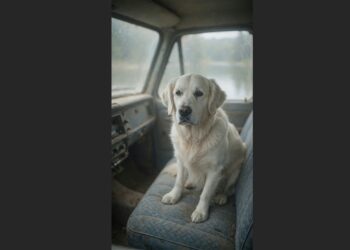
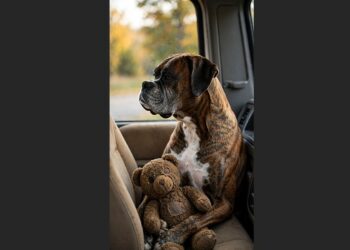
I placed her on the passenger side of my service truck and turned up the air conditioning.
Then I called the nearest veterinary clinic.
I had a bottle of water with me, but after describing her condition, I was told not to let her gulp a large amount all at once.
So I offered small amounts while we drove.
She drank eagerly but slowly.
Then lowered her head against the seat.
At every stoplight, I looked over to make sure her chest was still moving.
It was.
Barely, at times.
But it was.
I drove faster than I normally would have, though not so fast that I risked creating another emergency.
The clinic knew we were coming.
By the time I pulled into the parking lot, staff were already waiting.
Dr. Vance Took One Look at Her and Moved Quickly
There was no dramatic speech.
No prediction about miracles.
He examined her gums, temperature, heart rate, hydration, and neurological response while his staff prepared intravenous fluids and other supportive treatment.
Her dehydration was severe.
The prolonged heat exposure was also concerning.
Dogs in those circumstances can develop problems that are not always visible immediately. Kidneys, circulation, electrolytes, and other organ systems can all be affected.
Dr. Vance told me her prognosis was guarded.
She might recover.
She might deteriorate overnight.
It was too early to know.
I stood against the wall feeling useless.
Then one of the technicians asked me to come closer because the dog kept turning her head toward where I was standing.
I crouched beside the treatment table.
Her paw touched my wrist again.
That Evening, I Started Calling Her Alma
The name came without much planning.
I needed something to write on the temporary paperwork.
Something other than “female stray from container.”
Alma was the first name that stayed in my head.
The clinic staff began using it too.
“Alma’s temperature is improving.”
“Alma took a little food.”
“Alma’s resting.”
Hearing a name attached to her changed something for me.
Not medically.
She was still an unknown dog with an uncertain history and a difficult recovery ahead.
But she no longer felt like an anonymous emergency I had carried through the clinic doors.
She was Alma.
We Did Not Know Who Had Put Her There
That part of the story remained unclear.
There was no reliable way to determine how she entered the container or exactly what had happened before I found her.
The condition of the door suggested she could not simply have pushed it open herself.
Beyond that, speculation would not help her.
I found myself becoming angry anyway.
Then I would look at Alma and realize anger was not what she needed from me.
She needed veterinary care.
Fluids.
Rest.
Nutrition introduced carefully.
Monitoring.
And time.
I also stopped describing her as forgiving the humans who had hurt her.
Dogs do not process morality the way people do.
Alma was not making a philosophical decision about forgiveness.
She was responding to the people in front of her.
So far, she was allowing us to help.
That was enough.
I Started Spending My Lunch Breaks at the Clinic
At first, I told myself I was only checking on her.
Then the visits became part of my day.
I came at lunch.
Sometimes again after work.
I sat on the floor beside her enclosure and talked.
I read whatever I happened to have with me.
News articles.
A paperback I kept in my truck.
Once, embarrassingly, several pages from an equipment manual.
Alma did not care about the material.
The point was the sound of a familiar voice.
Some days she watched me.
Other days she slept through the entire visit.
Both felt like progress.
Sarah, one of the veterinary assistants, told me the best sign was not that Alma was affectionate.
It was that she was beginning to rest.
A critically stressed animal needs enough physical stability to stop monitoring every movement around her.
Recovery Did Not Happen in a Straight Line
One morning Alma looked brighter.
By afternoon, she was exhausted.
She tolerated food, then refused the next offering.
Her hydration improved while other values still needed monitoring.
There was no single moment when the veterinary team announced she was safe.
Recovery came in pieces.
Better circulation.
More interest in food.
A stronger attempt to stand.
A longer period of uninterrupted sleep.
Then, on the fifth day, I walked into the treatment area and saw Alma awake.
She had been resting when I arrived.
Her head came up.
Then she pushed herself onto all four legs.
They shook beneath her.
I immediately stopped moving.
Alma Took Three Steps
That was all.
Three unsteady steps across the padded floor.
Then she reached me.
I lowered my hand.
Alma placed her muzzle against my palm.
Her tail moved once.
Then again.
No one needed to applaud.
The room was busy, and the staff had animals to care for.
But Sarah saw what happened and smiled from across the treatment area.
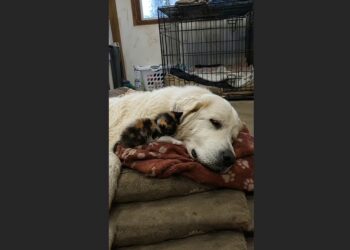
I sat beside Alma until she lowered herself back onto the bedding.
Those three steps did not prove that determination had defeated death.
They showed something more useful.
She had enough strength to stand.
Enough interest in her surroundings to approach.
And enough familiarity with me to choose proximity.
After the week we had just had, that felt enormous.
Her Body Needed Weeks, Not Days
Alma did not transform overnight into the glossy dog she would eventually become.
She was underweight.
Her muscles were weak.
Her coat needed careful grooming.
Her endurance was poor.
The veterinary team established a feeding and recovery plan rather than trying to put weight on her as quickly as possible.
Little by little, her body changed.
Her ribs became less pronounced.
Her gait strengthened.
The dullness in her coat began to disappear as new growth came in.
She could walk farther without tiring.
Later, she was cleared for short periods outside.
I was there the first time she stepped onto grass.
She lowered her nose immediately.
For several minutes, she did almost nothing except smell.
The Ordinary Things Became the Best Part
Fresh air.
Shade.
Grass.
A quiet room.
A meal eaten without encouragement.
These were the milestones I started paying attention to.
Eventually, Alma discovered toys.
I brought a small rubber ball one evening.
When I rolled it across the floor, she watched it as though I had made a serious error.
I rolled it again.
This time she followed.
She picked it up.
Then stood there with the ball in her mouth, apparently unsure what was expected next.
When she wandered back in my direction still carrying it, I laughed harder than the situation deserved.
It was the first time in weeks that laughter came without fear sitting immediately behind it.
People Began Asking About Adopting Her
The clinic shared updates about Alma while trying to locate any legitimate owner and determine what would happen once she was medically ready to leave.
Her story drew attention.
People offered food, toys, and help with medical expenses.
Several asked about adoption.
That was encouraging.
Alma would eventually need a permanent home.
At first, I assumed it would belong to someone else.
I lived in a small apartment.
My work schedule could be long.
I had never planned to restructure my life around a dog.
So when potential adopters began asking to meet her, I told myself that was the outcome we wanted.
A good household.
A fenced area if possible.
Someone able to afford continuing veterinary care.
Someone prepared for whatever behavioral effects might emerge after her ordeal.
Alma Was Polite With Other People
That is the fairest way to describe it.
She did not react aggressively to prospective adopters.
She accepted treats.
She allowed calm contact.
Some visitors seemed promising.
Still, staff noticed that Alma was more relaxed around people she had already spent significant time with.
That included me.
If I entered during a meeting, her posture changed.
Her tail moved.
She approached more readily.
That did not mean she had somehow chosen one permanent human and rejected everyone else.
Dogs can form new attachments.
But by then, Alma and I had accumulated weeks of predictable contact.
I had become familiar.
That mattered.
Eventually, Dr. Vance asked the question I had been avoiding.
“Have you considered taking her yourself?”
I Gave Him All the Reasons I Couldn’t
My apartment was small.
My schedule was inconvenient.
I did not have a yard.
I had never expected to own a dog.
He listened.
Then he said none of those things automatically meant adoption was impossible, but they did mean I needed a real plan.
That changed the conversation.
Not destiny.
Logistics.
Could I provide enough exercise?
What would happen while I worked?
Could I afford routine and emergency veterinary care?
Was my housing suitable?
Who could help if I became ill or had to work late?
Those questions were less romantic than saying Alma had “adopted me.”
They were also more important.
Over the next several weeks, I began answering them.
I Changed More of My Life Than I Expected
Eventually, I moved.
Not into some enormous dream property.
A modest rental house with a small fenced yard became available, and the numbers worked.
I checked the lease carefully.
Pets were permitted.
The fence was secure.
My commute remained manageable.
I arranged my schedule so Alma would not regularly spend excessively long stretches alone, and I identified people who could help when work ran late.
By the time the adoption became official, it did not feel like an impulsive decision made beside a hospital kennel.
It felt like something we had prepared for.
Alma came home with veterinary records, medication instructions, food, a leash, and more donated toys than one dog could reasonably need.
I bought her a large bed.
Naturally, she largely ignored it.
Our First Night Was Quieter Than I Imagined
Alma explored the house slowly.
Kitchen.
Living room.
Back door.
Bedroom entrance.
Then she found the bed I had purchased.
She sniffed it.
Stepped onto it.
Stepped off.
Later, when I was getting ready to sleep, she approached the side of my bed and looked up.
I waited.
She remained there.
Eventually, I invited her up.
She climbed carefully and settled beside me.
Her head rested against my ribs for a while.
Then she sighed and fell asleep.
I do not believe that sigh meant she understood concepts like permanent adoption or “forever.”
She knew something simpler.
The room was quiet.
Nothing was hurting her.
A familiar person was nearby.
For that night, she could sleep.
Home Did Not Erase What Had Happened
There were things we still had to work through.
Certain enclosed spaces made Alma hesitate.
Metal noises sometimes startled her.
On hotter days, I paid close attention to her behavior because I could not know what associations she might carry from the container.
I did not force exposure.
If she stopped, I let her investigate.
If she wanted distance, she got it.
Her confidence increased gradually.
There were setbacks.
A dropped metal pan once sent her scrambling out of the kitchen.
The following day, she walked back into the same room on her own.
That was how I learned to measure progress.
Not by whether fear disappeared.
By how many choices Alma felt safe enough to make.
A Year Later, She Was Almost Unrecognizable
Not because she had become a different dog.
Because health changed her appearance so much.
Her honey-colored coat grew thick and soft.
Her body reached a healthy condition.
Her muscles strengthened.
She could handle longer walks and play without becoming exhausted.
Her veterinary monitoring showed that the acute crisis was behind her.
She still had quirks.
Most dogs do.
The rubber ball remained one of her favorites.
She had also discovered that muddy paws were apparently compatible with every piece of furniture I owned.
What struck me most was how ordinary our life had become.
After all the intensity of the rescue, ordinary felt luxurious.
Most Evenings, We Walk After Work
Sometimes through quiet neighborhood streets.
Sometimes along paths farther from town.
Alma spends most of those walks doing exactly what dogs do.
Sniffing.
Stopping unexpectedly.
Reconsidering a patch of grass she inspected thirty seconds earlier.
Watching birds she has no realistic chance of catching.
Occasionally, she sits beside me when I stop.
Now and then, one paw lands on my hand or shoe.
It reminds me of the truck.
Of the clinic.
Of that first weak touch against my wrist.
I do not call it our secret language.
For Alma, it may simply be a familiar way of making contact.
That is meaningful enough.
I Still Think About the Container
Not every day.
But sometimes.
Especially when I pass the abandoned lot during work.
I remember forcing the door.
The heat coming out.
The shape lying in the darkness.
There are details I wish I knew.
Who put her there?
Why?
Was she intentionally abandoned?
Could someone have found her sooner?
Those questions never received satisfying answers.
Eventually, I stopped allowing them to dominate the part of the story we could control.
Alma survived.
Veterinary professionals kept her alive through the dangerous stage.
People helped.
She recovered.
Then she needed somewhere to go.
I happened to be able to make that place mine.
Alma Did Not Teach Me That Suffering Automatically Creates Wisdom
Animals do not exist to turn terrible events into inspirational lessons for people.
What happened to her was unnecessary.
There is nothing beautiful about a dog being trapped without water.
The meaningful part came afterward.
Someone heard her.
A door opened.
Veterinary staff did their jobs.
People donated.
A recovery plan was followed.
A home became available.
Those were actions.
That distinction matters to me now.
Hope is useful when it moves somebody to do something.
The Dog Beside Me Today Is Still the Same Animal I Found
She is healthier.
Stronger.
More comfortable.
But I do not describe her as completely healed in some emotional sense.
I cannot know that.
What I know is what she shows me.
She eats well.
She plays.
She sleeps deeply.
She seeks interaction.
She can spend time alone without becoming distressed.
She explores new places.
And when something worries her, she increasingly recovers and makes another choice.
That is enough evidence for me that her life is good now.
I do not need to turn it into something larger.
Sometimes the Beginning Still Feels Impossible
A year ago, I was a municipal employee checking an abandoned lot.
I heard a sound.
I forced open a rusted door.
Then I carried a dangerously dehydrated dog to my truck.
I thought my part would end at the veterinary clinic.
Instead, I kept returning.
One lunch break became several.
Several became evenings.
Eventually, I found myself discussing leases, fences, dog walkers, food, medication, and whether a rental house had enough room for a recovering dog.
None of it happened because Alma understood I had rescued her and decided she owed me devotion.
Relationships do not need that kind of debt.
I helped because she needed help.
I adopted her because, once I considered the responsibility honestly, I wanted her in my life.
Tonight, She Will Probably Put Her Paw on Me Again
We will take our usual walk.
Alma will investigate the same places she investigated yesterday.
When we get home, she will drink water and check the kitchen as though dinner might somehow have prepared itself during our absence.
Later, she will settle close by.
Perhaps on her expensive dog bed.
More likely somewhere less convenient.
And if she rests a paw across my hand, I will probably think about that first morning.
The metal door.
The dark container.
The weak dog I lifted into my truck.
Back then, her paw barely had the strength to remain on my wrist.
Now she can run through a yard, chase a ball, and pull slightly harder than she should when an interesting smell crosses our evening route.
That is the part of the story I choose to hold onto.
Not the idea that suffering made Alma pure.
Not that she forgave humanity.
Not that I saved her by myself.
A municipal worker heard a dog.
Veterinary professionals treated her.
Other people helped.
Then, over time, she recovered enough to build a life that looked less like a rescue story and more like what every dog should have had from the beginning.
Food.
Water.
Safety.
Medical care.
Room to move.
And someone familiar nearby when the day ends.
Sometimes I still picture that rusted door closing her away from the world.
Then I look at Alma sleeping in an open room, with the back door leading to a fenced yard and her leash hanging nearby for tomorrow’s walk.
That is the image I prefer.
The door is open now.
And she gets to decide where she goes.
Editor’s Note: The characters in this story are fictional. Through these stories, we hope to share the intelligence, loyalty, compassion, and loving nature of dogs with people everywhere.